Showing posts with label Latvian. Show all posts

Thursday, January 22, 2015

EC 478 Hiermalgamated History
Change the World! Think It Through! Do not Vote! Remember:
What if they declared war and no one came? Don’t go.
© Eso A. B.
The Russian Tragedy 2

Hieros Gamos means Holy Marriage, and ‘hiermalgamy’ means a forced or unholy marriage by secular authorities of people to governments through the act of taxation or other violent and unnatural join-tings or divorces.

The story of history as I am putting it together is not because I am a historian, but because the history that we are told by historians is enacted by order of a centralized government jealous for more power and a desire to have only its version of the story known. The centralized powers of the U.S.A., Russia, China, and EU have accepted a put-together history that fits their interests, but imprisons the people they govern into negahistory.

There is little the public knows of what really happened a thousand years ago in Europe (when it was not yet called Europe). One reason is that the chronology of ‘what happened when’ is completely unreliable, having arbitrarily and self-servingly been created by a historian (Skaliger) in pay of the Catholic Church. Knowing this enables me (and anyone else) to arrange the events in a different sequence, which tells us a very different story from the one that prevails in schools. Once we know that the chronology of history is unreliable, we also know that the episodes in that chronology are out of sequence and arranged by the ‘Zionist’ method—the tip of the pyramid  determines.

The history that emerges out of the govRmnt vacuumed sphere differs in amazing ways not only from what thousands of historians tell us, but perceives a human being who does not conform to the being presented to us by our ‘science’.

As I wrote in Blog 476, nature created a being that is “trusting by genetic fiat”. The sinful creature appeared when humans created by nature were removed from Nature and were compelled to live in cities, where they were recreated with egos differing from the egos of humans who lived in nature. If Nature creates beings who know they can trust it and, therefore, be trusting, cities and their suburbs, with their prison-like apartments and houses, create beings who distrust each other.

The creation of ‘sinful man’ is due to the violent compulsions of an elite who emerged either from a major natural catastrophe or an exceptional collusion of violent men, who were able to discover ways to perpetuate themselves as a violent phenomenon.

While I have no sure way of explaining the metamorphosis of a gentle natured human into one with a violent nature, in-uterus autism which is the result of pre-eclampsia, which is the result of a misplaced placenta within the body of a mother, which is associated with high protein count in the mother’s urine, which is associated with stress—may offer an answer. A high probability of rape for a woman is a likely cause of an abnormal concentration of autistic babies due to misplaced placentas. In certain geographical areas (such a river shores), such babies may grow up with pronounced pathological tendencies. If such babies when grown form communities, they may create a stressed community for themselves. If stress in such a community is reinforced in a young person’s teen years, it creates a personality that (given state control over defensive weapons) causes it to react passively (and sometimes adoringly) to a violent authority figure—as the Americans and Russians, both, do—to Bush, Jr. and Putin. This is due to the fact that the underlying longue durée communal personality can now only romanticize about its once independent nature in the wood or field.

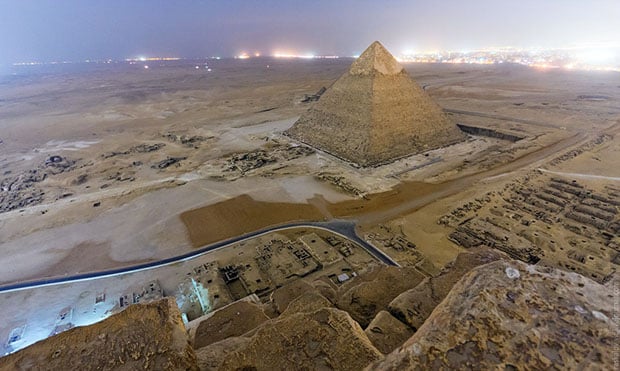
The Russian tragedy emerges from the stress thrust on a people originating in a significantly gentler culture in earlier times. For the Russians, such a culture is reflected in their language.* Perhaps this is reflected in the Russian diety Zimnik, Father Frost, who came with the so-called Little Ice Age. While scientists today date the LIA to the 14th century at the earliest, one cannot presume this to be the last word on the matter. It may have occurred at earlier times, for example the 8th-9th centuries, when—so it appears—there begin to occur radical negative changes in the nature of human behavior. This is the approximate time to which chronologists may attach reliable and actual historical events. Does it mark the time when women begin to suffer pre-eclampsia? If an earlier dating for extreme cold is not possible, then ‘historical events’ are even more recent than a thousand years ago—the former a presumption of Anatoly Fomenko which I have adopted as my working hypothesis.

In earlier blogs, I suggest the catastrophe to have begun with the Vikings, who descended from the north to south via the large European rivers: the Rhine, Danube (Donava), Dniepr, Volga, and many smaller ones such as the Latvian Daugava. In so far as the origin of the word for Viking derives from the feminine vik, “meaning ‘creek, inlet, small bay’”, and may refer to female genitalia, and since the consonant D may at one time have been pronounced as a Y, then Donava = Yauna-vika, and Daugava, translate into ‘young woman’ or ‘virgin’. In short, driven by a severe climate, the Vikings went on a rapine. In time rapine became generalized violence and was imitated by the violated. The Rusian elite became expert at it. There is an anecdotal story that one day my maternal grandmother left her son Sasha scream without coming to comfort him. When asked why she did this by her mother in-law, a Latvian peasant woman, she replied: ”I am tempering-training him to better cope with life.” Many Russian nobles used to train their children in this manner”.

*I associate a gentle culture with the endearing word imbedded in a language: Russian, Latvian, and many others; it comes from a realm dominated by women and Sun worshop. The beastial ‘fuck’ and rapist’s ‘mother fucker’ comes natural to English, to Russians the ‘beastial’ is first reflected in ‘shit’, the preoccupation of the well known ‘Pushkin jokes’ [I know Pushkin you shit somewhere. I can smell it. Pushkin: lift the palm out of the pot, you’ll see.], then acquires the drunk rapist gang banger ‘yoptvai match’—jump your mother.

Wednesday, July 30, 2014

Eso’s Chronicles 358
The following in Latvian.
Cerinju miljons / 10. Nogrimušās Jeruzalemes (2)
© Antons Benjamiņš  (turpinājums)

Redzēdami, ka rūriki (iepriekš varbūt lūdiki), kā vietējie sevi atpazina, netaisijās savus briežus tūlīt kaut, vikingi turpinot sirotāju parašas, pieprasīja no mežu ļaudīm briežu kažokus par nodokli. Nodoklis bija jānodod ekspluatācijā gada laikā, kad tie teicās atkal nākt ciemos. Citādi, ja pieprasītais nebūs, goti sola nolaupīt meža ļaudīm bērnus. Kirgīzu teika atspoguļo šos notikumus. Kad Ragainā Briežumāte stāsta Bakurētainai Klibai Vecenei, ka cilvēki ir nogalinājuši viņas dvīņu briedelēnus, un, ka viņas tesmenis ir pilns piena bērniem, mēs dzirdam lakonisku ziņojumu par vēsturiskiem notikumiem. Enesejas upe ir uz ziemeļaustrumiem no Kirgistanas, uz kurieni katru pavasari kirgīzu priekšteķi dzina savus mareļu briežus ganīties, bet rudenī tos dzina uz mājām, kuras atradās pie Isikkula vai Isik ezera.

Seno nodokļu vārds saucās ‘jasaks’. Tas līdz šai dienai ir sastopams vārdā jaka. Nav neiedomājams, ka līdzskanī ‘K’ atbalsojas svētā ezera vārds. Mana kaimiņiene laukos stāsta, ka viņa atceras savu vecmāti saucam savu aitas ādas vesti par jasaku: „Kur mans jasaks?”

Pienāca laiks, kad vietējie iedzīvotāji saniknojās, sadumpojās, un padzina apspiedējus no Bizantijas-Israēlas-Kazārijas apkaimes. Jodi bēga uz ziemeļrietumu Eiropu, kur tagad atrodas Beniluksa valstis. Ir iespējams, ka ganu ‘apmaldīšanās’ notika tāpēc, ka sagadījās vienlaicīgi ar Storegga krasta nobrukumu pie Norvēģijas, kurš izsauca tsunami, kurš noslīcināja tā saukto Doggerlandi http://en.wikipedia.org/wiki/Doggerland , kas apmēram 6000-8000 gadus secen savienoja Eiropu ar Angliju un Skandināviju.

Šie ‘citi’ brauca sirot uz Melno jūra ne pa Daugavu, Dniepru, Donu, vai Volgu, bet  pa Reinas un Donavas upēm. Esmu redzējis Ķēniņa Ludviga kanālu, kas savieno Reinu un Donavu, Vācijā, Bambergā, kur kā bēglis (atstājot krievu zonu, lai nonāktu t.s. Amerikāņu zonā) uz mēnesi pārnakšņoju kādas skolas telpās.

Atraduši patvērumu brāļu zemēs, goti (pārmainījuši savu cilšu nosaukumu no ‘jodi’ uz patīkamāku vārdu), sapņoja par atgriešanos pie Melnās jūras un drīz plānoja karu. Plāni nebija viegli izpildāmi, jo zemēs, kuras mēs tagad saucam par Bulgāriju, Rumāniju, un Ukrainu nāca ar citādāku garīguma  apziņu). Nodokļu vietā viņi saviem valdniekiem nesa ‘dāvanas’. Mēs šai vārdā redzam „dav, dev” ieskaņas, kas liecina par ‘dāvanu’ saistību ar lūgšanām un ziedojumu nevis nodokļu dienu (tax deadline), bet dievainēm.

Aitmatova stāstā, mēs redzam kaut ko no senās kristietības iz ļaužu vides, re: Ragainās Briežumātes mēģinājuma atrunāt Bakurētaino Klibo Veceni no bērnu upurēšanas mareļu briežu mednieku nodokļu ievākšanai par labu. Līdzīga attieksme redzama iestrādāta baltu valodā, kurā mīkstinātais ‘mīlinātājs’ vārds spēlē īpašu lomu. Baltiem nav Bībele, ne Jaunā Derība, bet ir valoda, kurā kopš senatnes, garīgā ticība ir ieminusi cilvēka vēl neaizkārtās subjektivitātes uzticību Saulei, ka Visuma mātes simbolam. Latviešu priekšteči izmantoja savas valodas īpatnību sacerot tautas dziesmas, kur vienā pantiņā dažkārt sastopami līdz pat pieci mīlinātāji vārdi.

Nodokļi, kā ienākumu avots kļuva gotiem par patstāvīgu ienākumu avotu, un goti no tiem nevarēja atteikties. Bija jāizdomā, ka pārvarēt bizantīniešu lūdu (ļaužu) iebildumus. To varēja panākt tikai, ja izveidoja jaunu ticību, kura pieņēma nodokļu maksāšanu kā ‘normālu’ parādību un spēja aizstāt senās Jeruzalemes un Dievam veltītas, zelta ikoniem greznotas, svētnīcas ar pils torņiem un pazemē ieraktiem ‘tumšo Jāņu’ pagrabiem (dungeon), kur slēpa zeltu un dārgakmeņus. Šai ‘jaunai ticībai’ arī vairs nederēja Jeruzaleme kā visu ‘svēto’ ķēniņu troņpilsēta (tsargrada) koncepts, bet bija nepieciešams nosaukumu pārnest uz tik vienu vien Jeruzalemi*.

Nupar ‘mūžīgā’ Jeruzaleme tiek apliecināta ar Dieva lūgšanām pie pussagruvušas sienas, kuru ‘faktu’ nesen Pops Francis apstiprināja bučojot vecus akmeņus izdomātās Izraēlas iedomātā galvas pilsētā Jeruzalemē. Joku, ko Rietumu kultūra, sāka sev stāstīt līdz Napoleons ieņēma Vidus jūras austrumu krastu un savās militārās kartēs iezīmēja pilsētiņu ‘Jeruzaleme’, kura tur iepriekš bija bijusi tikai fantāzijā*.

Īru dzejnieks Yeats šos melus saprata, jo viņa dzejolis „Sailing to Byzantium” (Būrojot uz Bizantīnu) ir veltīts Bizantijai, ne Jeruzalemei. Citēju: „...Un tāpēc esmu būrojis pāri jūrām un jūrām, lai nonāktu / Pie svētās pilsētas Bizantijas vārtiem....”

*Laicīgā vara nostiprināja Jeruzalēmes ģeogrāfisko vietu tikai 1948. gadā ar Harija Trumana atbalstu dibināt Israelu Palestīnā http://fpif.org/genesis-harry-truman-israeli-palestinian-conflict/


Thursday, January 30, 2014

Eso’s Chronicles 289 / 2  
A Civilization of Persecution
© Eso A.B.
All comments appearing within brackets [ ] are editorial in origin.

OF PRIMITIVE LANGUAGE

At the ‘Soklehni’ household, it was the women who did most of the work around the house—from milking cows to gardening. The men were around the house when in the carpentry room, when the household needed a new water bucket or barrel for pickling, or shoeing a horse, or beekeeping. Women took care of the cows, the sheep, the pigs, and the chickens, while the men looked after the horses; the men also ploughed the fields, did logging, and did (except for the chickens) most of the slauthtering of animals. Except for smithy work, both sexes knew how to do each other’s part if the need arose. Both went into the wood to do mushrooming and berry picking, and both knew how to milk cows. The head of the household, my aunt (and her husband), did all cooking and baking, made the dough and baked the bread, and prepared the animal parts for cooking and baking (“haven’t you seen a rams balls before?”/ “This is a cow’s udder!” http://upload.wikimedia.org/wikipedia/commons/c/cb/Melkmeid_Dutch_girl_milks_a_cow.jpg ) A neighbor, whose farm was named “Skroderi” (Dress Maker), cut our hair and used it in horse collars that he made.

The children did most of the animal herding and did what the heads of the household told them to do: join the men in crayfishing, go fishing with them, pick the berries, pick up the eggs in the chicken coup in the morning, ride the horses who pulled the hay load to the hayloft. The old folks (including men) did most of the knitting, spinning of wool and cotton yarn.

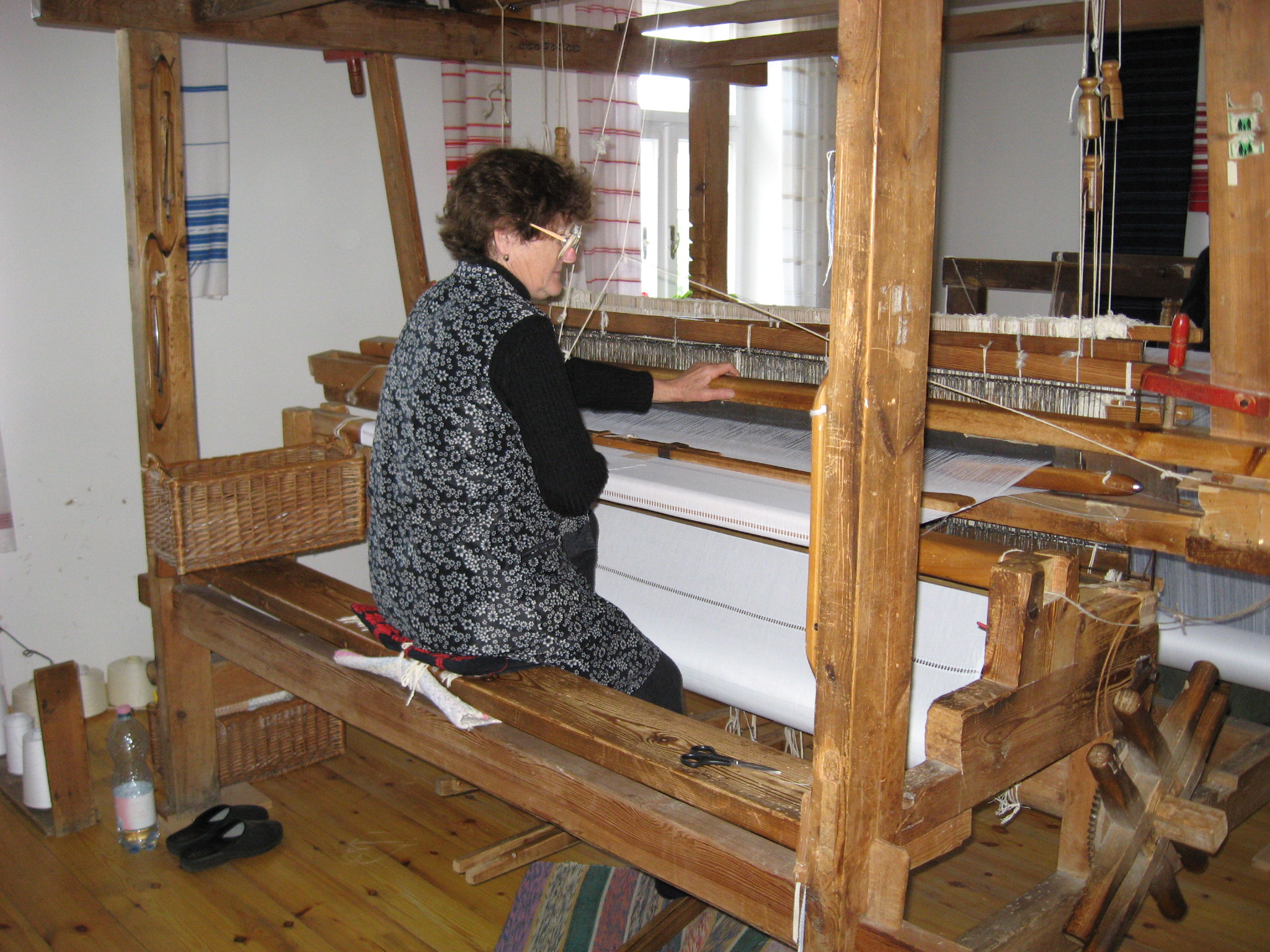
In the fall and winter months, all spent time at the loom http://upload.wikimedia.org/wikipedia/commons/7/72/Hand_weaving_loom.JPG . The children mostly observed.

Because there was no electricity, the household sat around a petroleum or carbide lamp in the evening and sang, read stories from books or newspapers, or worked at knitting or spinning, perhaps braiding onions to a pole, which were later hung close to the ceiling.

Before the days of the printed letters arrived, most of the evenings were spent singing, which often led to singing ‘wars’—if the singers grew restless. It was as a consequence of these long and ‘boring’ evenings with ‘nothing to do’ that the Latvian language and culture evolved. It was a female dominated culture of which the dominant Goddess was the Sun.

The Sun meant warmth, a welcoming smile, the dawn of the day, the mysterious ‘non-event’ of the noon hour (when anything could happen).  The Sun lived in the ‘other land’ (vinya Saule), where the dead went to live out whatever there was to the rest of their lives.

The Sun also became translated into other Goddesses, the chief of who was Laima, the Goddess of Fate and Fortune. When at an earlier time, I had to translate the name of the Goddess into English, and had not yet thought to associated Her with the Sun, I simply called Her the Dearest Goddess. It was She who was the midwife called for when a child was born: it was Laima who picked him-her up in a white towel and foretold what was to come. Marija Gimbutas, the late anthropologist, once wrote me a note in which she regretted that there was no way to make a more direct translation of Laima’s name, and that it was being lost.

While the official translation of the word for the ‘Sun’ is ‘Saule’, unofficially and on the subjective level, She was called ‘Saulihte’, which translates into English as ‘Dear’ or ‘Dearest Sun’—the latter manifest through a grammatical form used for endearments. Since before the introduction of letters and writing, Latvian (and all other languages) was an oral language, it was the subjective level that prevailed and dominated our forebears’ culture.

From what I understand, the Chinese letters may retain some of the subjhective nature of Chinese http://en.wikipedia.org/wiki/Chinese_characters .

As proud as people of modern times may be of their literature, literature does not stand equal to the oral culture’s ability to form culture: the subjective ‘endearing word’ creates a cultural world that stands on the opposite of the cultural world of the written and ‘legalized’ (officialised) word. Whereas in the subjective cultural world the ‘official’ or ‘straight’ word stands for the inflection of ‘naked’ reality into one’s language, the subjective cultural world never does without the ‘endearing word’.

We should make note, that the language used by our contemporary media and in our literature is always ‘officialese’, the culture it creates and maintains is plainly ‘scientific’ at best. As an example, when the Westernized homus (from homo) speaks of a ‘sunset’, which by now is as trite an image they come, my forebears used to say: “Dear Sun, wherever Thou goest, take with Thee a hundred endearments to my dear mother.”

It is unfortunate that today linguists and philosophers never point out this difference between subjective and officialise languages; and if any of these is ever primitive, it is the latter version. It is the denial of subjectivity that gives modern reality its secularist orientation.

Saw Cross https://blogger.googleusercontent.com/img/b/R29vZ2xl/AVvXsEjPI4FceVgDDSuUxIJcVFT6TfjBf6IQwE5T0nZB9xmrUUFmPppkD7WJte8Z2M4Hr6pCOlMRAGQ34oPcCr8n3WQK-j-acV7Yrd0kWyLS6qNQrRzzKrt2dsS-iDrr3GVqgtgSkpeSzXxbAc0i/s220-h/DSCF7743.JPG

Saturday, August 3, 2013

Eso’s Chronicles 196/ 6
A Hologram in Motion (6)
© Eso A.B.

At the time of death, the history of one’s life (really known only to one’s self and God) freezes into a hologram. This hologram then becomes the plaything of biographers if the deceased was an important enough personage to warrant further public interest. If more than one biographies are written, then each biographer is likely to make different associations between this or that past event and the actions it influenced the biographed personage to engage in years later.

On the internet there are many examples of ‘frozen’ holograms. There are also examples of moving holograms and bioholograms”: http://sangreality.weebly.com/helix-to-hologram.html The latter are particularly interesting, because they hint at the possibility that for all the killing that science and capitalism have helped expedite, it has also opened a door to a better understanding of Life and Mind, which is likely to be necessary in the near and medium distanced future as post-modern man faces up to the damage that he has done to nature and himself.

Historian Edmund Burke III, brings a sense of holography to history by taking ‘long duree’ history a step further and transforming it into ‘big history’ https://www.youtube.com/watch?v=EHROAmkOZ-w . The holographic perception of history is essential to, both, a better understanding of societal traditions and culture as well as to world peace outside the capitalist elite’s tendency to impose its views on the population by force.

An excellent example of how to ignore an old culture and devastate it in a very short time is my country of origin==Latvia. Following the collapse of the Soviet Union and the great hopes of the population to return to independence and all that this implies, the mythical Ugly American, supported by Latvian exiles from WW2 times, was imposed as the model to strive for. In a very short time, the Latvian political elites (often with extensive backgrounds as Soviet apparatchiks) downloaded the capitalist model, fully aware that the imposition of the model would come as a ‘shock’ to a populace acclimated to Soviet ways for forty-six years or about two generations, yet despite this was aware of its roots in ‘old’ history. The latter awareness was indeed what in the late 1980s and early 1990s activated the Latvian drive for independence.

In this case the model for the Ugly American was Harvard University’s School of Economics, led by professor Michael Porter, an avid supporter of competion as a model of economic growth. Without any direct experience with the culture that he was to lead into the abyss by his recommendation of ‘shock’ economic therapy, the professor and his team of economists recommended a rapid (‘shock’) elimination of Soviet institutions and an instant substitution (‘shock’) with capitalist institutions.

The results were what one could expect: the country reeled. Former communist officials with experience and access to Soviet institutions (= property) almost immediately formed rather large private enterprises and in the name of democracy took control of political institutions. Naturally, there was no call for revealing the names of the persons who had previously taken their orders and done the will of Moscow.

Strangely, the Latvian exiles and descendants supported this ‘shocking’ of their countrymen or the countrymen of their forebears in the name of ‘freedom and independence’. At the same time, hardly anyone returned from America (or other places in the Western world) to live in the countryside. Most of those who did return established themselves in the political sector or tried to establish a foothold in business for their corporate employers. Very few returned to the countryside or wanted to learn anything much about it--other than a decoration.

The result of this idiocy as reform was that over 300,000 Latvians (including emigrants from the former Soviet Union), some say more, left the country and are still leaving it. The total population once was over 2 million. Today the population is closer to 1.5 million. In fact, one may say that the people of the countryside were evicted from their domicile by the policies of the Latvian government in collaboration with America’s interests to push successor governments of the Soviet Union as much as possible to their knees. The result twenty three years later is that according to a recent survey, about 20% of the population more or less supports the government’s economic policies, while 80% see no economic improvements following the 2008 financial and economic crisis that was, for Latvians, a crisis on top of a crisis.

The divide between the Latvian people and their government may roughly be measured by the above percentages. This 20/80% split and the difficulty to sustain it in the face of a rapidly approaching collapse of government and the economy was recently illustrated by the government’s refusal to hold a referendum over whether the country was willing to accept the euro over their own lats as future currency. This refusal was an obvious governmental tour de force in using force to accomplish compliance with the capitalist policies of Harvard, and U.S. (also NATO) strategy to repress (in fact eliminate) the long duree or big history that was and remains ‘on the mind’ of the country (this writer including).

Not surprisingly, the weapon of priority for the government’s policy to remain in power has been to attack citizens of Russian descent as a major factor that is sabotaging a more successful access to prosperity. The Latvian media, too, largely corporate owned (no one knows who the owners of the Latvian newspaper ‘Diena’ in Riga are) collaborates in the destruction of what is a cultural hologram. Rule and divide is the clear  policy of the Latvian political, business, and media elite.


Monday, May 27, 2013


Esis's Chronicles 172
Origin of The Midsummer Fire
© Eso A.B.

This blog a ‘break’ in the regular series.

Johns Eve or the Midsummer Festival in Latvia is only weeks away. Here are some reflections on the significance of the festival by one who many years ago became an afficianado of the festival and has never been able to let go of an interest in it..

The sad truth about the demise of the Latvian Midsummer Festival is that it is not the result of Soviet repression (as many allege, but a consequence of the Latvian intelegentsia smothering its own communal roots by surrendering to the neo-Christian propaganda about God being a Being out of nature.


The smothering of this ‘day of the community’ has other sources as well. One cause is an overly tight hugging of Johns as a purely Latvian festival with no relation to anyone else. I remember the poet Imants Ziedonis, recently deceased, telling me that Latvians can be proud of being the only ones who wear oak leaf wreaths on their heads. I was surprised to hear this, because a wreath of leaves or flowers is an old tradition if one remembers the laurel wreath of the Greeks and Romans and poet ‘laureates’ http://en.wikipedia.org/wiki/Laurel_wreath .


Recently, while rereading Euripedes “The Bacchae” another image and potential source for the Festival came to mind.


When Dionysus (Yahnis in Latvian) comes to Thebes, many of the city’s inhabitants, apparently mostly women (once inhabitants of the wood, now starved for nature by the desert regime that is the city), join him in a bacchanal that winds up Mt. Cithaeron to a holy communal gathering place there. The name ‘bacchae’ originates in Bacchus, who is the Roman God of wine; however, Bacchus is a late replacement for the name of the Greek God Ion

The Bacchae are behaving orgiastically and apparently lewdly. Word of this gets to King Pentheus, who (also starved for nature) imagines the event as a pornography show. To better see what the women are up to, Pentheus climbs a tall pine that grows close to the grounds where the ritual is to take place. Unfortunately, the Bacchae see him, and climb the tree to pull the King down to earth.

When the King is down, the Bacchae fall on him and tear him into bloody pieces. Then everybody rushes back to Thebes, with an elderly lady leading the runners. The lady holds in her hand by the hair the head of King Pentheus. Only when the Bacchae reach the marketplace of Thebes, does the lady awaken to the fact that she is none other than the mother of the King.


The Bacchae, realize that a great tragedy has happened, and a great communal wailing ensues. Incidentally, the word ‘tragedy’ has its origin in the greek name tragōidia, “billy-goat-song”. Taking the behavior of King Pentheus into account, he may have been thought to be impersonating a billy goat. The Latvians have a folk poem, it goes: “Kaza kāpa debesīs, Dievam sūdzēt….” (The billy goat climbed up to heave to complain to God…) There is an ancient statue of gold that shows a goat on its hind legs chewing the leaves of a small tree. http://classconnection.s3.amazonaws.com/312/flashcards/134312/jpg/c9iwf00z1316047577614.jpg


Then the Bacchae hit upon a brilliant idea. Some of them rush back to Mt. Cithaeron, and go to the pine tree which had hid King Pentheus. The Bacchae dig around the pine until they have loosed its roots. Then they fell the tree, strip it of its branches, shorten the trunk somewhat, and carry the rest of the trunk back to Thebes.


Meanwhile, the Bacchae who have remained in Thebes have dug a deep hole in the ground. This is where the top of the tree is now placed, and the tree, with the aid of pulleys and pichforks, it is pushed and pulled until it is with its roots in the air, and stands in a vertical position. A ladder is then brought to the tree. The crevices of the roots are filled with tar and resin, and to the roots is secured the head of the King. (In later years the head of the king is replaced by the head of a sacrificial goat,) The roots are then put to a flame.


One may imagine that it is in this ceremony that we must seek the origin of the image of the head of the Medusa http://www.bbc.co.uk/history/ancient/romans/images/gal_mosaic_head_medusa.jpg and/or the Latvian Midsummer wreath http://news.bbcimg.co.uk/media/images/61207000/jpg/_61207060_man_oak_wreaths_afp624x351.jpg .


Monday, March 22, 2010

© Eso Antons Benjamins, aka Jaņdžs

THE NOT-UNTHINKABLE  
93 A Story of Clever John and Crazy Jane (2)

An old Latvian story retold. For the original see
3.A.327.B.460. A.K. Bramanis Rīgas apg. LP,V,36 (3,1).


The following links lead you to think of life with a different entry point in time than the machines that we have made to roar around us enter us in. I recommend you listen and see the links in the sequence as below before reading the story.
http://www.youtube.com/watch?v=RxIroakIXto
http://www.youtube.com/watch?v=g50iAWTJF3M&feature=related

The Second Leg of the Journey. After she was done chopping heads, the Mother of the Devil was out of breath and took a rest. This was time enough for the seven brothers to jump out the window of the hay barn and run to the stall for their horses. They then rode like hell was on fire. The boots on the horse of Clever John carried him to the head of the pack.

Half-way home though, Clever John had an idea. He reigned in his horse and waved for his brothers to stop.

“Good brothers,” said Clever John, “we are out of danger. The Mother of the Devil will not catch up with us now. But you know, I have not seen the Sun come out once today. And it has been raining without a stop. Let us go visit the Sun and ask her why She did not come up on Johns Day. Maybe something is wrong”.

“Are you crazy, man?” All the six brothers spoke as one. “We just escaped from the Mother of the Devil and are lucky to be alive. We want to go home.”

“I am smart—as always,” answered Clever John. “I saved you your lives once, and I will save them again. Trust me. Let’s go. It will be alright.”

“You are crazy all the same,” the brothers retorted again in unison. “You promised us brides, and here we are still bachelors. You have no more smarts in your head than the black behind your nail. We are riding home. Who knows where those crazy boots on your horse will take you.”

So it happened that Clever John continued his journey through the world on his own. His horse seemed to know where it was he was to go. They rode on for a while. After a while Clever John decided that it was enough for the day, so he stopped. He took the boots off his horse, tied its ankles to each other, and then found himself a hay stack to sleep through the night.

The next day, after he had dressed his horse and they had traveled to about midday, they came to a tall pine not too far from the road.

At the tip of the pine tree sat a raven and cawed: “Where you going, Clever John?”

“I am riding to ask the Sun why this is the second day that she is not shining,” answered Clever John.

"Ai, be so good, Clever John, and ask the Sun for how long am I going to be tied to this tree.”

Clever John continued on his journey. On the following day he came to a sea. He saw a big fish there. One side of the fish was tied to the shore, the other side was bathed by the sea.

The fish spoke up and said to Clever John: “Where you going, Clever John?”

“I am riding to ask the Sun why this is the third day that she is not shining,” answered Clever John.

“Ai, be so good, Clever John, and ask the Sun when she will untie me from the sea and the shore.”

On the fourth day Clever John came to a river. To his surprise, he saw Crazy Jane standing up to her knees in the river with a bucket in her hand. As soon as Crazy Jane had filled the bucket, she poured it out again. She did it tirelessly, bucket after bucket.

“I was wondering what happened to you, Jane,” said Clever John. “What are you doing here? I thought that you were dead.”

“The Devil’s children have ways of coming to life again,” answered Crazy Jane. “I will tell you as it is. This is my punishment from my mother for trusting you with her and my secrets. Where you going, Clever John?”

“I am riding to ask the Sun why this is the fourth day that she is not shining,” answered Clever John.

“Ai, be so good, Clever John, and ask the Sun when she will allow me to stop bailing water?”

By the fifth day, Clever John arrived to the Sun Mountain and rode up as high as the mountain was. No guards stood at the gate. There were just the usual bells at most gates and other entrances. One has to shake them themselves. Clever John rang the bells.

The Sun came to meet Clever John Herself. She brought him to sit in a large chair and put around his shoulders a thick coat of a black bear fur. After just a few minutes Clever John was perspiring as if he was a rain cloud. To help him, one of the daughters of the Sun brought him a glass of lemonade.

The Sun asked the first question: “Clever John, where are you going? It is five days since the skies are cloudy, and I cannot see what is happening on Earth.”

“That is what I came to ask you about,” answered Clever John. “You just stuck out a few rays on Johns Day morning, and then went away. We were sad to see the rains come.”

“Oh, I know, I know,” answered the Sun. “But clouds also have their place. Your brothers seemed hardly concerned whether I rose in the morning or not. Perhaps the weather will clear up by tomorrow.”

“Thank you, Mother Sun,” said Clever John. “The raven asked me to ask you for how long must he be tied to the pine tree.”

“As long as it is necessary,” answered the Sun. “He will be tied to the tree as long as the room cleaner’s child lies dead and unburied there. Once the child is buried, the raven is free to go.”

“Thank you, Mother Sun,” answered Clever John. “The great fish wants to know for how long she will be tied to the sea and the shore?”

“That will be a long time,” answered the Sun. “It cannot be any other way. However, if you know of a way to untie it, then go ahead.”

“Thank you, Mother Sun,” answered Clever John. “Crazy Jane, the Mother of the Devil’s own daughter, wants to know for how long she must bail the river.””

“That can be an endless task,” answered the Sun. “She must answer the question why she stole from her father his boots and gave them to you? If you return them to her, she is free to go, none the worse for the wear.”

Clever John is sweating under the bear mantle. As soon as the Sun finishes speaking, Clever John springs to his feet and with many bows to toward the Sun, he leaves the court going through the gate backwards.

Clever John’s last words to the Sun are: “Thank you again, Mother Sun, for receiving me.”

Clever John then jumps on his horse and makes it down Sun Hill as fast as the horse can. At the foot of the hill, Clever John is so exhausted that he decides to spend the night where he is. The mantle of the black bear now comes in handy.

The following day, Clever John meets Crazy Jane again. He takes the boots of his horse and hands them to her. “The Sun said that if I gave these back to you, you are free to go.”

“No, I want the other pair, too,” said Crazy Jane. She makes Clever John take off his horse the other pair of boots it is wearing as well. As if by magic, Clever John discovers that he is standing in his bare feet now, not much of prince anymore.

Crazy Jane thanks Clever John. “Clever John,” she tells him, “I love you this moment more than ever. If you ever need my help, just call my name, and I will come running.”

That same day Clever John comes to the sea and the great fish. He pats the fish on the back, gives it a hug, and whispers into her ear mystical numbers and magic words.

The fish thanks Clever John. “Clever John, if you ever need my help just call me, and I will come swimming.”

Clever John meets the raven next. He looks for and finds under the pine tree the body of the unburied child. He buries it. The raven flies off, cawing after her: “Clever John, if you lever need my help just call me, and I will be there.”

(Next blog is the third part of Clever John’s journey.)

Asterisk & Notes of Interest:
On  material depravation in Latvia.
On the theme of “more-equal-than-others”, see Orwell's "Animal Farm".
A recommended read: “The Theory and Practice of Oligarchical Collectivism” by Emmanuel Goldstein (A book within a book from George Orwell's "1984").  
Of great interest to me is this and like articles http://www.boston.com/news/globe/ideas/articles/2003/09/28/coca_politics/  . It presents some of my reasons for supporting the growing of Johns Grass in Latvia.

These blogs tend to be a continuum of an idea or thought, which is why—if you are interested in what you read—you are encouraged to consider reading the previous blog and the blog hereafter.
Partial entries of my blogs may be found at LatviansOnline + Forum Home + Open Forum –ONLATVIANPOPULISM vs LATVIJASLABEJIE. If you copy this blog for your files, or copy to forward, or otherwise mention its content, please credit the author and http://esoschronicles.blogspot.com/  

Friday, March 19, 2010

© Eso Antons Benjamins, aka Jaņdžs

THE NOT-UNTHINKABLE  
92 A Story of
Clever John and Crazy Jane

An old Latvian story retold. For the original see
3.A.327.B.460. A.K. Bramanis Rīgas apg. LP,V,36 (3,1).

For transition from proto-Latvian Kingdom of Jersika to modern state of Latvia (the image of which is currently under the direction of what can best be described as the Chicago School of Latvia) see blogs from 58 on.

The following links lead you to think of life with a different entry point in time than the machines that roar on our streets and over our heads. I recommend you listen and see the links in the sequence as below before reading the story.
http://www.youtube.com/watch?v=RxIroakIXto  

http://www.youtube.com/watch?v=g50iAWTJF3M&feature=related


Introduction. Once upon a time there were seven brothers. The seventh brother, the one who was the youngest, was the cleverest. This is why his brothers called him Clever John.

Even while he was very young, Clever John called his brothers together and said to them: “You know, guys, I know where there lives a mother with seven daughters. These are going to be our brides. Still, do not get married until I grow up.”

The brothers of Clever John thought it over and agreed to wait. After all, one could have fun while waiting. The village had many young women, and few were shy.

The time went, and it did not seem so very long before Clever John grew up. He then called his brothers together once more and said to them: “Guys, the Summer Solstice Festival, Johns Day, will be here day after tomorrow. You know how important this day is. There will be a big to do as all wait for the Sun to rise. We all know what will happen if She does not rise. Anyway, there will be a large crowd and a big dance at the Waysiders Inn on Johns Eve. The seven daughters that will be our brides will also be there. Now let us saddle our horses and off we ride.”
“Nice idea, Clever John,” answered his brothers, but where will we find seven horses. We don’t even have one.”

“No problem,” answered Clever John. “Go catch me seven crickets and I will fix it.”

The brothers looked at each other as if to say “Just listen to this, guy”. On the other hand, Clever John had done many clever things in the past, and perhaps this was going to be another one of those times. So, they went and caught seven crickets, stuffed them in a sack, and brought them to Clever John.
The first leg of the journey. Clever John looked into the sack, counted seven crickets, and invited his brothers to follow him to the sea.

When the brothers had come to the sea shore, Clever John opened the sack and shook the crickets into the shallow water that lapped the shore there. The crickets kicked around in the water for a while, and then one after another went limp. It seemed that they were about to die, if indeed they were not dead already.

One of the older brothers of Clever John was about to start laughing, thinking that Clever John had pulled off a joke on them, when, suddenly, the crickets started to shrivel and drew themselves into something that looked like seven pinheads. Then the pinheads began to grow larger again. They grew and grew into ever larger bubbles, until one could discern inside each bubble a horse. When the bubbles burst, out of each one of them stepped a horse in full saddle. The brothers, too, discovered that they all had a new suit and new riding boots.
“Well, did I not say that this will happen? And is it not so?” asked Clever John.

He was wasting his breath, however. His brothers had already mounted their horses and were at a full gallop over the dunes and unto the road to the Wayside Inn. The sea gulls barely had time to call to them good bye before they were out of sight.

Clever John was left with the seventh horse. He jumped into the saddle and was ready to ride, but discovered that because the bubble that his horse came from had burst a prematurely, his horse was smaller than the others. This is why Clever John could not ride as fast. Came evening, Clever John had still not caught up with his brothers, who, no doubt, were already at the inn and celebrating Johns Eve. It was the custom of the land that if on Midsummer’s Eve a man promised a woman the blossom of a fern and sunshine in the morning, the women could hardly refuse the men whatever it is they asked of them—come rain or sunshine.
So, this is what happened. By the time that Clever John reached Wayside Inn, it was already the morning of Johns Day. The Sun rose, discovered that no people had come out to greet her. None stood on the hilltops or had the Johns fires still going when she rose. She drew a peak through the windows of the Wayside Inn and discovered that everyone but one had had so much fun the evening before that everyone but one was asleep. Apparently, as soon as the six brothers of Clever John had arrived at the inn, the dancing had begun for real. The wife of the establishment owner, known as the “Mother of the Devil himself” had not spared on the beer. Her daughters, the waitresses, had not only served the beer to the customers, but had allowed themselves a portion. When Clever John opened the door to the inn, he saw that what had taken place was not only a Yandahls (Johns Dance), but a wedding. Everyone lay about where they had fallen.
In a far corner of the inn sat Crazy Jane. She was the oldest of the mother’s seven daughters. Clever John’s brothers, thinking her less pretty than the others, had left her for their youngest brother. There was no question, that Crazy Jane was lanky and flat chested. On the other hand, just as Clever John opened the door of the inn, the Sun cast on her one shaft of light, upon which Crazy Jane raised her eyes and saw Clever John. She knew she had not waited in vain.

As for Clever John, he was no dummy. “There is nothing to be sorry about,” he said to himself. “I will take what is left for the taking. The more she is lanky, the more she will bend.”

Crazy Jane invited Clever John into the inn. In the kitchen she baked him bacon and eggs, and served it on a plate with caraway cheese and beer. Then she sat down across the table from Clever John and asked: “What took you so long, Clever John?”
“My brothers played a joke on me,” replied Clever John.

“Yes, my mother told me,” answered Crazy Jane. “She saw what happened. She told me to wait up for you. We plan to reward your brothers for not waiting up for the Sun.”

“I will be much obliged,” answered Clever John. “I think that you are so beautiful, you can come live with me. I am the owner of a big inn. I have a stall full of horses.”

Just then Clever John’s six brothers and their brides started awakening. The brothers put on their hats and went out to the stall to take care of their horses. Outside the rain was pouring. Perhaps the Sun was crying. While the six brides fixed up the inn, Crazy Jane invited Clever John to her room to rest a while. She lay down beside him and whispered a secret into his ear. She also gave Clever John a warning. It was about how she and her mother planned to give the  brothers their reward. Clever John thanked Jane for the information and went to sleep.
When Clever John awoke, Crazy Jane had prepared a surprise for him. On the table beside the bed, Jane has set for John a fresh neck scarf. On top of the scarf was a gold ring, and next to the bed stand a pair of new riding boots.

Crazy Jane then told Clever John that she had stolen the boots from the Devil himself. Then, as if to prove that along with this story, she was indeed a little crazy, Crazy Jane told John not to put the boots on his legs, but on those of his horse.

“With boots on, the horse will carry us both off to our honeymoon,” she told John.

“Alright,” says Clever John. “That will be some ride.” He then puts on the neckerchief and the gold ring that Jane has set out. When Crazy Jane looked at John, he looked just like a prince. Crazy Jane was so thrilled that she gaveClever John a big kiss. Clever John kisses her back.
After a while Clever John remembered that he, too, must take care of his horse. However, instead of putting on either his own or the Devil’s boots, he cleverly dressed as was the custom on Johns Day--he put on his feet bark loafers. In each hand, he carried a pair of riding boots.

“When one is strong and another is weak, both are strong,” whispered Crazy Jane into Clever John’s ear as he went out the door.

On his way to the tall, Clever John meets with his brothers who are coming back from the stall. They come toward him whistling, and then one of them greet him. “Hey, Clever John, what are you going to do with those boots? Are you going to put them on that nag of yours?” All the brothers break out in a laugh. Ha, ha! But only Clever John knows what the boots are really for.

Another brother hm-m-med and asked: “Did you ask Crazy Jane how many men have stretched her before she got so long?”
While everyone laughed, Clever John winced.

“You dumb horseflies,” said Clever John as he then turned to his brothers. “What would you do without me? Do you have any notion of what awaits you tonight?”

The six brothers took control of themselves and gathered around Clever John. “What’s this? What can happen to us? Our brides are like honey covered strawberries. Are you jealous of us or something?”

Clever John then begins to explain: “Look, my dear brothers. The innkeeper-es is no innocent angel, but the Mother of the Devil himself. She is so angry with you for falling asleep last night that she would as soon as….” Clever John draws a finger across his throat. “More over, her daughters have only been pretending. They would probably like to strangle you.”
“What kind of dumb horseflies do you think we are?” said yet another brother. “Our brides purred us to our sleep last night, and look! We are alive.”

“Yes, and they now have proof just how much you honor the Sun.”

The brothers stood as if transfixed. “Men, we are into big doodoo,” said the very oldest of the brothers.

“Here is my plan,” then began Clever John. “Listen! When the Mother of the Devil invites us to sleep in the hayloft and bids us good night, she will give each one of us a kiss, so we all think that she is so very nice. She will hand to each one of us a nightcap, which we are to put on our heads during our sleep. She will give a wreath of flowers to each one of her daughters.”

“Nothing wrong with that,” said one of the skeptical brothers.
“That is not all,” said Clever John. The Mother of the Devil will tell her daughters to sleep along the rafters of the loft, while we are to sleep in a row on the outside.”

“So? What’s wrong?”

Clever John put down the boots, put his hand into his pocket and pulled out six cream of milk candies. “Don’t you suck on these,” he tells his brothers, “but give these to your brides. Tell them it contains a  special love potion. They will go for it. Actually, along the cream is mixed with a sleeping potion and your brides will soon be snoring. When your brides are snoring, put your nightcaps on their heads and roll them into your place on the outside row. Then put their wreaths on your heads. This is no joke, else you will not stay live.”

“Can we roll the sisters while we’re still awake?” asked one of the brothers. Perhaps he wished to be smarter than smart, but he got no answer.

Clever John looked around to make sure no one overheard and then told his brothers something that made them see black smoke and doom. Their eyes opened wide. Yes, that is something that one better not kid about. Of course, it is difficult to believe what Clever John is telling, but one never knows for sure. Maybe it is for real.

It all happens as Clever John has foretold.

A few minutes after midnight the barn door creaks open, and up to the loft came the Mother of the Devil. She held in her hands an axe that was wide as the length of two feet put end to end. And then she proceeded to chop off all the heads of all who lay along the outer edge right edge of the loft with nightcaps on their heads.

It is in this way that the Mother of the Devil cut off the heads of all her daughters—including the head of Crazy Jane, the Mother of the Devil’s eldest daughter. Clever John had been so clever that he had made Crazy Jane believe that she would be his bride. Of course, this was not fair. After all, was that not a great secret that Crazy Jane had entrusted Clever John with? Was that not true love?

We now see--don’t we?--of how it is with true love sometimes.

(In the next blog the second part of Clever John’s journey.)

Asterisk & Notes of Interest:
On  material depravation in Latvia.
On the theme of “more-equal-than-others” George Orwell's "Animal Farm"
A recommended read: “The Theory and Practice of Oligarchical Collectivism” by Emmanuel Goldstein (A book within a book from George Orwell's "1984").  
Of great interest to me is this and like articles. It presents some of my reasons for supporting the growing of Johns Grass in Latvia.
These blogs tend to be a continuum of an idea or thought, which is why—if you are interested in what you read—you are encouraged to consider reading the previous blog and the blog hereafter.
Partial entries of my blogs may be found at LatvianOnline + Forum Home + Open Forum –ONLATVIANPOPULISM vs LATVIJASLABEJIE. If you copy this blog for your files, or copy to forward, or otherwise mention its content, please credit the author and http://esoschronicles.blogspot.com/  

Thursday, March 4, 2010

© Eso Antons Benjamins, a.k.a. Jaņdžs

THE NOT-UNTHINKABLE  
87 Gridlocked In Latvia (6)

Photos: A shelter to be at "Melnays Jānis", a temple to forests now gone.

“The imprisoned Russian oil magnate Mihael Hodorovski suggested a bloody uprising in Russia if the excesses of the criminal system [of government] are not circumscribed [by the government]. ‘Such an eruption may be caused by almost anything’, opines the former ‘Yukos’ magnate in the [Russian] newspaper ‘Nezavisimaja Gazeta’. Hodorovski was once the richest man in Russia.” So reads the post at the DELFI website, which subscribes to the news service LETA.

One almost instinctively knows how much schadenfreude such a prognostication brings to many Latvian ears. Vo! Yes, this would be a great comeuppance to the brash and sometimes narcissistic Prime Minister of Russia, Putin, who appears to have maintained his former influence over the future of Russian politics. Hodorovski is especially incensed over the petty corruptions engaged in by low caste officials in the Russian government system.

I suspect that few or no readers will agree with my sympathies, which are, in spite of his personality, with PM Putin. Putin appears to have determined that what Russia needs at this time in its history is an authoritarian government. And he is pursuing that policy as determinedly as President Karlis Ulmanis in the 1930s pursued it in Latvia. While Putin’s premiership put him in a position where his voice will be listened to by Russia’s President Medvedev, his successor to the presidency, and the Duma, he has maintained the appearance of being in support of Russia as a democracy.
If we assume the latter, then Latvia is today in much the same situation as Russia. In spite of an endless series of patriotic speeches by Latvian politicians and candidates to government positions, Latvia, too, is beset by petty officials, who use their government posts to personal advantage. Moreover, Latvia has its share of oligarchs who sympathize with said Hodorovski and wish Latvia to pursue shadowy neo-capitalist policies which maintain its supporters in a position of being “more equal than others”. Since seeming wealth (all that glimmers) still appears to lie in the West, the vision of Latvian politicians—such as it is—if to pursue the path of least resistance, i.e., by way of a “drang nach Westen” and “flicht von Osten”. It hardly seems that the ruling neo-capitalist “ideology” is set to take advantage of Latvia’s geopolitically important location and make something of it.

The governments of Russia and Latvia are in a near equal bind. Both states are drifting toward the rapids, which we may call “The Mill of Hell.” No less determined to save the Latvian state from bodies floating in the water below the rapids than Putin is Prime Minister Valdis Dombrovskis of Latvia. Like Putin, Dombrovskis has not only the oligarchs to contend with, but the petty officials of Latvia’s regions and municipal administrative centres known as “novadi”. The latter, stitched together of older and smaller administrative units known as “pagasti”, are bucking the new system, because government sponsored administrations that can be turned to personal enrichment are suddenly very much fewer. Like Russia, the Latvia state is interested in using the modern communications apparatus of wheels and internet technology to compensate for the disadvantages of staying a century or more behind the rest of the world in terms of administration. Having said this, Latvia’s Dombrovskis has no vision that could justify his becoming an authoritarian, who like Putin would make something of the country and its cities something more than transit point for airplanes, producers of logs, glass fibre and nails.
Which brings me to mention a popular weekly show known as “Kas notiek Latvijā” (What is happening in Latvia?). The interviewer on the show is Jānis Domburs, and he frequently interviews as many as ten individuals who either are of the government (politicians, ministers, economists, and representatives of NGOs) or experts relevant to the question of the evening. The participants on the show sit in a semicircle focused on the interviewer. The show, known popularly as “Domburs Show”, is on the air since 2001. There is no question of the show’s popularity, because Mr. Domburs frequently tries to pinion evasive politicians to receive better than evasive answers.

Yet the show has a problem because of its popularity: it has no counterpart with regard to the rest of the people relevant to Latvia as a community of peoples. Call it an image problem or a question of how to project a community of 2.3 million people who at the same time have their own smaller community groupings. This is not to say that there are no interviews in Latvia with figures affecting Latvia’s culture and community as a whole. However, the dominance of “Kas notiek Latvijā?” tends over time to present political figures as representing a note worthy community, while the larger community and communities of Latvia escapes projection or attention.
If we combine the singular attention given to the community of politicians and their ilk, most with strong neo-capitalist leanings and ideology for the ego driven, no vision of the future, and no questions of “What Latvia should aim to become”, the “Dombur show” itself has come to project the main events in Latvia as a flight of wealthy rabbits well trained in evasive tactics from a hungry fox with a limp leg.

What is happening in Latvia? My personal answer is that the deforestation of the land that is quickly leading to its desertification is the main event. The next important question for me is What is in store for Latvia in the future? What is the vision thing? Since the community of politicians are evading the answer, the answer must come from an authoritarian figure. As Latvians today know, they are lost in a big forest. They need to find their way out of the forest not by following the leadership of a hundred directions provided by the present Latvian government, but by displacing the community of politicians who bring to the community terror through psychological uncertainty.
The transition to a new government may be accomplished by a successful “not-vote” campaign, which will force the government to resign or declare itself a dictatorship. IMO an authoritarian government is preferable to a dictatorship. Given the overall performance of authoritarian Karlis Ulmanis, I do not believe that in spite of numerous faults, K. Ulmanis ever became a dictator. I believe that the Latvians of today can control this process equally well (and probably better) by limiting the authoritarian regime to, say, eight years before the next elections. After all, a majority community not-vote is a political reverse Nelson on politicians who would deny the people the last word, no? Not to act on the not-vote means continued stagnation.

Asterisk & Notes of Interest:
It is obvious that the mindset among the Latvian political elite at this time is not only gridlocked, but has turned to stone. These blogs are, for one, an attempt to loosen the rusted in screws with some naval jelly. Click here to discover the meaning of the Overton Window, and here to see what purpose it serves.
On material depravation in Latvia.
A recommended read: “The Theory and Practice of Oligarchical Collectivism” by Emmanuel Goldstein (A book within a book from George Orwell's "1984"
Of great interest to me is this and like articles. It presents some of my reasons for supporting the growing of Johns Grass in Latvia.
These blogs tend to be a continuum of an idea or thought, which is why—if you are interested in what you read—you are encouraged to consider reading the previous blog and the blog hereafter.
Partial entries of my blogs may be found at LatviansOnline + Forum Home + Open Forum –ONLATVIANPOPULISM vs LATVIJASLABEJIE. If you copy this blog for your files, or copy to forward, or otherwise mention its content, please credit the author and http://esoschroniclnes.blogspot.com/  

Sunday, February 28, 2010


© Eso Antons Benjamins, aka Jaņdžs
THE NOT-UNTHINKABLE  
86 Gridlocked in Latvia (5)

This blog removed on 2013-01-27.


Saturday, February 27, 2010

A MESSAGE, PRE-BLOG 86
http://esoschronicles.blogspot.com/ 
Election speeches are beginning in earnest.

In the next blog (86) I will respond to S. Elertes speech in the USA.
Here is a picture of a young Latvian mother and her child.

I am using the picture with her permission, but a request
to respect her anonymity. A quick fact: Young woman and child
presently have to make do on Ls 38 = $ 76 (state support)
+ 7 kilos dry macaroni, 7 kilos flour, a few other items allotted by the municipality
+ plus home made conserves of tomatoes, and a few other items.
I have made a contribution that may help increase her monthly income
by Ls 45 ~ $ 90, i.e., total of Ls 83 or $ 166.
Now please go to Blog 85.

Friday, February 26, 2010

© Eso Antons Benjamins, aka Jaņdžs
THE NOT-UNTHINKABLE  
85 Gridlocked in Latvia (4)

I have observed the aforementioned virtual family (see Blog 84) for many years. I find similar cases to family X everywhere I look.

This is because, unfortunately, over the last twenty years the economic situation in Latvia has not improved. I do not consider a new refrigerator necessarily an improvement in quality of life, though it is undeniably a material acquisition not possible in Soviet times. A difference between then and now is that while twelve years ago when I first met some of X family members, the children where by that much younger and by that much more hopeful. Today four of family X’s six children have left Latvia to seek greener pastures (jobs) in other countries and whatever hope existed in the first ten or so years of Latvia’s renewed independence has been replaced by merciless cynicism about government and despair over the negative turns (lack of a job, minimal income, poverty) in one’s personal life.

Family Y, of who I will write about next, describes the vale of tears of a number of virtual people. In other words, what follows is a conglomerate.
A virtual neighbor of mine just told me that he has been waiting for a year and a half for the authorities to register five of his cows so he can take them to the market, but no word yet from the agency responsible for the registration. When Y calls Riga and asks what the hold up is, the answer he receives is that “everything is okay, just wait for our letter”. Meanwhile, the man cannot sell his cow or cows to the market and he is broke. A kilo of cow brings in 40 santimi, thus a 500 kilos of cow or bull x 40 = Ls 200 – ~Ls 20 (in taxes) = Ls 180 (~$360). However, the cash from the slaughter house does not arrive right away, because the law permits three month before payment. Assuming that my virtual neighbor sold all of his five cows, he would earn approximately Ls 900 (~$1800). Divide $1800 by 24 months waiting time for the papers (never mind the time and expense it took to raise the cattle) = ~ Ls 75 per month / 30 = Ls 2.5 ($5) per day. I am no mathematician, but…. Is this worth getting up at 4 a.m. and go to the barn and take care of the animals?
There are several answers to those who cannot for one reason or other emigrate: 1) a bottle of “krutka” to forget the troubles; 2) find a rope to go hang; 3) bite your tongue when daughter becomes a prostitute or runs off to Pakistan; 4) think becoming violent; 5) you add your version to the aforementioned. Interestingly, the grandfather of virtual farmer Y in K. Ulmanis era (1934-1940) owned a profitable horse and stud farm in Abrene. The Soviets sent grandfather and father to Siberia, where neighbor Y was born. After Stalin died (1953), neighbor Y’s father was allowed to relocate to Latvia.

When said virtual neighbor’s wife (from who he is long separated, but not divorced) went to the village administration to request government aid (she worked for years as a cook at a local school—until it was closed last year), she was refused aid. The reason given was that, well, your husband has five cows and some pigs, so you are not destitute yet.
How do these “virtual” people get by? I frankly do not know. When my virtual neighbor’s sow (a very important animal, because she can bear piglets) got sick, and my neighbor broke out in cold sweat because he could not afford to call the vet, we extended our barter agreement, and he now shovels my yard and driveway when I am snowed in.

Not long ago in a village—not too far from where I live—an A-frame house caught fire. It was probably due to an overheated stove. Yes, there were days here when the temperatures dropped to -30C. The village administration could afford no more than Ls 150 (~$300) to give the woman who owns the house. Ostensibly the money was for rebuilding the roof of the house.
Yet another virtual neighbor, a man who is in his prime has not left off alcohol for years. This is what happens when you work to get out of the hole, but as soon as you reach the rim of the crater, you—like Sisyphus—fall back, and are forced to dig yourself repeatedly out of the hole all over again. It should surprise no one if the day comes when the man lights a candle for himself (as one virtual man I knew did) and…good bye. Indeed, Latvia has no mountains to climb, but has plenty of craters. When recently a fictitious meteor “dug” a crater not too far from where I live, I suspect that it was not dug to advertise a mobile telephone company as the media insisted. I would argue that while the phone company did pay some men to do the dig, they dug the ridiculous crater as a work of love, because the crater projects a meteoric "rise" of despair that has visited their community.
During our conversation my virtual neighbor also mentioned that on television news, he saw the minister of education being interviewed on television upon her return from the Olympic games in Canada, but could not name the Latvian athletes who had won medals at the games there. We both had a laugh, but we did not laugh over the news that the Latvian Prime Minister was to attend the games later in the week, too.

Last, but not least, as economists know, one cannot invest money into new projects or realize plans if one is forced to become a slave to debt. Instead, debt slavery produces anxiety and anger, both public and private. If there is no money to pay for the minimum necessities and if one finds one’s self in a hole already, the resulting anxiety will not help improve the situation. One will—like a plant sown in a season of too much rain—rot. So will a nation. That is presently the case with Latvia. And though our neighbors see this (not in my unkind words), our own haughty http://www.apollo.lv/portal/news/articles/195326 government pretends not to see, which is one good reason for letting it go.

Asterisk & Notes of Interest:
TO THE LATVIAN VOTER: While a “not-vote” is not a cure all, it is 1) a step toward choosing and then setting up a program for achieving a realistic future; 2) it helps exit the simplistic mechanics of a dysfunctional community so reduced by politics as usual; 3) it refuses to keep the current “death spiral” (political, economic, demographic, you name it) under wraps and presents it as an emergency it is; 4) it reintroduces charisma as an essential element for the survival of Latvia. Come October 2, 2010, cast a NOT-VOTE. No amount of votes cast for any of the parties now campaigning will result in improvements in the peoples lives whatsoever. Indeed, it will make things worse, because the government’s dysfunction is endemic. Yes, we know the argument that the Latvian constitution provides that even if no more than a thousand people vote in the elections, the government may declare itself legitimate. However, if the majority of the 700,000 eligible voters cast a “not-vote”, everyone will know that the government has no other options than either resign or declare itself a dictatorship. There is no other way to a viable future than through a not-vote; or as the French writer Genet put it: [Else] nous ne sortirons jamais de ce bordel..  
It is obvious that the mindset among the Latvian political elite at this time is not only gridlocked, but has turned to stone. These blogs are, for one, an attempt to loosen the rusted in screws with some naval jelly. Click here  to discover the meaning of the Overton Window, and here to see what purpose it serves.
On material depravation in Latvia.
On the theme of “more-equal-than-others” see George Orwell's "Animal Farm"
A recommended read: “The Theory and Practice of Oligarchical Collectivism” by Emmanuel Goldstein (A book within a book from George Orwell's "1984").  
Of great interest to me is this and like articles. It presents some of my reasons for supporting the growing of Johns Grass in Latvia.
These blogs tend to be a continuum of an idea or thought, which is why—if you are interested in what you read—you are encouraged to consider reading the previous blog and the blog hereafter.
Partial entries of my blogs may be found at  LatviansOnline + Forum Home + Open Forum –ONLATVIANPOPULISM vs LATVIJASLABEJIE. If you copy this blog for your files, or copy to forward, or otherwise mention its content, please credit the author and http://esoschronicles.blogspot.com/