Showing posts with label summer solstice. Show all posts

Friday, May 2, 2014

Eso’s Chronicles 337 / 13
Odds and Ends 
© Eso A.B.
All comments appearing within brackets [ ] are editorial in origin.

FOR CITYZENS—A TIME TO PAY (2)!

If the last blog (336) left off with the discovery of the husband of Baba Yana as being Santa coming back on winter solstice for more of the amanita muscaria brew cooked by his Chez Baba Jeza, we begin this one by adding that Santa comes back on Midsummer Eve also with the name of John.

I also mentioned that a remnant of the word ‘jezu’ may be found not only in Old Chech or Polish, but also in the Latvian word for ‘a mess’--kheza or yezga—it is also found in the French word for ‘house’, re: chez as in chez vous or ‘my house’.

In other words, looking to find the meaning of Baba Yaga (in the process of discussing the Bogomils), we wandered into a pareidolia of associations, the most significant of which is the name of Jesus, who I suggested (also in the previous blog) was the famous healer and husband of Baba Yag(n)a (or maybe Uga), who now (in our secular times when medicine is monopolized by ‘doctors’) runs the famous restaurant Chez Jezu (unholy mess of tasteful dishes), whose cook on one occasion made such a potent potion of medicine that he flew right out the chimney of his alchemy lab. Because Baba Yaga got good and angry on that occasion [she actually became enraged http://en.wikipedia.org/wiki/Baba_Yaga (make sure you read the fairy tale about the three Baba Yagas at the link)], Jezu now dares come back to Earth only as Santa Claus on Christmas time and John on Midsummer Eve. No doubt, that is one reason there are so few good cooks around these days, what with most knowing how to cook only hot dogs and rat meat hamburgers.

When Chez Jezu goes to visit his three Baba Yagas (yes, Santa has three wives), he makes sure that he has with him appropriate gifts. If he does not have gifts, his wives are sure to detect the smell of his russkim dukhom (Russian sweat) and get ready to throw him out of their chez vous (just make sure it is not you). As the fairy tale tells it, Jesus’ third wife became hungry enough to want to get Jezu caught immediately, and he was saved only because she first went to whet her teeth and nails to better tear and devour him.

As we live in a time of inflation and ever increasing prices, Abu Jesus [Abu is the male version of Baba and may once have been the name of the devil, sataniel)] and his dwarf apostles or Chabas are known to been creating (at least dreaming about it) an exceptional gift for the future--no taxes. For this reason, all three Baba Yagas are eager to get hold of Jesus (even if elsewhere he is known as John or Ivan). He better be wary!

Chez Jezu is the name not only of some famous restaurants, but often stands for the name of its cook—Cook Jesus, aka Chez Jezu. Thus, when come Christmas and Chez Jezu comes to visit his wifes, he comes not only to get from them a new supply of Amaritas (red capped mushroom with white dots on its red cap), which Baba Yaga gathers during the summer and fall seasons and then dries on a string that she strings on the ceiling above her stove, Santa Jezu makes sure that he brings her a gift worth calling a gift.

The story goes that because he is constantly in danger of being captured, by one of his wives, Chez Jezu carries with him three horns http://www.allposters.com/-sp/Red-Devil-with-3-Horns-Tail-and-Goats-Legs-Pours-Money-into-the-Fire-Posters_i1872801_.htm , all of which he has tied to his hat, and which testify to the fact that he is the oldest son of God as well.

The wonder of the three horns is the smallest of them. When Jesus blows the horn (when his hungry third wife rushes at him breasts bared), he is immediately surrounded by all kinds of birds, among which the most amazing bird is the firebird https://blogger.googleusercontent.com/img/b/R29vZ2xl/AVvXsEgCh5_Z5tQQ9KSl1ZRMLDLi3WqMQPlyrX0vTJTBT6wby0_lwdxX4VHE_35g98yFPa-ICbvj28RoXSnxfdbJIrISM2yGwKjnMgOf8Y74-m3GbrvNaTaD-8BIIqsWUxSm3LFpmTqwotPk7y4/s1600/firebird.jpg .

The firebird is distinguished by amazing tail feathers. In most countries the feathers are red and remind of flames. In some countries it is known as the Phoenix http://www.youtube.com/watch?v=420s1PtwnAg . The Fire Bird invites Chez or Magi Jezu to sit on its back and flies into the air just as the Third (and youngest) Baba Yaga is about to seize it.

The Third Baba Yaga is left only a few tail feathers as her husband (Claus or John) and the firebird fly off to Heaven. This is why in some countries the traditional Yule or Summer solstice fires are made of bound sheaves of oats or grasses, however, given that most people live in cities, some fires are filled with large cardboard cutouts in the shape of feathers, some midsummer fires are made of such material or even small rocket flares.

Monday, April 14, 2014

Eso’s Chronicles 328 / 4
Odds and Ends
© Eso A.B.
All comments appearing within brackets [ ] are editorial in origin.

THE TRAGEDY OF JOHN AND IESU (3 of 4)

In some ways John the Baptist or Christener and Jesus Christ may be one and the same person, and their basic message of love may be the same.

Still, there are some important differences between the two.

Even while the New Testament admits that John precedes Jesus and that he Baptized or Christened Jesus, there are some substantial differences. A careful reader will have noted that my two previous blogs, 326 & 327, dwell on how deliberate and politically motivated changes in the meaning of names set the stage for the Big Lie.

We discovered that the word pagan, really means pa-Yan, a word that stands for a ‘belittled’ reindeer (or other forest animals) herder in the Eurasian woods. A neighbor of mine, who was born in Siberia, reminded me that the word ‘pa-gan’ also rhymes with the Russian word for the fly-agaric (aka amanita muscaria), the famous red mushroom capped by white dots, frequently used by native shamans of the wood https://www.google.lv/#q=images+of+fly+agaric . Its Russian name spells ‘pa-gan-ka’.

It is easy to imagine how a townie alienated from nature, would in later years condescendingly call a dweller of the wood a Paganka. This name calling does not differ much from today’s city or government elite calling a marihuana smoker a ‘pothead’.

Nevertheless, John Allegro wrote a controversial book, which he called “The Sacred Mushroom and the Cross”, in which there are a number of images from ancient art showing the use of the mushroom for visionary purposes http://psypressuk.files.wordpress.com/2011/03/mushroom-in-christian-art.jpg . Since we live in a cultural atmosphere that accepts that the thinking process is a matter of digitization, the chemical process as a facilitator of visions has been viciously denied and repressed by do-gooder political organizations and religious organizations lobbied by secular governments. The “yes-no” process of “yes-no”, “yes-no” ad infinitum has unfortunately brought our urban desert civilization to the state of near idiocy.

The fact that both John and Jesus were men of the wood and not from Nazareth or the river Jordan, is hid by contrary statements, such as Matthew 3:4, calls the wood ‘wilderness’ and describes John wearing “a garment of camel's hair and a leather belt around his waist””; while Jesus is popularly believed to have been either a carpenter or the son of a carpenter, a belief derived from Matthew 13:55: “"Is not this the carpenter's son?”

Who but men living in the wild of nature (if not the wood) wear a garment of camel’s hair and are expert handlers of wood, that is to say, are  carpenters? While most hominids of the times of John and Jesus were not urbanites as today’s popular prejudice of churchmen encourages us to believe, they all surely knew that the wolf could imagine having eaten Little Red Ridinghood only if he had eaten a fly agaric.

And why would a wolf eat a fly agaric? Probably because he mistook it for menstrual blood. As the color red is associated with the color of blood and hence is a sacred color, and the muscaria amanita is known to lower blood pressure, it may have been used by women during their menstrual periods. Whether it was used externally, I do not know, but Red Ridinghood is not a name of an ‘innocent’ little girl wearing a red hat in the days when color red could be afforded only by royalty.

Yet, while John and Jesus both stood for enduring suffering and pain in the name of love as a human condition, there was also a distinct difference between them.

John was clearly a man of the wood. His color was green, that of vegetation coming back to life in the spring. In northern climes his month was April-May, the Beltaine Festival of Ireland (remember the clover leaf as its symbol) and Scotland come to mind http://www.britannica.com/EBchecked/topic/60147/Beltane . It was a fire festival, because it is in these months that leaf and grass as if catches fire and bursts from sleepy earth. Beltaine is also a word that consists of two words: Belt + aine. While the meaning of ‘belt’ may derive from ‘vert’, green or ‘velt’ to swell, ‘aine’ clearly rhymes with yaine or ian. In other parts of Europe this festival is celebrated in June on the Summer solstice and is known as Johns Festival. It, too, is associated with the color green and fire; it is a day when everyone in Latvia of old and of the wood wore a green-leafed wreath http://www.kasjauns.lv/Otkrito_Foto/22.06.2010/1_Glavnaja-big.jpg  or when it comes to today, wears a green spray attached to his-her garments.

As the summer solstice is the day of the Goddess Sun, the celebrants in Latvia are called “children of Johns”, however, the word ‘children’ may be a religio-political substitute for the word ‘llaudis’ (Jāņu ļaudis), People. As I pointed out in blog 326, “…the acronym INRI (Latin: Iēsus Nazarēnus, Rēx Iūdaeōrum) should be substituted with the letter L [in place of I], in which case the acronym reads ‘Lūdaeōrum’, which means ‘King of the People’ not of Jews.” Indeed, in Latvian folk belief the Kings of the People are all named John.

Still, when Catholic Christianity arrived to substitute the Christianity that arose of itself in the wood and of ‘Lūdaeōrum’, the word was substituted by “Iūdaeōrum” or Jews (a people compelled to become tax collectors), not only was there begun a tradition of prejudice by the elite against human beings living in nature, but the nature of Christianity itself was changed for a faith imposed on the People by princes and barons. In short, the name of John was changed to Iesu, and this Iesu had no objections to either tax collectors or tax collecting.

Friday, March 19, 2010

© Eso Antons Benjamins, aka Jaņdžs

THE NOT-UNTHINKABLE  
92 A Story of
Clever John and Crazy Jane

An old Latvian story retold. For the original see
3.A.327.B.460. A.K. Bramanis Rīgas apg. LP,V,36 (3,1).

For transition from proto-Latvian Kingdom of Jersika to modern state of Latvia (the image of which is currently under the direction of what can best be described as the Chicago School of Latvia) see blogs from 58 on.

The following links lead you to think of life with a different entry point in time than the machines that roar on our streets and over our heads. I recommend you listen and see the links in the sequence as below before reading the story.
http://www.youtube.com/watch?v=RxIroakIXto  

http://www.youtube.com/watch?v=g50iAWTJF3M&feature=related


Introduction. Once upon a time there were seven brothers. The seventh brother, the one who was the youngest, was the cleverest. This is why his brothers called him Clever John.

Even while he was very young, Clever John called his brothers together and said to them: “You know, guys, I know where there lives a mother with seven daughters. These are going to be our brides. Still, do not get married until I grow up.”

The brothers of Clever John thought it over and agreed to wait. After all, one could have fun while waiting. The village had many young women, and few were shy.

The time went, and it did not seem so very long before Clever John grew up. He then called his brothers together once more and said to them: “Guys, the Summer Solstice Festival, Johns Day, will be here day after tomorrow. You know how important this day is. There will be a big to do as all wait for the Sun to rise. We all know what will happen if She does not rise. Anyway, there will be a large crowd and a big dance at the Waysiders Inn on Johns Eve. The seven daughters that will be our brides will also be there. Now let us saddle our horses and off we ride.”
“Nice idea, Clever John,” answered his brothers, but where will we find seven horses. We don’t even have one.”

“No problem,” answered Clever John. “Go catch me seven crickets and I will fix it.”

The brothers looked at each other as if to say “Just listen to this, guy”. On the other hand, Clever John had done many clever things in the past, and perhaps this was going to be another one of those times. So, they went and caught seven crickets, stuffed them in a sack, and brought them to Clever John.
The first leg of the journey. Clever John looked into the sack, counted seven crickets, and invited his brothers to follow him to the sea.

When the brothers had come to the sea shore, Clever John opened the sack and shook the crickets into the shallow water that lapped the shore there. The crickets kicked around in the water for a while, and then one after another went limp. It seemed that they were about to die, if indeed they were not dead already.

One of the older brothers of Clever John was about to start laughing, thinking that Clever John had pulled off a joke on them, when, suddenly, the crickets started to shrivel and drew themselves into something that looked like seven pinheads. Then the pinheads began to grow larger again. They grew and grew into ever larger bubbles, until one could discern inside each bubble a horse. When the bubbles burst, out of each one of them stepped a horse in full saddle. The brothers, too, discovered that they all had a new suit and new riding boots.
“Well, did I not say that this will happen? And is it not so?” asked Clever John.

He was wasting his breath, however. His brothers had already mounted their horses and were at a full gallop over the dunes and unto the road to the Wayside Inn. The sea gulls barely had time to call to them good bye before they were out of sight.

Clever John was left with the seventh horse. He jumped into the saddle and was ready to ride, but discovered that because the bubble that his horse came from had burst a prematurely, his horse was smaller than the others. This is why Clever John could not ride as fast. Came evening, Clever John had still not caught up with his brothers, who, no doubt, were already at the inn and celebrating Johns Eve. It was the custom of the land that if on Midsummer’s Eve a man promised a woman the blossom of a fern and sunshine in the morning, the women could hardly refuse the men whatever it is they asked of them—come rain or sunshine.
So, this is what happened. By the time that Clever John reached Wayside Inn, it was already the morning of Johns Day. The Sun rose, discovered that no people had come out to greet her. None stood on the hilltops or had the Johns fires still going when she rose. She drew a peak through the windows of the Wayside Inn and discovered that everyone but one had had so much fun the evening before that everyone but one was asleep. Apparently, as soon as the six brothers of Clever John had arrived at the inn, the dancing had begun for real. The wife of the establishment owner, known as the “Mother of the Devil himself” had not spared on the beer. Her daughters, the waitresses, had not only served the beer to the customers, but had allowed themselves a portion. When Clever John opened the door to the inn, he saw that what had taken place was not only a Yandahls (Johns Dance), but a wedding. Everyone lay about where they had fallen.
In a far corner of the inn sat Crazy Jane. She was the oldest of the mother’s seven daughters. Clever John’s brothers, thinking her less pretty than the others, had left her for their youngest brother. There was no question, that Crazy Jane was lanky and flat chested. On the other hand, just as Clever John opened the door of the inn, the Sun cast on her one shaft of light, upon which Crazy Jane raised her eyes and saw Clever John. She knew she had not waited in vain.

As for Clever John, he was no dummy. “There is nothing to be sorry about,” he said to himself. “I will take what is left for the taking. The more she is lanky, the more she will bend.”

Crazy Jane invited Clever John into the inn. In the kitchen she baked him bacon and eggs, and served it on a plate with caraway cheese and beer. Then she sat down across the table from Clever John and asked: “What took you so long, Clever John?”
“My brothers played a joke on me,” replied Clever John.

“Yes, my mother told me,” answered Crazy Jane. “She saw what happened. She told me to wait up for you. We plan to reward your brothers for not waiting up for the Sun.”

“I will be much obliged,” answered Clever John. “I think that you are so beautiful, you can come live with me. I am the owner of a big inn. I have a stall full of horses.”

Just then Clever John’s six brothers and their brides started awakening. The brothers put on their hats and went out to the stall to take care of their horses. Outside the rain was pouring. Perhaps the Sun was crying. While the six brides fixed up the inn, Crazy Jane invited Clever John to her room to rest a while. She lay down beside him and whispered a secret into his ear. She also gave Clever John a warning. It was about how she and her mother planned to give the  brothers their reward. Clever John thanked Jane for the information and went to sleep.
When Clever John awoke, Crazy Jane had prepared a surprise for him. On the table beside the bed, Jane has set for John a fresh neck scarf. On top of the scarf was a gold ring, and next to the bed stand a pair of new riding boots.

Crazy Jane then told Clever John that she had stolen the boots from the Devil himself. Then, as if to prove that along with this story, she was indeed a little crazy, Crazy Jane told John not to put the boots on his legs, but on those of his horse.

“With boots on, the horse will carry us both off to our honeymoon,” she told John.

“Alright,” says Clever John. “That will be some ride.” He then puts on the neckerchief and the gold ring that Jane has set out. When Crazy Jane looked at John, he looked just like a prince. Crazy Jane was so thrilled that she gaveClever John a big kiss. Clever John kisses her back.
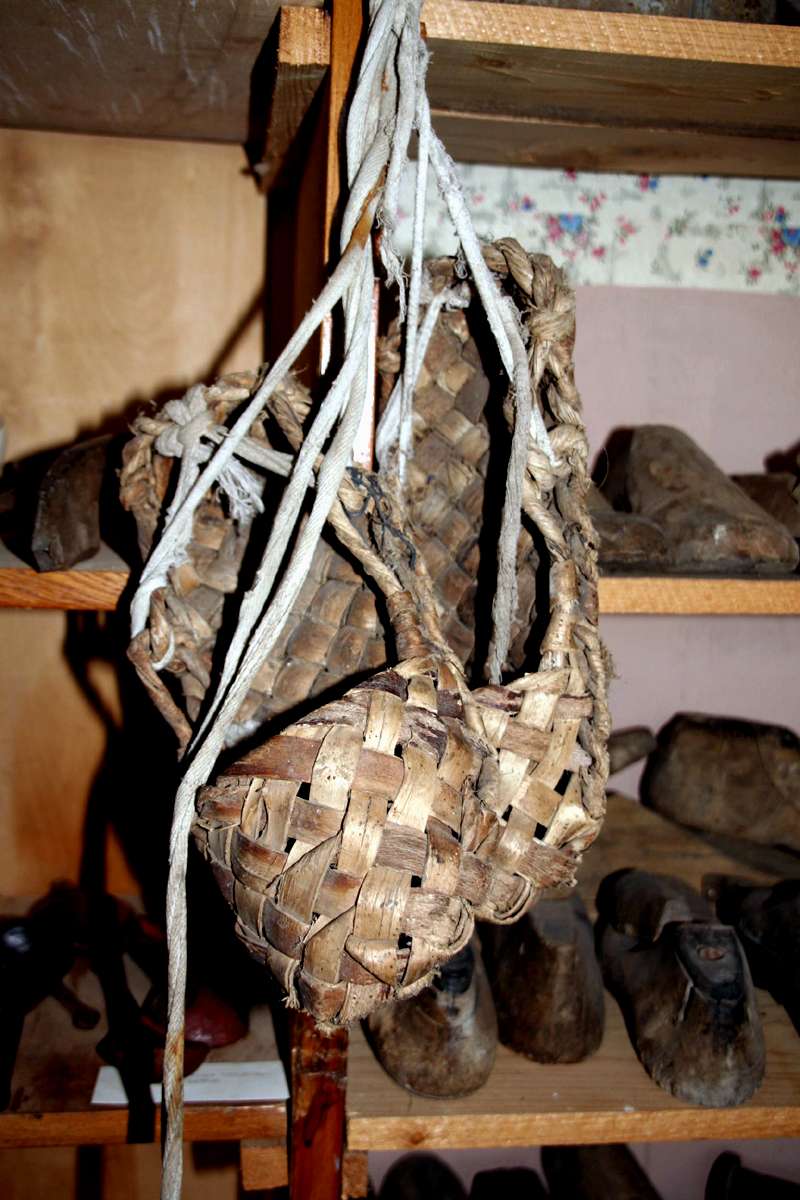
After a while Clever John remembered that he, too, must take care of his horse. However, instead of putting on either his own or the Devil’s boots, he cleverly dressed as was the custom on Johns Day--he put on his feet bark loafers. In each hand, he carried a pair of riding boots.

“When one is strong and another is weak, both are strong,” whispered Crazy Jane into Clever John’s ear as he went out the door.

On his way to the tall, Clever John meets with his brothers who are coming back from the stall. They come toward him whistling, and then one of them greet him. “Hey, Clever John, what are you going to do with those boots? Are you going to put them on that nag of yours?” All the brothers break out in a laugh. Ha, ha! But only Clever John knows what the boots are really for.

Another brother hm-m-med and asked: “Did you ask Crazy Jane how many men have stretched her before she got so long?”
While everyone laughed, Clever John winced.

“You dumb horseflies,” said Clever John as he then turned to his brothers. “What would you do without me? Do you have any notion of what awaits you tonight?”

The six brothers took control of themselves and gathered around Clever John. “What’s this? What can happen to us? Our brides are like honey covered strawberries. Are you jealous of us or something?”

Clever John then begins to explain: “Look, my dear brothers. The innkeeper-es is no innocent angel, but the Mother of the Devil himself. She is so angry with you for falling asleep last night that she would as soon as….” Clever John draws a finger across his throat. “More over, her daughters have only been pretending. They would probably like to strangle you.”
“What kind of dumb horseflies do you think we are?” said yet another brother. “Our brides purred us to our sleep last night, and look! We are alive.”

“Yes, and they now have proof just how much you honor the Sun.”

The brothers stood as if transfixed. “Men, we are into big doodoo,” said the very oldest of the brothers.

“Here is my plan,” then began Clever John. “Listen! When the Mother of the Devil invites us to sleep in the hayloft and bids us good night, she will give each one of us a kiss, so we all think that she is so very nice. She will hand to each one of us a nightcap, which we are to put on our heads during our sleep. She will give a wreath of flowers to each one of her daughters.”

“Nothing wrong with that,” said one of the skeptical brothers.
“That is not all,” said Clever John. The Mother of the Devil will tell her daughters to sleep along the rafters of the loft, while we are to sleep in a row on the outside.”

“So? What’s wrong?”

Clever John put down the boots, put his hand into his pocket and pulled out six cream of milk candies. “Don’t you suck on these,” he tells his brothers, “but give these to your brides. Tell them it contains a  special love potion. They will go for it. Actually, along the cream is mixed with a sleeping potion and your brides will soon be snoring. When your brides are snoring, put your nightcaps on their heads and roll them into your place on the outside row. Then put their wreaths on your heads. This is no joke, else you will not stay live.”

“Can we roll the sisters while we’re still awake?” asked one of the brothers. Perhaps he wished to be smarter than smart, but he got no answer.

Clever John looked around to make sure no one overheard and then told his brothers something that made them see black smoke and doom. Their eyes opened wide. Yes, that is something that one better not kid about. Of course, it is difficult to believe what Clever John is telling, but one never knows for sure. Maybe it is for real.

It all happens as Clever John has foretold.

A few minutes after midnight the barn door creaks open, and up to the loft came the Mother of the Devil. She held in her hands an axe that was wide as the length of two feet put end to end. And then she proceeded to chop off all the heads of all who lay along the outer edge right edge of the loft with nightcaps on their heads.

It is in this way that the Mother of the Devil cut off the heads of all her daughters—including the head of Crazy Jane, the Mother of the Devil’s eldest daughter. Clever John had been so clever that he had made Crazy Jane believe that she would be his bride. Of course, this was not fair. After all, was that not a great secret that Crazy Jane had entrusted Clever John with? Was that not true love?

We now see--don’t we?--of how it is with true love sometimes.

(In the next blog the second part of Clever John’s journey.)

Asterisk & Notes of Interest:
On  material depravation in Latvia.
On the theme of “more-equal-than-others” George Orwell's "Animal Farm"
A recommended read: “The Theory and Practice of Oligarchical Collectivism” by Emmanuel Goldstein (A book within a book from George Orwell's "1984").  
Of great interest to me is this and like articles. It presents some of my reasons for supporting the growing of Johns Grass in Latvia.
These blogs tend to be a continuum of an idea or thought, which is why—if you are interested in what you read—you are encouraged to consider reading the previous blog and the blog hereafter.
Partial entries of my blogs may be found at LatvianOnline + Forum Home + Open Forum –ONLATVIANPOPULISM vs LATVIJASLABEJIE. If you copy this blog for your files, or copy to forward, or otherwise mention its content, please credit the author and http://esoschronicles.blogspot.com/  

Wednesday, September 16, 2009

Copyright E. A. Benjamins aka Jaņdžs
NOT-VIOLENT TERROR
27 The Children of Johns


The sentiment against Johann, Hans, Wohn and like cognates of Jānis (John) is so grafted to the consciousness of the descendants of Europe’s Johns [once Europe’s wandering priests and teachers (think of the Wandering Jew)], that the event of the graft-birth—birth by sword or cauterization by fire—has been forgotten. The trauma to the psyche has been so great that it is as if the trauma never was and Johns never lived.

This is why Hitler, a descendant of a people who took the graft of neo-Christianity, had no inkling that such a graft had been performed on his forebears. This is why he, an heir to “Operation Spiritual ‘Final Solution’”, was readily recruited to the cause of another “final solution”. Alas, the consequences of a spiritual graft commit the grafted to a mindset from which it is almost impossible to break away. The results of meditative thought—think what you may—it always leads you to think in a self-referential (within neo-Christian parameters) way. For example, beginning with the concept of “blood libel” directed at arch-Christians (their self-sacrificial ways are interpreted as the sacrifice of babies), the neo-Christians—their God removed to the never land of Heaven—were readily able to perceive their opponents as vermin and suicide terrorists. [“Our, Fedre, hu he eart in Heofnum…”, You stay where You are, and we will do whatever we do here on Earth in your name!] “Blood libel” is the victor’s curse on the defeated enemy in order to silence also the loser’s descendants. Hope that they will never remember!

While the curse of blood libel is no longer issued except for the neo-Jews and neo-muslims, probably to provide no excuse whatsoever to recall their past, neo-Christian princes and lords manage to instill in the populace a prejudice against the “pagans” nevertheless. The prejudice maintains its effect by shifting the defeated enemy’s sense of guilt (as enemies of Christ) unto a caste among the losers who survived the defeat of their faction intact. Incidentally, the reason the caste survived is that its members were the collectors of gifts [the Latvian word for gift is called “dahvana” [dahv or diev (a God) + y(j?)ana—a gift to the Gods] for the temple and the sacred king.

The victors exploited the said caste’s experience as collectors of gifts by turning them into tax collectors. To the West, thus, this arch-Christian caste of tax collectors is known as Jews, Juden, now comes softened as Hebrew. This is very good, except that by getting away from Jew and Juden one is liable to lose all connection with history.

What the meaning of the name and its origin is is difficult now to tell, but the word “yule”, the sacred log of the winter solstice—a log once burned in honor of the Sun—may provide a link. In a number of traditions, the yule log—the rump of an oak—was covered with a blanket before it was brought into the house or to the pit for burning. Since trees were once believed to house Gods, the log may have been thought of as a gift of warmth. Another possible source for the name may be the Baltic word “juhgs”, a yoke, a word that means a burden; and taxes surely are a burden. There is also a relationship between Hannukah—a Jewish holy day celebrated about the time of winter solstice—and that same word, but beginning with the letter J(Y), re: Yannukah, an event of J(Y)ohns, perhaps the lost name of the arch-Christian winter solstice festival. In Latvia the Children of Johns would have known their winter solstice festival as Yahndahlins (Jandahlins), a name now signifying the noise that describes the energy found on a dance floor.

Once the Jews switched from gift collecting to tax collecting, they could be manipulated by blackmail. Blackmail occurred whenever the Lord of the manor felt that the Jews had become too independent of the views of the Lord’s court. On the occasions when blackmail was exercised, the Jews were reminded of their origins among the “pagans” or of becoming “pagans” as a result of their betrayal of Jesus Christ.

The blackmail was made credible through the exercise of a “pogrom”, an onomatopoetic word (po+grom) for the strike of lightning and sound of thunder. The anger of the defeated arch-Christians (lingering and real, but without memory of its defeat), given a provocation and alcohol, enabled them to enter the quarters of the Jews—the one’s who the neo-Christian priests had called “killers of Christ”—and do their will until the lord’s bodyguards arrived to put a stop to the violence. Such blackmail against the Jews (and the arch-Christians) has never been confessed (except by Hitler), nor has anyone ever truly withdrawn it. No longer known as “blood libel”, the libel against the Children of Johns took the form of anti-semitism now in the process of forgetting itself and mutating into a mindset that dismisses the self-conscious mindset of Central Europe East as entirely of inconsequence.

Interestingly, a fragment of this arch-Christianity has survived among the Latvians, who remember their arch-Christian priests as Johns and the followers of these priests as the Children of Johns. The Johns Eve and Johns Day Festival take place at summer solstice, which—like it or not—recalls a time when the Johns were under the umbrage of Saule, the Sun as either God or Goddess. If today the words of a folk song, edited by neo-Christians, speak of “Ai, Jānīti, Dieva dēls” (Oh Johnny, Son of God), the more ancient version of it sang “Oh Johnny, Son of the Sun”.

The curse against the Children of Johns (John and all being one Children of the Sun), decimated their numbers by murder (martyrdom) in significant numbers starting as early as the 9th-11th centuries, but gaining significant ground with the 16th and the European Religious Wars. This is the time of the greatest numbers of cross-overs. This is when many of the Children of John(s) crossed over to a fellow caste known as Jews. Under the king’s and princes’ protection, but with no apparent binding agreement or oath that would disallow the Jews to open their ranks to their endangered brethren. This democratic kink, such apparent link to their connection to the Children of John, caused the ranks of the Jews to swell many times their original numbers.

The consequences of the neo-Christian attacks on arch-Christians and victory over the latter to the extent that the former have no recognition of themselves and are allowed no suggestion of any such recognition of themselves—have been many; which is not to get into the problems between neo-Christians and the Muslims.

For one, even as neo-Christian violence caused the Children of Johns to become demoralized and forget their origins, their loss of collective memory (such a memory in modern society enduring for about two generations) caused them to accept a neo-Christian interpretation of history and become haters of Jews, i.e., anti-Semitic and deniers that they might be their own.

Because of the murder and mayhem against the Children of Johns, Johns Eve today has lost almost all of its links to a once very sacred ritual. With ever more renaming of the festival (re: summer solstice, picnic, day off, long-weekend, etc.), ever greater distancing occurs and removes the Johns Eve festival of its charisma and decreases its function as a community-binding celebration.

P.S. I highly recommend “Pan Tadeusz” by Adam Mickiewicz (b. 1798), translated by Kenneth R. Mackenzie, Hippocrene Books. There may be other editions. This is an epic poem that tells of Polish life in the 18th century. It is a long read, but worth it, because it gives evidence of the times of transition from the arch-Christian Children of Johns to Hebrews so zionized that they have become settlers of Z(Y)ion almost beyond recognition.

If you copy this blog or otherwise mention the content of it, please credit the author and http://esoschronicles.blogspot.com/