Showing posts with label midsummer. Show all posts

Tuesday, June 25, 2013

Eso’s Chronicles 185/ 7
Will Sun Shine Again?
© Eso A.B.

If as the following link claims, Europeans share a common ancestor as recently as one thousand years ago http://www.sciencenews.org/view/generic/id/350267/description/Europe_is_one_big_family then all the talk about ‘fringe’ and ‘pseudo’ history by establishmentarian historians and ecclesiasts is hog wash’, a fairy tale cooked up and preserved in an ‘academic’ pickling jar. If the ‘history’ of the parents of most Europeans does not go further back than a thousand years, then Catholic Christianity does not go back two thousand years.

So much for the ‘morality’ of ‘religion’ in our time and the ‘spiritual’ house of cards it has built. So much for ‘literary criticism’—a fish that walks on water with its head underwater. So much for ‘deconstruction’ living with the conviction it has been imprisoned in the Eifel Tower, while the next mile high tower is already off the drawing table.

In a small country in the northeast of Europe there live a people who still have a tradition of offering to the Sun a celebration. The celebration occurs on Midsummer’s Day, which is also known as Johns Day. Traditionally, John was the son of the Sun. He does not, however, have a ‘sacred’ function anymore, because the story permitted for Latvian ears by the Catholic Church took it away, and replaced it with one where the ‘sacred’ was replaced by ‘glory alleluia!’

The story once told among Latvians of why the Sun may not rise and why it needs to be encouraged to do so is, but for the guessing, lost. Yet some little hints remain. One is a statement of fact: of all the nights of the year, Midsummer’s Night is the shortest of them all. Behind the statement of fact hides the knowledge that if you or I were to move north, the Sun would not set https://www.youtube.com/watch?v=zhIJO0_lrGg .

Then there is another fact: there is a fire. The fire is, so to speak, to tide the Sun over the gap of darkness, while it is under the horizon. Ideally, the fire would be lit the moment the sun sets and the sacrifice makes his or her quantum leap to rebirth. Mind you, this is not a leap to resurrection, but to rebirth. In this manner, the Latvian psyche resembles that of the Tibetan Dalai Lamas: when one dies, all the monks go and search the land for a baby born at the precise moment of his predecessor’s death. The Tibetans believe in giving a life worn down to boredom another try, though ideally meditation brings them to such perfection that they need not ever be reborn.

For most of the celebrants of the Sun’s high point on summer solstice, these are anxious moments, because this is also a day when—if there is to be sacrifice—this is when it happens. The celebrants need, like it or not, contemplate death, and whether they can weather it. Many celebrants rather pass the time getting drunk, because alcohol simplifies thought. On occasion, when wannabee self-sacrifice fails, being drunk helps the executioner do his job.

In the long ago, before the days of festivals as spectacles, an explanation for the ritual was available through a story told by a poet. In our time, silly girls and boys prattle about jumping over a bonfire and the fun this is. No one believes that a day will come, probably at old age, when one may have to see one’s life in the perspective of a hologram. It is then that the Devil’s daughter may put the Devil’s boot up one’s crotch—as she does in the story below.

For over half a century, Latvian churches have been hoisting on the folk tradition of Midsummer in place of Latvia's own story, one and the same comedy, a humorous play of country life during the Midsummer festival. The evangel machine insists that Johns Day is a ‘family’ day. Some festivity organizers even propagate the notion that Midsummer need not be celebrated on Midsummer, but at any time summertime is fine. This last message results from ‘globalization’ efforts at the Vatican of politicians in Brussels and thins ever further the traditions of the past to suit the urban desert. The Sun, after all, keeps rising according to scientific theory, the stories of old myths to the contrary notwithstanding.

In one Latvian story that has to do with the Sun, seven brothers turn seven crickets into seven horses and ride to seek for themselves brides among the daughters of the Sun. Clever John gets to ride the nag and arrives at the party late, long after his brothers are already under the table. Not surprisingly, Clever John gets to choose Crazy Jane, the not so pretty Sun’s oldest daughter.

Like his brothers, Clever John also behaves in a high-handed manner. Nevertheless, when the morning nears and it is time to go to sleep, Crazy Jane—in spite of a number of rejections--whispers to John that her mother did not take a liking to the brothers and is likely to turn into a hag and when all are asleep come to cut off the heads of everyone who sleeps on the outside isle in the hayloft. Jane also offers John two pairs of her father’s (the Devil’s) boots, if John promises to take her with him when he rides home. The Devil’s boots, when put on the legs of the nag will enable Clever John to ride at double normal speed.

Clever John listens, then does as he likes. He makes for all the Sun’s daughters Valerian tea http://www.gnet.org/ease-your-worries-and-drift-off-with-valerian-root/ and arranges it so that all the daughters (including Crazy Jane) go to sleep on the outside of the isle.

After a while a hag comes to the loft with a big knife and chops off the heads of all who sleep in the outer isle. As the hag leaves, the hayloft is enveloped by a blinding darkness. Nevertheless, the brothers manage to jump from the hayloft out of a hatch. While six of the brothers are agreed that they have had enough of experiences and are ready to ride home, Clever John announces that he would rather go seek after the Devil’s own daughter and only then come home.

Clever John then puts on his nag in the Devil’s boots, and—Surprise! Surprise!—Rozinante, the nag, takes him to the Devil’s castle. The Devil tells John that he can have his daughter, but not before he brings him a pile of gold as payment.

After a series of adventures that include a flight  on the back of a raven, Clever John—Wonder of Wonders!—learns that the pile of gold is in the backyard of the Sun. Unfortunately, the Sun has set and is on the other side our planet, and to get there the raven has to fly through a landscape in perpetual dusk so great that it cannot determine in which direction the Sun is closest.

The entire story is too long to tell here, but Clever John does eventually discover the pile of gold. When he brings it to the Devil, he also discovers that the Devil’s daughter is none other than Crazy Jane, who is also the daughter of the Sun. Of course, by this time Crazy Jane has recovered from Clever John her father’s boots, which she insists both she and John wear to bed on their wedding night.


Friday, June 21, 2013

Eso’s Chronicles 183/ 5
A Midsummer Supper
© Eso A.B.

A long time ago, at a time that may seem like fairy tale time, a ‘King’ was called ‘Basil’ http://en.wikipedia.org/wiki/Basil_(name) . A number of words that are still with us derive from that time. For example, the word ‘basilica’ or ‘church’ or cathedral; ‘basil’, the king of savories; ‘base’, which is synonymous with ‘headquarters’. The word derives from Greek language.

Thus, the sign “INRI” http://en.wikipedia.org/wiki/Jesus,_King_of_the_Jews  that is often seen in old paintings above the crucified Jesus, and which we are told is an acronym for ‘Iesu of Nazareth, King of the Jews’, was originally read as INBI, “Iesus Nazarenus, Basil Iudaeorum”.

Though a ‘king’ is a king by whatever name, what we should note is that ‘Basil’ stands for a special king—a king of the people. This is one reason why in former days many saints were given the name of Basil. This is as good a reason as any why originally Jesus was likely called Basil. Moreover, if ‘Iudae’ is a deliberate misspelling of ‘Ludi’ http://ancienthistory.about.com/od/games/g/ludiromani.htm  (games, from ludus, people), then INRI should read INBL, “Iesus Nazarenus, Basil Ludusorum”, Basil of the People; or ‘Basil Ludiorum’, Basil of (religious) Festival or Rites. As the link tells: “The ludi were public Roman religious festivals started, before 220 B.C., as annual communal games to give thanks to the gods.” The word ‘games’ in context can only be a cynical derivative from ‘religious rites’, the rite being a human sacrifice. Moreover, if ‘Roman’ stands for the Byzantine Empire, as the Russian mathematician and historian Anatoly Fomenko http://en.wikipedia.org/wiki/New_Chronology_(Fomenko)  claims, the date of the rite is closer to 1118 CE than it is to 220 BC. Notwithstanding post-modern historians, who view Fomenko’s work as that of a “fringe” and “pseudo” historian, the reverse is likely true.

In fact, the story of Jesus, as I have written in other blogs (srch ‘jesusthebogomil’), is the definitive False Flag of Western Civilization, with its post-modern banner seized by the ‘democracy’ of the U.S.

If the reader is familiar with the story of Jesus, he-she will remember that Jesus-Basil and his bookkeeper and disciple Peter are closely associated with a bonfire, that burns early on the morning of the day Jesus-Basil is to be (gamed) crucified http://en.wikipedia.org/wiki/Denial_of_Peter . While in Europe most traces of the ancient Rite meant to assure that the Sun rises have been erased, there remains enough to suggest that the Sun had indeed ceased to rise that day http://biblehub.com/luke/23-45.htm from “…about the sixth hour (in the morning)… there was a darkness over all the earth until the 9th hour… (in the evening)”. The ‘clock’ that measured the time was a sundial http://www.nist.gov/pml/general/time/revol.cfm .

While the reason given why the Sun is not moving is different from Aztec and Greek versions, it is no less weighty. It concerns the celebration of the Name’s Day https://en.wikipedia.org/wiki/Name_day  of the son of the Sun: Dionysus (Huan, Ian, Ivan, Jean, John, Zhan, etc.) by those who make laws on a planet where the wood has been cut, the land has been turned to desert, people have been driven into cities, and all other forms of life have been belittled as ‘the Devil’s work’ and are further exploited by corporation scientists through genetic modification. The Name’s Day of Iesu/ Iannis falls on Midsummer’s Eve or Summer Solstice Day, when for about three days the Sun appears to hang in one and the same place in the sky.

On the evening before he is betrayed by his Public Relations man, his disciple Judas, Jesus and his colleagues sit down to an uncommon meal. Jesus’ companion Mary Magdalene, said to be his ‘financial’ benefactor, presents as the main dish a very special kind of pie. The pie has baked into it a fingernail sized piece of coal. Mary Magdalene did not bake the pie herself, because the pie is to be part of a draw (in which she too participates): whoever draws the piece with the coal, must prepare him- or herself to offer his-her life to the Sun on the following day.

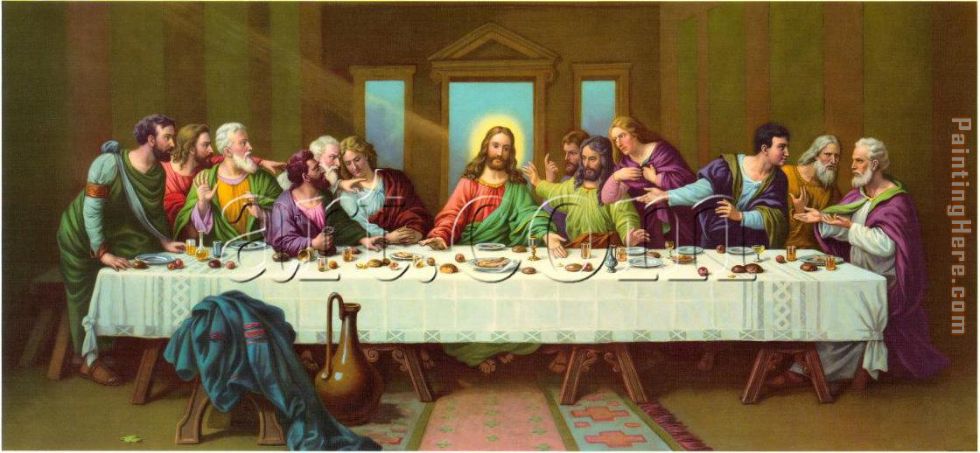
What we know as The Last Supper http://www.paintinghere.org/UploadPic/Leonardo_da_Vinci/big/picture%20of%20last%20supper.jpg occurred on the evening the day before Midsummer Day, a day that was also celebrated as Iesus’s Name’s Day. This fact elevates Iesu twice, first as Basil (King) of the day in his own right and, second, as the son of the Sun, who by giving him birth on that day also elevates herself to prominence.

The disciples of Iesu argued that Iesu should not be the only one to fight the laws made up willy-nilly by secular rulers. There was an agreement among them, that all would draw lots. By participating, all signaled that they were ready to offer their lives to the Sun. Iesu made no objections.

It happened that the ruler of Byzantium at the time was King Alexius I. The King had heard rumors of resistance to his ruling among the people. He, therefore, wanted to discover who their leader was. The Emperor had heard that a ‘King of the People’, came from a country of nomads—a people who moved with the Sun and the seasons and herded reindeer for their livelihood. Emperor Alexis sent spies try recruit a spy from among Iesus’s closest followers.

The follower most accessible was Judas. Judas had his reasons: he did not believe that the Sun was a divinity. He was recruited for thirty pieces of silver (we have no real idea of what it was worth then). It also happened that Judas’s piece of pie had the coal in it, but Judas did not let on and swallowed it. Later, a troubled Mary Magdalene spoke to the baker, but was assured that everything had been done right and there were witnesses to prove it. Iesu said: “Do not be concerned. It was and remains my lot to be the son of the Sun.”

While walking along the shore of the Bosphorus that night (there was a full moon), Judas, as if overcome with grief for Iesu’s lot, came up to him and embraced him. This was the signal waited for by the King’s spies, who were hiding among the people of Constantinople, who, too, were talking a walk and enjoying the moonlight.

Shortly thereafter, Iesu and his colleagues (also known as disciples) were surrounded by the Emperor’s armed police and taken into custody. Iesu was brought to the court of the High Priest. The name of the High Priest, some say, was Yannas. He headed Emperor Alexis’ own religion, which was named Christianity. The name was borrowed from the Slavs, among whom the word meant “criss-crossers or ‘markers’ of earth” or more simply plowmen. In those days agriculture had just made its appearance http://p2.la-img.com/249/28182/10780046_1_l.jpg . The ‘Christians’ had no plows as we know them today, but were using stumps of trees with the branches cut down to the length of a foot or a foot and a half. When a a man stood on the stump, and an ox or mule was made to pull it, the ‘plow’ scratches deep marks into the face of Earth.

To scare those who opposed his order to end all celebrations of the Sun (or Midsummer, or Johns Day) and Earth, Emperor Alexis had his gendarmes (armed police) dig a large pit at the Hippodrome. The pit was filled with logs and these set ablaze. The fire burned and sparks rose high into the air all night long and was the talk of Constantinople. Some said that the King had defeated his own purpose, which was to have ‘no’ celebration whatsoever.

There is great confusion about the ‘true’ story of Iesu Basil or what I prefer to call Iesu The Bogomil (Jesus God lover). The reason is that there are at least two stories of what happened.

The Catholic Christian or canonical version of the story has had a wide distribution. The story is accessible in every country and in nearly every language. The ‘Other’ story, however, is not only denied, but the fragments continue to be denied validity. Among the two best ‘other’ stories is that of Basil the Bogomil, whose death has been described in Anna Comnena’s biography of her father Emperor Alexius I of Byzantium http://en.wikipedia.org/wiki/Alexiad ; and in the story of Polycarp the Bishop of Smyrna https://en.wikipedia.org/wiki/Polycarp .

Unfortunately, the story of Jesus Christ is a wholly made-up story (probably by the forebears of the modern French) with nearly no recollection of things holy in proto-Christian times.


Monday, May 27, 2013


Esis's Chronicles 172
Origin of The Midsummer Fire
© Eso A.B.

This blog a ‘break’ in the regular series.

Johns Eve or the Midsummer Festival in Latvia is only weeks away. Here are some reflections on the significance of the festival by one who many years ago became an afficianado of the festival and has never been able to let go of an interest in it..

The sad truth about the demise of the Latvian Midsummer Festival is that it is not the result of Soviet repression (as many allege, but a consequence of the Latvian intelegentsia smothering its own communal roots by surrendering to the neo-Christian propaganda about God being a Being out of nature.


The smothering of this ‘day of the community’ has other sources as well. One cause is an overly tight hugging of Johns as a purely Latvian festival with no relation to anyone else. I remember the poet Imants Ziedonis, recently deceased, telling me that Latvians can be proud of being the only ones who wear oak leaf wreaths on their heads. I was surprised to hear this, because a wreath of leaves or flowers is an old tradition if one remembers the laurel wreath of the Greeks and Romans and poet ‘laureates’ http://en.wikipedia.org/wiki/Laurel_wreath .


Recently, while rereading Euripedes “The Bacchae” another image and potential source for the Festival came to mind.


When Dionysus (Yahnis in Latvian) comes to Thebes, many of the city’s inhabitants, apparently mostly women (once inhabitants of the wood, now starved for nature by the desert regime that is the city), join him in a bacchanal that winds up Mt. Cithaeron to a holy communal gathering place there. The name ‘bacchae’ originates in Bacchus, who is the Roman God of wine; however, Bacchus is a late replacement for the name of the Greek God Ion

The Bacchae are behaving orgiastically and apparently lewdly. Word of this gets to King Pentheus, who (also starved for nature) imagines the event as a pornography show. To better see what the women are up to, Pentheus climbs a tall pine that grows close to the grounds where the ritual is to take place. Unfortunately, the Bacchae see him, and climb the tree to pull the King down to earth.

When the King is down, the Bacchae fall on him and tear him into bloody pieces. Then everybody rushes back to Thebes, with an elderly lady leading the runners. The lady holds in her hand by the hair the head of King Pentheus. Only when the Bacchae reach the marketplace of Thebes, does the lady awaken to the fact that she is none other than the mother of the King.


The Bacchae, realize that a great tragedy has happened, and a great communal wailing ensues. Incidentally, the word ‘tragedy’ has its origin in the greek name tragōidia, “billy-goat-song”. Taking the behavior of King Pentheus into account, he may have been thought to be impersonating a billy goat. The Latvians have a folk poem, it goes: “Kaza kāpa debesīs, Dievam sūdzēt….” (The billy goat climbed up to heave to complain to God…) There is an ancient statue of gold that shows a goat on its hind legs chewing the leaves of a small tree. http://classconnection.s3.amazonaws.com/312/flashcards/134312/jpg/c9iwf00z1316047577614.jpg


Then the Bacchae hit upon a brilliant idea. Some of them rush back to Mt. Cithaeron, and go to the pine tree which had hid King Pentheus. The Bacchae dig around the pine until they have loosed its roots. Then they fell the tree, strip it of its branches, shorten the trunk somewhat, and carry the rest of the trunk back to Thebes.


Meanwhile, the Bacchae who have remained in Thebes have dug a deep hole in the ground. This is where the top of the tree is now placed, and the tree, with the aid of pulleys and pichforks, it is pushed and pulled until it is with its roots in the air, and stands in a vertical position. A ladder is then brought to the tree. The crevices of the roots are filled with tar and resin, and to the roots is secured the head of the King. (In later years the head of the king is replaced by the head of a sacrificial goat,) The roots are then put to a flame.


One may imagine that it is in this ceremony that we must seek the origin of the image of the head of the Medusa http://www.bbc.co.uk/history/ancient/romans/images/gal_mosaic_head_medusa.jpg and/or the Latvian Midsummer wreath http://news.bbcimg.co.uk/media/images/61207000/jpg/_61207060_man_oak_wreaths_afp624x351.jpg .


Friday, March 19, 2010

© Eso Antons Benjamins, aka Jaņdžs

THE NOT-UNTHINKABLE  
92 A Story of
Clever John and Crazy Jane

An old Latvian story retold. For the original see
3.A.327.B.460. A.K. Bramanis Rīgas apg. LP,V,36 (3,1).

For transition from proto-Latvian Kingdom of Jersika to modern state of Latvia (the image of which is currently under the direction of what can best be described as the Chicago School of Latvia) see blogs from 58 on.

The following links lead you to think of life with a different entry point in time than the machines that roar on our streets and over our heads. I recommend you listen and see the links in the sequence as below before reading the story.
http://www.youtube.com/watch?v=RxIroakIXto  

http://www.youtube.com/watch?v=g50iAWTJF3M&feature=related


Introduction. Once upon a time there were seven brothers. The seventh brother, the one who was the youngest, was the cleverest. This is why his brothers called him Clever John.

Even while he was very young, Clever John called his brothers together and said to them: “You know, guys, I know where there lives a mother with seven daughters. These are going to be our brides. Still, do not get married until I grow up.”

The brothers of Clever John thought it over and agreed to wait. After all, one could have fun while waiting. The village had many young women, and few were shy.

The time went, and it did not seem so very long before Clever John grew up. He then called his brothers together once more and said to them: “Guys, the Summer Solstice Festival, Johns Day, will be here day after tomorrow. You know how important this day is. There will be a big to do as all wait for the Sun to rise. We all know what will happen if She does not rise. Anyway, there will be a large crowd and a big dance at the Waysiders Inn on Johns Eve. The seven daughters that will be our brides will also be there. Now let us saddle our horses and off we ride.”
“Nice idea, Clever John,” answered his brothers, but where will we find seven horses. We don’t even have one.”

“No problem,” answered Clever John. “Go catch me seven crickets and I will fix it.”

The brothers looked at each other as if to say “Just listen to this, guy”. On the other hand, Clever John had done many clever things in the past, and perhaps this was going to be another one of those times. So, they went and caught seven crickets, stuffed them in a sack, and brought them to Clever John.
The first leg of the journey. Clever John looked into the sack, counted seven crickets, and invited his brothers to follow him to the sea.

When the brothers had come to the sea shore, Clever John opened the sack and shook the crickets into the shallow water that lapped the shore there. The crickets kicked around in the water for a while, and then one after another went limp. It seemed that they were about to die, if indeed they were not dead already.

One of the older brothers of Clever John was about to start laughing, thinking that Clever John had pulled off a joke on them, when, suddenly, the crickets started to shrivel and drew themselves into something that looked like seven pinheads. Then the pinheads began to grow larger again. They grew and grew into ever larger bubbles, until one could discern inside each bubble a horse. When the bubbles burst, out of each one of them stepped a horse in full saddle. The brothers, too, discovered that they all had a new suit and new riding boots.
“Well, did I not say that this will happen? And is it not so?” asked Clever John.

He was wasting his breath, however. His brothers had already mounted their horses and were at a full gallop over the dunes and unto the road to the Wayside Inn. The sea gulls barely had time to call to them good bye before they were out of sight.

Clever John was left with the seventh horse. He jumped into the saddle and was ready to ride, but discovered that because the bubble that his horse came from had burst a prematurely, his horse was smaller than the others. This is why Clever John could not ride as fast. Came evening, Clever John had still not caught up with his brothers, who, no doubt, were already at the inn and celebrating Johns Eve. It was the custom of the land that if on Midsummer’s Eve a man promised a woman the blossom of a fern and sunshine in the morning, the women could hardly refuse the men whatever it is they asked of them—come rain or sunshine.
So, this is what happened. By the time that Clever John reached Wayside Inn, it was already the morning of Johns Day. The Sun rose, discovered that no people had come out to greet her. None stood on the hilltops or had the Johns fires still going when she rose. She drew a peak through the windows of the Wayside Inn and discovered that everyone but one had had so much fun the evening before that everyone but one was asleep. Apparently, as soon as the six brothers of Clever John had arrived at the inn, the dancing had begun for real. The wife of the establishment owner, known as the “Mother of the Devil himself” had not spared on the beer. Her daughters, the waitresses, had not only served the beer to the customers, but had allowed themselves a portion. When Clever John opened the door to the inn, he saw that what had taken place was not only a Yandahls (Johns Dance), but a wedding. Everyone lay about where they had fallen.
In a far corner of the inn sat Crazy Jane. She was the oldest of the mother’s seven daughters. Clever John’s brothers, thinking her less pretty than the others, had left her for their youngest brother. There was no question, that Crazy Jane was lanky and flat chested. On the other hand, just as Clever John opened the door of the inn, the Sun cast on her one shaft of light, upon which Crazy Jane raised her eyes and saw Clever John. She knew she had not waited in vain.

As for Clever John, he was no dummy. “There is nothing to be sorry about,” he said to himself. “I will take what is left for the taking. The more she is lanky, the more she will bend.”

Crazy Jane invited Clever John into the inn. In the kitchen she baked him bacon and eggs, and served it on a plate with caraway cheese and beer. Then she sat down across the table from Clever John and asked: “What took you so long, Clever John?”
“My brothers played a joke on me,” replied Clever John.

“Yes, my mother told me,” answered Crazy Jane. “She saw what happened. She told me to wait up for you. We plan to reward your brothers for not waiting up for the Sun.”

“I will be much obliged,” answered Clever John. “I think that you are so beautiful, you can come live with me. I am the owner of a big inn. I have a stall full of horses.”

Just then Clever John’s six brothers and their brides started awakening. The brothers put on their hats and went out to the stall to take care of their horses. Outside the rain was pouring. Perhaps the Sun was crying. While the six brides fixed up the inn, Crazy Jane invited Clever John to her room to rest a while. She lay down beside him and whispered a secret into his ear. She also gave Clever John a warning. It was about how she and her mother planned to give the  brothers their reward. Clever John thanked Jane for the information and went to sleep.
When Clever John awoke, Crazy Jane had prepared a surprise for him. On the table beside the bed, Jane has set for John a fresh neck scarf. On top of the scarf was a gold ring, and next to the bed stand a pair of new riding boots.

Crazy Jane then told Clever John that she had stolen the boots from the Devil himself. Then, as if to prove that along with this story, she was indeed a little crazy, Crazy Jane told John not to put the boots on his legs, but on those of his horse.

“With boots on, the horse will carry us both off to our honeymoon,” she told John.

“Alright,” says Clever John. “That will be some ride.” He then puts on the neckerchief and the gold ring that Jane has set out. When Crazy Jane looked at John, he looked just like a prince. Crazy Jane was so thrilled that she gaveClever John a big kiss. Clever John kisses her back.
After a while Clever John remembered that he, too, must take care of his horse. However, instead of putting on either his own or the Devil’s boots, he cleverly dressed as was the custom on Johns Day--he put on his feet bark loafers. In each hand, he carried a pair of riding boots.

“When one is strong and another is weak, both are strong,” whispered Crazy Jane into Clever John’s ear as he went out the door.

On his way to the tall, Clever John meets with his brothers who are coming back from the stall. They come toward him whistling, and then one of them greet him. “Hey, Clever John, what are you going to do with those boots? Are you going to put them on that nag of yours?” All the brothers break out in a laugh. Ha, ha! But only Clever John knows what the boots are really for.

Another brother hm-m-med and asked: “Did you ask Crazy Jane how many men have stretched her before she got so long?”
While everyone laughed, Clever John winced.

“You dumb horseflies,” said Clever John as he then turned to his brothers. “What would you do without me? Do you have any notion of what awaits you tonight?”

The six brothers took control of themselves and gathered around Clever John. “What’s this? What can happen to us? Our brides are like honey covered strawberries. Are you jealous of us or something?”

Clever John then begins to explain: “Look, my dear brothers. The innkeeper-es is no innocent angel, but the Mother of the Devil himself. She is so angry with you for falling asleep last night that she would as soon as….” Clever John draws a finger across his throat. “More over, her daughters have only been pretending. They would probably like to strangle you.”
“What kind of dumb horseflies do you think we are?” said yet another brother. “Our brides purred us to our sleep last night, and look! We are alive.”

“Yes, and they now have proof just how much you honor the Sun.”

The brothers stood as if transfixed. “Men, we are into big doodoo,” said the very oldest of the brothers.

“Here is my plan,” then began Clever John. “Listen! When the Mother of the Devil invites us to sleep in the hayloft and bids us good night, she will give each one of us a kiss, so we all think that she is so very nice. She will hand to each one of us a nightcap, which we are to put on our heads during our sleep. She will give a wreath of flowers to each one of her daughters.”

“Nothing wrong with that,” said one of the skeptical brothers.
“That is not all,” said Clever John. The Mother of the Devil will tell her daughters to sleep along the rafters of the loft, while we are to sleep in a row on the outside.”

“So? What’s wrong?”

Clever John put down the boots, put his hand into his pocket and pulled out six cream of milk candies. “Don’t you suck on these,” he tells his brothers, “but give these to your brides. Tell them it contains a  special love potion. They will go for it. Actually, along the cream is mixed with a sleeping potion and your brides will soon be snoring. When your brides are snoring, put your nightcaps on their heads and roll them into your place on the outside row. Then put their wreaths on your heads. This is no joke, else you will not stay live.”

“Can we roll the sisters while we’re still awake?” asked one of the brothers. Perhaps he wished to be smarter than smart, but he got no answer.

Clever John looked around to make sure no one overheard and then told his brothers something that made them see black smoke and doom. Their eyes opened wide. Yes, that is something that one better not kid about. Of course, it is difficult to believe what Clever John is telling, but one never knows for sure. Maybe it is for real.

It all happens as Clever John has foretold.

A few minutes after midnight the barn door creaks open, and up to the loft came the Mother of the Devil. She held in her hands an axe that was wide as the length of two feet put end to end. And then she proceeded to chop off all the heads of all who lay along the outer edge right edge of the loft with nightcaps on their heads.

It is in this way that the Mother of the Devil cut off the heads of all her daughters—including the head of Crazy Jane, the Mother of the Devil’s eldest daughter. Clever John had been so clever that he had made Crazy Jane believe that she would be his bride. Of course, this was not fair. After all, was that not a great secret that Crazy Jane had entrusted Clever John with? Was that not true love?

We now see--don’t we?--of how it is with true love sometimes.

(In the next blog the second part of Clever John’s journey.)

Asterisk & Notes of Interest:
On  material depravation in Latvia.
On the theme of “more-equal-than-others” George Orwell's "Animal Farm"
A recommended read: “The Theory and Practice of Oligarchical Collectivism” by Emmanuel Goldstein (A book within a book from George Orwell's "1984").  
Of great interest to me is this and like articles. It presents some of my reasons for supporting the growing of Johns Grass in Latvia.
These blogs tend to be a continuum of an idea or thought, which is why—if you are interested in what you read—you are encouraged to consider reading the previous blog and the blog hereafter.
Partial entries of my blogs may be found at LatvianOnline + Forum Home + Open Forum –ONLATVIANPOPULISM vs LATVIJASLABEJIE. If you copy this blog for your files, or copy to forward, or otherwise mention its content, please credit the author and http://esoschronicles.blogspot.com/