Showing posts with label Bogomil. Show all posts

Monday, June 24, 2013

Eso’s Chronicles 184/ 6
The First ‘Written’ Story
© Eso A.B.

‘Basil Ludieorum’, or ‘Basil Luduseorum’, or ‘game(s)’ was indeed but human sacrifice presented as theatre. That the words ‘ludi’ and ‘ludus’ should later appear written as ‘iudi’ or ‘iudus’ is easily explained by several pathways.

The first explanation clusters around the easy mispronunciation of words that may to some ears sound alike.

The second explanation is that once a mispronounced word is ‘fixed’ in writing, and the fixation is repeated over and over again, because certain interest groups may wish the fixation to become indelible.

Another explanation may arise over whom the words may be assigned to. Here perhaps the explanation is somewhat ‘Machiavellian’, but certain ‘Machiavellianisms’ are rather commonsensical.

For example, if one group wishes to exploit another group by force or lies or both, the politically most expedient way to do this is through a ‘middleman’. It is well known, that the Russian tsars oppressed other minorities under Russian rule by using a war-like people called Cossacks http://en.wikipedia.org/wiki/Cossacks . Perhaps not so strangely, no one quite knows whence the Cossacks. Some say that they originated out of the Khazar Empire http://en.wikipedia.org/wiki/Khazar . Some say that the Khazar Empire is whence the origin of the Jewish people.

Does Iesu and the Jewish people have Cossack roots? The Jewish people are in denial http://en.wikipedia.org/wiki/The_Thirteenth_Tribe. So are Catholics, aka neo-Christians.

Nevertheless, the above link has, among other things, the following to say: “…the lesser king was called îšâ and the greater king Xazar xâqân”. The so-called lesser king or Īšā is easily imaginable as a name whence Iesu, even though Iesu’s original governing duties are likely those of a tax collector of fur pelts (hence the name refers to a military rank ishad (a Göktürk military rank) from the Evanks, a huge tribe of wandering nomads. It was elementary tax collecting that established the first permanent bureaucracies. Since Fomenko’s and Koestler’s opinions on the subject more or less coincide, the death of Iesu in the 12th century approximates the time that the Khazar Empire eperienced its demise, and—when for reasons not clearly understood—Īšā may have been imagined to be Xazar. Still, we may perceive through the ‘fog’ how the ‘Double Kingship’ continues to have its echoes to our own day: re the Pope as the spiritual leader of the West, and Ayatollah Khomeini as the spiritual or Supreme leader of Iran http://news.bbc.co.uk/2/hi/middle_east/8051750.stm , not to mention hereditary royalty in some historically old kingdoms.

If as I wrote in the previous blog, Iesu Rex was once commonly referred to as ‘Iesu Basil’ and died in Constantinople and not Jerusalem as insisted on by neo-Christian authorities, the changes occurred not for some profound religious reasons, but due to changes on the political power structure. As we experience that power structure to this day, it is alleged to be ‘democratic’, while there is, in fact, little ‘democracy’ to be found in it. As in the English Magna Charta, the alleged democracy is for princes and not the commoners—even though it ‘sounds nice’ to apply democracy across the board. If economic abundance enabled the commoners to occasionally allow them the illusion that ‘democracy’ was real, across the board spying today by NSA http://www.infowars.com/nsa-spying-on-and-blackmailing-top-government-officials-and-generals/ on anyone it chooses, also represses (blackmails) anyone it chooses.

This dismissal of real history as ‘fringe’, ‘pseudo’, and inconsequential will continue until the ever growing princely system meets its apocalypse. While no one knows the day of its end, the havoc the system wreaks on humankind is universal http://rt.com/shows/keiser-report/protests-brazil-banksters-economy-051/ . The Sun may well soon stop shining on the West http://www.nasa.gov/mission_pages/sunearth/news/gallery/20130618-coronalhole.html . Extra ordinary measures will have to be initiated, including self-sacrifice by leaders, for human kind to survive. “There will be weeping and gnashing teeth.” Judging by the witless bravado and obviously low level of education strutted by the young of our day, their elders (responsible for upbringing of them) are as likely to perish as they are. “There will be weeping and gnashing teeth.

The future for such awesome consequences was initiated when humankind made its first steps from organic reality—to which belongs spoken language—to the virtual reality of written communication. Language changed in a fundamental manner. It took on different characteristics, and replaced direct communication with that of story telling. The fixation of lies in runes and hence into simplified script and print has created a civilization that does not know how to sustain itself without unsustainable violence, which is why it eventually must return to the wood by its own designs.

When Īšā of the Khazars, a government officiating over a nomad people, was humiliated by Emperor Alexis I, and his reindeers were slaughtered and stripped of their skins for back taxes, all Iesu was left with was one reindeer to ride into town with. [Not surprisingly, the populist mind has reinvented Jesus as Santa Claus arriving from the North Pole, this time not with pelts of other reindeers, but anything that Money can buy.] As we know, in later years the reindeer was changed to a donkey.

As for Īšā Basil, since it was his lot to be the sacrifice and Judas had confirmed this “…the Holy Synod, the chief monks, as well as the patriarch of that time (Nicolas) unanimously decided that he must be burnt. The emperor, who had interviewed the man at length on many occasions, cas his vote for the same verdict. He had recognized Basil’s perversity and knew that his attachment to the heresy was permanent. So a huge fire was kindled in the Hippodrome. An enormous trench had been dug and a mass of logs, every one a tall tree, had piled up to a mountainous height. Then the pyre was lit and a great multitude of people quietly collected on the floor of the arena and on the steps; everybody waited impatiently to see what would happen….” http://en.wikipedia.org/wiki/Alexiad (Book fifteen).

By this time, in sympathy with Basil, the Sun, who had begun her rise over the eastern shore of the Bosphorus, gradually slowed, until by the 9th hour it stopped moving. A full moon moved across the face of the Sun and extinguished what daylight there was. The only remaining light was that of the fire pit.

“See! Emperor! Observe the Sun is no more,” cried Iesu. But the emperor only laughed and said: “Fool! It is nothing but an ecclipse.” The emperor then waved his arms and his gendarmes quickly seized Iesu and threw him into the fiery pit. All of the other Bogomils except two drew back, which is why these two also were burnt.


Friday, June 21, 2013

Eso’s Chronicles 183/ 5
A Midsummer Supper
© Eso A.B.

A long time ago, at a time that may seem like fairy tale time, a ‘King’ was called ‘Basil’ http://en.wikipedia.org/wiki/Basil_(name) . A number of words that are still with us derive from that time. For example, the word ‘basilica’ or ‘church’ or cathedral; ‘basil’, the king of savories; ‘base’, which is synonymous with ‘headquarters’. The word derives from Greek language.

Thus, the sign “INRI” http://en.wikipedia.org/wiki/Jesus,_King_of_the_Jews  that is often seen in old paintings above the crucified Jesus, and which we are told is an acronym for ‘Iesu of Nazareth, King of the Jews’, was originally read as INBI, “Iesus Nazarenus, Basil Iudaeorum”.

Though a ‘king’ is a king by whatever name, what we should note is that ‘Basil’ stands for a special king—a king of the people. This is one reason why in former days many saints were given the name of Basil. This is as good a reason as any why originally Jesus was likely called Basil. Moreover, if ‘Iudae’ is a deliberate misspelling of ‘Ludi’ http://ancienthistory.about.com/od/games/g/ludiromani.htm  (games, from ludus, people), then INRI should read INBL, “Iesus Nazarenus, Basil Ludusorum”, Basil of the People; or ‘Basil Ludiorum’, Basil of (religious) Festival or Rites. As the link tells: “The ludi were public Roman religious festivals started, before 220 B.C., as annual communal games to give thanks to the gods.” The word ‘games’ in context can only be a cynical derivative from ‘religious rites’, the rite being a human sacrifice. Moreover, if ‘Roman’ stands for the Byzantine Empire, as the Russian mathematician and historian Anatoly Fomenko http://en.wikipedia.org/wiki/New_Chronology_(Fomenko)  claims, the date of the rite is closer to 1118 CE than it is to 220 BC. Notwithstanding post-modern historians, who view Fomenko’s work as that of a “fringe” and “pseudo” historian, the reverse is likely true.

In fact, the story of Jesus, as I have written in other blogs (srch ‘jesusthebogomil’), is the definitive False Flag of Western Civilization, with its post-modern banner seized by the ‘democracy’ of the U.S.

If the reader is familiar with the story of Jesus, he-she will remember that Jesus-Basil and his bookkeeper and disciple Peter are closely associated with a bonfire, that burns early on the morning of the day Jesus-Basil is to be (gamed) crucified http://en.wikipedia.org/wiki/Denial_of_Peter . While in Europe most traces of the ancient Rite meant to assure that the Sun rises have been erased, there remains enough to suggest that the Sun had indeed ceased to rise that day http://biblehub.com/luke/23-45.htm from “…about the sixth hour (in the morning)… there was a darkness over all the earth until the 9th hour… (in the evening)”. The ‘clock’ that measured the time was a sundial http://www.nist.gov/pml/general/time/revol.cfm .

While the reason given why the Sun is not moving is different from Aztec and Greek versions, it is no less weighty. It concerns the celebration of the Name’s Day https://en.wikipedia.org/wiki/Name_day  of the son of the Sun: Dionysus (Huan, Ian, Ivan, Jean, John, Zhan, etc.) by those who make laws on a planet where the wood has been cut, the land has been turned to desert, people have been driven into cities, and all other forms of life have been belittled as ‘the Devil’s work’ and are further exploited by corporation scientists through genetic modification. The Name’s Day of Iesu/ Iannis falls on Midsummer’s Eve or Summer Solstice Day, when for about three days the Sun appears to hang in one and the same place in the sky.

On the evening before he is betrayed by his Public Relations man, his disciple Judas, Jesus and his colleagues sit down to an uncommon meal. Jesus’ companion Mary Magdalene, said to be his ‘financial’ benefactor, presents as the main dish a very special kind of pie. The pie has baked into it a fingernail sized piece of coal. Mary Magdalene did not bake the pie herself, because the pie is to be part of a draw (in which she too participates): whoever draws the piece with the coal, must prepare him- or herself to offer his-her life to the Sun on the following day.

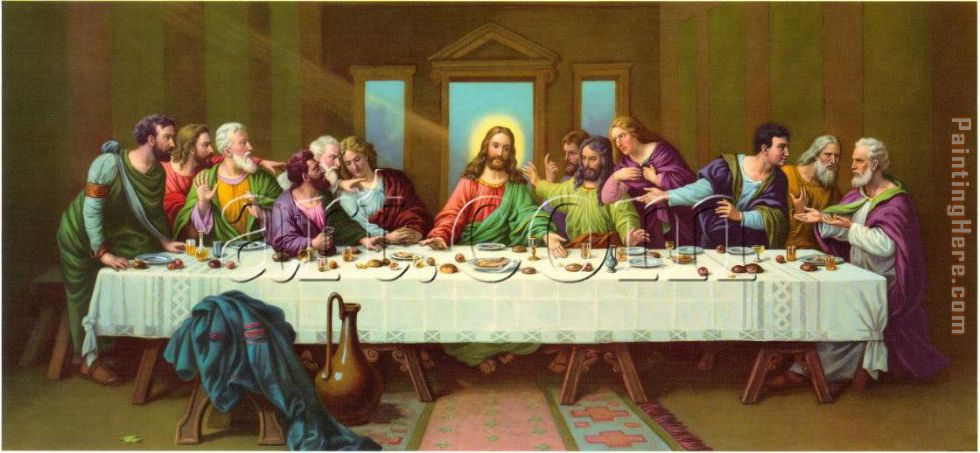
What we know as The Last Supper http://www.paintinghere.org/UploadPic/Leonardo_da_Vinci/big/picture%20of%20last%20supper.jpg occurred on the evening the day before Midsummer Day, a day that was also celebrated as Iesus’s Name’s Day. This fact elevates Iesu twice, first as Basil (King) of the day in his own right and, second, as the son of the Sun, who by giving him birth on that day also elevates herself to prominence.

The disciples of Iesu argued that Iesu should not be the only one to fight the laws made up willy-nilly by secular rulers. There was an agreement among them, that all would draw lots. By participating, all signaled that they were ready to offer their lives to the Sun. Iesu made no objections.

It happened that the ruler of Byzantium at the time was King Alexius I. The King had heard rumors of resistance to his ruling among the people. He, therefore, wanted to discover who their leader was. The Emperor had heard that a ‘King of the People’, came from a country of nomads—a people who moved with the Sun and the seasons and herded reindeer for their livelihood. Emperor Alexis sent spies try recruit a spy from among Iesus’s closest followers.

The follower most accessible was Judas. Judas had his reasons: he did not believe that the Sun was a divinity. He was recruited for thirty pieces of silver (we have no real idea of what it was worth then). It also happened that Judas’s piece of pie had the coal in it, but Judas did not let on and swallowed it. Later, a troubled Mary Magdalene spoke to the baker, but was assured that everything had been done right and there were witnesses to prove it. Iesu said: “Do not be concerned. It was and remains my lot to be the son of the Sun.”

While walking along the shore of the Bosphorus that night (there was a full moon), Judas, as if overcome with grief for Iesu’s lot, came up to him and embraced him. This was the signal waited for by the King’s spies, who were hiding among the people of Constantinople, who, too, were talking a walk and enjoying the moonlight.

Shortly thereafter, Iesu and his colleagues (also known as disciples) were surrounded by the Emperor’s armed police and taken into custody. Iesu was brought to the court of the High Priest. The name of the High Priest, some say, was Yannas. He headed Emperor Alexis’ own religion, which was named Christianity. The name was borrowed from the Slavs, among whom the word meant “criss-crossers or ‘markers’ of earth” or more simply plowmen. In those days agriculture had just made its appearance http://p2.la-img.com/249/28182/10780046_1_l.jpg . The ‘Christians’ had no plows as we know them today, but were using stumps of trees with the branches cut down to the length of a foot or a foot and a half. When a a man stood on the stump, and an ox or mule was made to pull it, the ‘plow’ scratches deep marks into the face of Earth.

To scare those who opposed his order to end all celebrations of the Sun (or Midsummer, or Johns Day) and Earth, Emperor Alexis had his gendarmes (armed police) dig a large pit at the Hippodrome. The pit was filled with logs and these set ablaze. The fire burned and sparks rose high into the air all night long and was the talk of Constantinople. Some said that the King had defeated his own purpose, which was to have ‘no’ celebration whatsoever.

There is great confusion about the ‘true’ story of Iesu Basil or what I prefer to call Iesu The Bogomil (Jesus God lover). The reason is that there are at least two stories of what happened.

The Catholic Christian or canonical version of the story has had a wide distribution. The story is accessible in every country and in nearly every language. The ‘Other’ story, however, is not only denied, but the fragments continue to be denied validity. Among the two best ‘other’ stories is that of Basil the Bogomil, whose death has been described in Anna Comnena’s biography of her father Emperor Alexius I of Byzantium http://en.wikipedia.org/wiki/Alexiad ; and in the story of Polycarp the Bishop of Smyrna https://en.wikipedia.org/wiki/Polycarp .

Unfortunately, the story of Jesus Christ is a wholly made-up story (probably by the forebears of the modern French) with nearly no recollection of things holy in proto-Christian times.


Saturday, July 18, 2009


NOT-VIOLENT TERROR
13 The Unmaking of Jesus (cont.)

The story of the murder of the Bogomil leader Basil by the Byzantine Emperor Alexius I is a story well known in the 12th century when it took place. It is not so today. Today many people are likely to be shocked to hear that what happened to Basil is a story that parallels closely to what happened to Jesus. There is a reason and explanation for this.

The story of Jesus was created around the story of Basil. The dreadful events that overtook Basil provided a ready available armature for the story for then emerging neo-Christian church founded by the Byzantine emperor Alexius I. Of course, the new story is reaches us not only inverted in the reasons for it happening, but the main cathartic events were changed from burning to being nailed to a cross. The reasons for these changes, too, are founded on the need to divert the public’s attention from what really happened.

Most likely these events happened under the rule of the Byzantine empire’s Emperor Alexius I. The Emperor felt compelled to change the story and found a new church and a new religion, for two main reasons.

1. The arch-Christian church, what we today derogatorily call the cult of “pagans”—of which Alexius his predecessors and I had been the sacred kings—had for many years felt alienated from their king. The people had once called their kings “the sacred king”. However, something increasingly unacceptable happened. For several consecutive generations the sacred king began to fail to fulfill his sacred function—which was to act the role of the kingdom’s founding father—by reenacting the founding violent moment by self-sacrificing himself. Since time immemorial, the founding moment (of death and miraculous rebirth) was celebrated during the annual solstice festivals. The festivals, one in winter and one in summer, generally went by their local name, but for the most part retained the root name of the sacred being: John, Yan. We see this practice in such names as Ivan Kapusta, John the Baptist, Yannukah, Hunnapu, Yohammad, and so on. Depending on the age of the sacred king (whether young or old), the length of his reign was determined by priests. Usually the agon, the moment of self-sacrifice, came with an obviously old age.

In any event, the sacred king of the Byzantine empire began to act increasingly as merely a king, that is to say, a man with a standing army who could and often did rob his people, his neighbors, aggrandized himself, and dictated what people should or should not do and think. In short, there occurred mutual alienation between the king’s and the people. Eventually, this alienation reached a stage, where it broke out into a civil war. As part of his war effort, the emperor needed to kill not only the Johns, the wandering priests of arch-Christendom, but also to replace their ideas with ideas of his own.

2. It is probable hat the alienation between the sacred king and the people began when the king began to use a number of the priests to the Sun, as not only his bookkeepers, but collectors of the gifts that the people donated to the temple-palace. These priests, were self-castrated devotees of the Sun, and, thus, not attracted to women for sexual reasons. This made them attentive workers and bookkeepers. Unfortunately, since the priests were such competent gift collectors, the sacred king soon discovered a way to have them collect more gifts than was customary. In time, the word “gift” came to mean “tax”.

At first, the tax was used to build grander temples, which then became the sacred king’s palaces, which of course soon no longer pretended to be temples. As the sacred king abandoned the temple for the palace, he became what today we call a temporal or secular man, an atheist as religiously devoted to materialism, as the sacred king had once been devoted to the aura of charisma that held the community under its umbrage. The temple prostitutes (women who wished to make the temple especially attractive as a place for leaving gifts) became part of the king’s harem. The “gifts” paid for a standing army, employed an increasingly large number of artists and artisans, and so on. Indeed, the king abandoned the ancient practice of self-sacrifice and began to seek ways to escape death altogether. This is what is behind the stories where kings and heroes go out on adventures to seek the magic plant (usually guarded by a serpent), the eating of which will give one immortality.

However,

3. The priests of Iananna (the Johns) learned not only how to do bookkeeping and collect taxes, they needed to invent writing to do so. And they did so. With the invention of writing, the castrates learned not only how to record old stories, but invent new ones. Some of the stories, which the priests invented, did not sit well with the king. He began to fear that they would take power away from him. This fear was the cause for discovering various ways by which to bind the priests closer to the palace and alienate them from the temple.

This is how there developed two factions of priests. One faction stayed with the people. These were the wandering preachers, the Johns. The other faction became known as “Jews”, most likely a word that was semantically connected to words for gifts and taxes. The word “jewel” comes to mind. The Jews necessarily became involved in palace intrigue, while the Johns remained of the people.