Showing posts with label Oedipus. Show all posts

Saturday, November 15, 2014

EC 446 / GoveRment is an aLien People
Eso A.B.
Another King Fails In Charisma
Translation © Eso A.B.

It is a curious happenstance that when Sigmund Freud lent to the story of Oedipus Rex his famous interpretation of incest [re: Interpretation of Dreams (1899)], he not only proposed a psychoanalytic theory, which we know as the Oedipus http://www.britannica.com/EBchecked/topic/425451/Oedipus-complex  or ‘castration complex’ http://psychology.about.com/od/oindex/g/def_oedipuscomp.htm, but brought to prominence a minor element that is only of a secondary importance to the play of Sophocles as a whole.

It is the prominence given to the secondary element and the failure of Western analyst to see beyond this secondary aspect, that not only increases the intellectual significance of the play, but betrays Western scholarly intelligence as entrapped by its solipsist character.

Freud fails to analyze the play properly, and only notices its superficial aspects: that in the course of the plays’s development, Oedipus slays his father and inadvertently marries his mother. Freud fails to notice that this happenstance occurs, because Iocaste tries to save her son from being tested by the Gods (through a mock sacrifice ritual), and that the reason for her anxiety and activities to circumvent her husband, King Laius (another name for King of the People or Ludi)  is that Oedipus, may be at risk of being slain by King Laius during the proceedings, and, thus, denied, what the mother believes to be her son’s rightful role as future King of Thebes.

As my ‘rewrite’ of Oedipus Rex argues http://oedipusrexrewritten.blogspot.com/2014/09/oedipus-synopsis-king-ludi-ii-play.html (see synopsis of Act I), the anxieties of Queen Iocaste arise from the fact that she is a former temple prostitute. This fact causes her to be pregnant with Oedipus at the time the King of Thebes Laius decides to marry her—possibly because of her expertise at playing and being a desirable and at the same time a ‘divine’ sexual object.

When the child is born, the King follows the old custom of letting the Gods decide whether the child is fit to become the next ruler of the Kingdom by ordering him exposed to the elements of Mt. Cytheron. Not unreasonably, Queen Iocaste is anxious that the King may have got wind that the child is not the King’s, but the result of her liaison with an ‘Unknown lover’, and may use the ritual as a pretext to kill the newborn.

For these reasons the Queen abducts her own child from the mountain and replaces him with a stillborn of another woman. She spirits away her own son to the neighboring Kingdom of Corinth, where her sister Meirope, also a former temple prostitute, has married the King.

As Oedipus grows into an adult, the mother finds herself in the unenviable role of wishing to do what she can to enable her son to become the king of Thebes.

In effect, Oedipus Rex is a play about politics and the entrapment of a group of people (of royal and ludi descent) by the customs of choosing a Kingdom an heir. Rather than a story of incest as Freud’s interpretation and the political prejudices of our epoch have caused the play to become, it is an illustration of how kings in the long ago were legitimized and the risks that such a legitimization entailed.

While the story has many possible nuances, the one that interests this blogger is the role of ‘king’ as leader of society in former times versus the role of leadership assigned to ‘democracy’ in our time.

Indeed, government by King and Democracy may be the north and south pole of a bipolar psychic political system and may be telling us something about the development and history of human society.

If we presume that such a bipolar political model does indeed reflect the reality of social organization of, say, the last ten or twenty thousand years, we may perceive in pareidolia the ‘drift effect’ that takes the place of Earth’s magnetism. As the Earth’s magnetic poles gradually shifts from + to -, from the North pole  back to the South pole, so the story of Oedipus Rex yet tilts toward the ‘kingly’ pole, while the Democratic pole, represented by Queen Iocaste, finds fault with the system and subjects it to a test that turns out to be catastrophic in result. I.e., the entire Kingly ‘political system’ goes down as a result of one woman’s anxieties, just as today our Democratic ‘political system’ may be going down for the simple reason that one presumably ‘democratic’ President cannot—because a of a social tradition traditionally disciplined by charisma his ‘color’ denies him.

Wednesday, August 7, 2013

Eso’s Chronicles 199/ 9
Violence or Death? (9)
© Eso A.B.

In a book of interviews (“Violent Origins”), where the questions center around Rene Girard’s investigations in human sacrifice, violence, and death, in the Preface Gerard is quoted from yet another book of his (“Violence and the Sacred”) and is attributed the following statement: “Violence is the heart and secret soul of the Sacred.”

Without denying the importance of Girard’s https://www.youtube.com/watch?v=9Uo3THEzEtc provocative thoughts and contributions in an age of indifference to one of the most central questions for social existence, there are several things about which Girard ‘puts words  into the mouth and thoughts into the brain of readers through omissions’ that  are patently false.

First, let us take the above statement: “Violence is the heart and secret soul of the Sacred.” If that is so, then are not the so-called ‘modern’ governments among the most sacred governments that have ever been? And is not then President Truman’s decision to drop the nuclear bomb on Hiroshima an act far superior to that of a Jesus, who drops it, so to speak, only on himself? General MacArthur, who  then confiscates all photographic and like evidence of the deaths and damage and destroyed it, was he not one of saintly disciples of presidential America? The grim fact that U.S. government refuses to sign a peace treaty with North Korea (for over 60 years), because its absence leaves it a gate through which--at some point in the future—to attack China? Is that not a guarantee for America’s future saintliness?

Second, if the reader listens to the interview with Girard at the link provided above, Girard is more than a little off when he states that all mythic violence is directed by entire communities against a scapegoat and that Jesus is the first ‘innocent’. That kind of absolute is borne of ideology and contempt for ancient history.

One of the phenomenons brought about by state (originally Frankish, then French) sponsored Catholic Christian hegemony is that its ‘Christian’ violence imposed on an older proto-Christian foundation (its own and those of neighbors) yet another violent restriction: self-sacrifice, either as a form of direct action or as sacrifice of one’s life for a cause other than dictated from those in the pyramid of power above them, though this point of view strengthens my argument that modern Christianity is but a wolf in sheep’s clothing in that it will not oppose those in the pyramid above them by pushing alarm buttons or by organizing direct actions, or by its priests sacrificing their lives in not-violent opposition. While Gerard never mentions the European Union, EU, his political support of a government under the ‘false flag’ invented in Aachen by Franks http://www.eupedia.com/europe/frankish_influence_modern_europe.shtml is evident. We can see its continuity in the French courts’ demand that Muslim girls do not wear their modest scarves to school.

As for ‘Jesus Christ’ being the first innocent who is slaughtered as a scapegoat, yes, it is true in-so-far that the story of Jesus is an invented story written over the story of king John Basil of Byzantium. Jesus himself is a fictional composite, created out of several saintly characters, that of Sts. Polycarp http://en.wikipedia.org/wiki/Polycarp and Basil (first name possibly John, but since Catholic repressions disguised behind the name of Disciple John) including. Yet even the invented story, invents his death in a Robin Hood setting, i.e., he is crucified between two thieves, surely meant to indicate that those who killed him wished the future to remember him as a criminal.

At the very beginning of the link there is discussion of Oedipus, but Girard, a literary critic among other things, completely or deliberately  misreads the story by failing to see the hidden story within it. For a full reveleation see my http://oedipusrex.blogspot.com Indeed, the story of Oedipus Rex is a story of a king inheriting the tradition of self-sacrifice, but fearing death escaping it with tragic and violent consequences.

Gene Girard’s faith in religion as the ‘Word’ is a word for himself. However, since very ancient times humankind has been aware that the ‘word’ has to be reinforced by ‘deed’, and if such a deed and reinforcement is lacking, the ‘word’ becomes empty. This is what is behind the act of self-sacrifice rather than its substitute—violence. This is what is behind humans working together as a community, rather than letting one individual of ‘empty word’ exploiting them together for his own gain. Yet Girard’s thought—outside of being provocative in an age where thoughtfulness suffers of malaise—ends up replacing God with Money. Whether the figures which stand behind Money are God, Gates, or Rockefeller--What a disaster for humankind!
 
Elsewhere in “Violent Origins” (p87) Girard insists that “…the imperfection of our knowledge does not deter us from interpreting these documents as reliable evidence of some kind of collective madness….”, The documents he is referring to are from the time of Black Death, when “…foreigners were killed, and Jews were massacred, and a century or two later, ‘witches’ were burned….”
 
While one may agree that the killing may have resulted from some kind of “collective madness”, the sorce of this great madness is the Church itself—that it  continues to propagate the will of the  secular leadership. Neither it or the secular leadership ever was or is capable of offering itself in self-sacrifice. It is evident that the neo-Christian dogma that “Jesus has died for our sins…” is just the right abracadabra of a  tetanus bacillus that covers the nail Christian institutions drive into the heads of their flocks and paralize the minds and bodies of the sheeple and make them part of a stupendous parade of the living dead. I can think of “resurrection” only in terms of the ‘living dead’ growing tired of being dead and shaking off this neo-Christianhomunculus for all ages to come.
Academia covering its brain with sand: http://www.globalresearch.ca/911-in-the-academic-community/5345251
 

Sunday, April 4, 2010

© Eso Antons Benjamins, aka Jaņdžs

AN INTERMISSION  
97 To Be Continued at Another Time (2)

I     Mythology, when understood to be more than about ghosts, vampires, and dragons is a set of images whose complexity give evidence of having once been a well thought out and well told. The story of Oedipus, re-presented in my blog series “Tiresias’ Revenge” (see blogs 68-81), and my re-construction of “The Story of Clever John and Crazy Jane” (blogs 92-95) give support to the belief that these stories are profoundly spiritual in content. Unfortunately, in both cases, the world dwells on fragments and easily and often misinterprets them as a convenience to forgetfulness.


No doubt, my interpretation of the story of King Oedipus (“Tiresias’ Revenge”) puts emphasis on something passed over by Sigmund Freud’s interpretation. At the same time, the knowledge of how a story can be constructed and deconstructed and constructed yet again—rather than one example being the only example for all times—tells us that many examples may be tried and not always the best model is chosen. The story of King Oedipus clearly bends the plot of the play more to my reconstruction than that of Freud. Sophocles’ version of the play masks some disturbing events in the background that Freud and most everyone pass over.

Both of the aforementioned stories (“Tiresias’ Revenge” and “The Story of Clever John and Crazy Jane”) give an interpretation of The Real that we are not accustomed in perceiving. Most of us know the Real as a Western positivist projection. While the positivist advertisement best points its finger at the Barbie Doll, the Real of Oedipus and Clever John gives evidence that their creators knew how to chop wood. For a king to discover that it is not for having slept with his mother that ten of his family die, but for him not having suffered the risk of sacrifice is devastating. It is devastating for all who trusted the king’s (or government’s) authority. Clever John (clever in the sense of the unhesitatingly using his wit in an invidious manner when opportunity allows) gets taught the priorities of the Sun in no uncertain terms.

It is through the story of Clever John (a story very likely from before the written word) that we discover that proto-Latvians knew what the price of a wagon load of gold was. It was the “Clever Johns”, the  kaupos, who came to replace the itinerant Johns of arch-Christianity. Crazy Jane became crazy because Clever John could not be trusted though it cost him the spectacle of the lights going on just in time to discover that in return for a wagon full of gold, he has the pleasure of making love to a straw doll.

The people who formed the Latvian governmentwhich followed the “singing revolution” and exposed Latvia to the shock treatment of neo-liberal economic policies, betrayed the people and the state of Latvia by seizing it for conspicuous consumerism. One may argue that they neither knew nor understood better, and were mere kaupos on behalf of neo-liberalism. Ought they to not know now? There is no evidence that they do. The recent appearance of a group that calls itself “The Meierovic Group for Progressive Changes” (whose initial members count 43 prominent names) proves that the fault is not only with the government, but the intelligentsia of Latvia. Perhaps it is mute; perhaps it does not exist, though it is mentioned frequently as if asserting it makes it so.

Describing itself as “non-political”, the Meirovic Group has announced that its members are “…ready to give their time and energy to make of Latvia a dynamic, self-aware and honorable 21st century Western nation” (re Press Release of 21-3-2010). Are they joking? Does not the word “Western” represent—implicitly and explicitly—a political orientation?

If before the disintegration of the Soviet Union and with it the orthodox Left in the West, one could argue that “West” (or Western) was a word that contained both the Left and the Right political wings, today this is no longer true. Anyone who follows politics today knows that politics has been captured by money that favors a neo-liberal orientation. True, the latter pretends to be an all embracing “Western” political ideology. But it is unlikely that the members of the “non-political” Meirovic Group do not understand that “Western” has come to stand for the creation and maintenance of weak citizenship. What else is the Latvian government, but a bought off conspicuous consumer partidocracy making a gross spectacle of itself with the “positive” political support of its corrupt self? The Latvian people stand outside this glass bowl with but one orange fish in it and watch the fishy wiggle its tail as a form of reform.

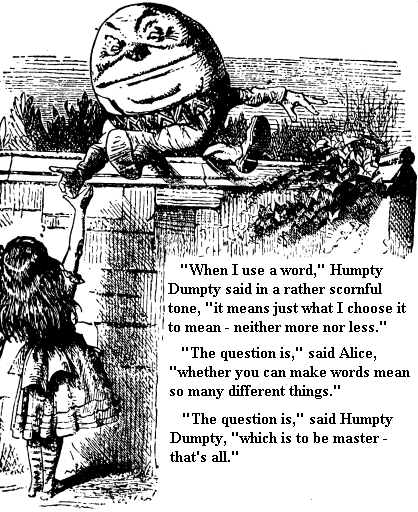
The Maeirovic Group asks citizens to be “demanding” and suggests that this demandingness will metamorphose into a demand for schools and health care. Have the Latvian people not been demanding this all along, but have been yoked by their government to debt and tax slavery and banks instead? The political winds of today blow people not toward benign globalization, but toward more neo-liberal exploitation of the politically weak and uninformed populations said to believe in something the government and its cronies call “populism”. The “growth” of the consumerist Humpty Dumpty goes on uninterrupted even in a crisis that is as permanent as the war on terrorism by “democratic” and “freedom (loving)” consumer nations. Even Alice (in Wonderland) knows that Humpty Dumpty falls off the wall; not so, it seems, the said Meirovic group.

II    It would have been politically more neutral for the Meierovic Group to say that it stood for an East-West neutral 21st century nation. This evidently did not occur to the group. Why not?

The answer is only a guess, but the ones who should have questioned the politics of a “non-political” group should have been those with links to the “old left”. The Maeirovic Group does have members with such links. However, apparently these members stand for that particular “left” which has no ideas of its own and finds primitive accumulation an apolitical act. In short, the Meierovic Group sees the war currently being waged on the behalf of and to further the cause of Conspicuous Consumption as an end in itself, and of course as destined to win. Therefore, so the logic goes, why oppose “Western” political ideology which is a Winner from the word go? Did not the so-called Cold War happen between the Soviet Union and the West? Did not the “West” win and provide proof of a successful depolarization of politics?

What the Meirovic Group does not say is that the “West” unambiguously supports Conspicuous Consumption with the military forces of NATO. Only a decade after the fall of the Soviet Union, the symptom of Conspicuous Consumption broke out in an acute event, which we know as “9/11”. A group of young people, saturated by, with, for, yet unaware that they had been poisoned by the bacillus of Conspicuous Consumption, motivated by jealousy (and angered by delay in the instant gratification promised in televised soap opera ads), they attacked one of the financial centers of the West. For all its paradoxes, it was a chronal moment. The events ocultated (sorry; a new meaning to the word ‘occultation’), occultated in such a way that paradoxes met, shorted, and something humongous happened: the sick unknowingly retaliated on those who made them sick more profoundly than they had dared imagine. [For backup of this hypothesis of the new polarization see “Afflicted Powers”, Verso, 2005, by Retort, a group of San Francisco Bay area that describes itself as “antagonists to capital and empire”. An interesting read; see Ch 5 & 6 to be sure.]

The crisis of Latvia is that of a community without a purpose, dreaming of conspicuous consumption, financially poor, psychologically adrift. The present Latvian government (a partidocracy controlled by businesses wholly committed to conspicuous consumption) sells conspicuous consumerism to the people without reservations, because the government emerged from under the Soviet yoke as a political a tabula rasa. A moment after this reconstituted entity rid itself of the inspired romanticism of “liberty” explicit in the “singing revolution”, it instantly morphed into a failed imagination. The imagination fails the Meierovic Group. This does not mean that its surreal presentation of itself as “not a political party” does not continue the romantic notions of the “3rd Awakening” of Latvia. Indeed, it does continue it. However, this suggests that the crisis which the group perceives and of which it is born is more serious than the group knows. This will present the group or whatever may emerge from it with either a strategic failure, i.e., a continued preoccupation with a fake present, or the emergence of the only alternative—a revolutionary act.

As this writer has suggested many times, one such revolutionary act (or, if you will, not-violent terror—see blogs 1-81) is a “not-vote” in the upcoming elections in Latvia in October. Unlike the pean of peacemakers: “They declared war, and no one came”, which is far too soon to predict to be soon doable, ‘not-voting’ is doable. The members of the Meierovic Group have not only the potential talent and influence to carry off the act, but to prepare for its success (of which there is a good chance) by preparing forums for the necessary debates, conferences (to rewrite the Latvian Constitution for one), and install a temporary government while the house of Latvia is debated over and put in order. This kind of effort will surely be worth joining and its growth will send chronal echoes through all political spectrums of the world.

P.S. Spring is icumen in. I write this on the 30th of March, 2010. The cranes, storks, geese, and starlings returned a day or two after the spring solstice. The first butterfly was seen at a local cemetery—as one rose, but the other went from being a point to becoming a wave as the holographic model of the universe suggests. Immersed in an affliction known as ‘lack of time’, I take an intermission to do other necessary things. From time to time I may return with yet another Postscript. I hope the readers found the above essay interesting enough to back up to the early blogs, even back to the beginnings. The build-up through all that boring stuff was necessary to erase the orthodox and calcified image of both “ancient” and more “recent” (proto-)Latvians and create the beginnings of an alternative.

P.P.S. For all those of you who did not care a wit for any of my blogs, I send you herewith the greetings and “apologies” of Clever John and Crazy Jane. See here. I have a feeling that you will want to see this twice.

Last but not least: a link to a workshop of “How to start a populist NOT-VOTE movement” or
any-other-such and to “"Eso's Chronicles" for a philosophical trump over the usual “a Not-Vote is Sin” sweats (see blogs 96 & 97 to get the idea): It is the only way for people to recover the State.

Asterisk & Notes of Interest
On material deprivation in Latvia.
On the theme of “more-equal-than-others” see George Orwell's "Animal Farm".  
A recommended read: “The Theory and Practice of Oligarchical Collectivism” by Emmanuel Goldstein (A book within a book from George Orwell's "1984".)  
Of interest to me is this  (news on the California elections to legalize Johns Grass) and this article (coca politics in Bolivia). The articles express some of my reasons for supporting the growing of Johns Grass in Latvia.
Interesting material  relating to Johns.
A provocative and stimulating news-analysis-opinion site (from someone very American): http://emsnews.wordpress.com/  
……………………………………………………..
These blogs tend to be a continuum of an idea or thought, which is why—if you are interested in what you read you are encouraged to consider reading the previous blog and the blog hereafter.

Partial entries of my blogs may be found at LatviansOnline + Forum Home + Open Forum –ONLATVIANPOPULISM vs LATVIJASLABEJIE. If you copy this blog for your files, or copy to forward, or otherwise mention its content, please credit the author and http://esoschronicles.blogspot.com/ 

Tuesday, January 26, 2010


© Eso Antons Benjamins, a.k.a. Jaņdžs

NOT-VIOLENT TERROR
76 Climbing Mt. Citheron (IX)

There is yet a thirteenth death in “Tiresias’ Revenge”. It is the death of the Sphinx, the chimera of child sacrifice child sacrifice that has been haunting Thebes.

When fleeing Corinth—in order to escape the prediction that he is about to kill his father and marry his mother—and on his way to Thebes, Oedipus meets and kills his father. Sophocles presents the scene as if it is a fated accident. We are told that King Laius and Oedipus meet on the road, but neither of the parties identify themselves, and both try to push each other off the road. The fight over who has the right of way escalates into a deadly fight. In the melee, the captain of Prince Oedipus’ bodyguard kills Laius, the king of Thebes.

After the “victory”, Oedipus continues his journey until he reaches the temple of the Sphinx. The temple is not far from Thebes. The Sphinx, we are told, is plaguing the city of Thebes. The Sphinx will continue to plague Thebes, that is, demand the city to sacrifice its young for its dinner, until someone is brave enough to come before it and answer its ridiculously simple riddle: Who walks in the morning on four, at noon on two, and in the evening on three legs? The answer is “man”, at least this is the answer that everyone in the last two thousand years plus (according to Scaligeri’s chronology) has accepted as being the right answer.

One may accept the given answer as the correct one. On the other hand, we should not forget that the third leg, which is not a nature made instrument, but an instrument made by man, may be presumed to be other than a cane. After a crawl on all fours and learning to stand upright, the hands may hold more than a stick. This is to say that after learning to walk, one may support himself on a spear, a sword, or a rifle. The instrument need not be associated with the physiological nature of man. It may be an instrument that is typical to a cultural ethos.

In any event, Oedipus and his father do not meet each other by accident as Sophocles misleads us to believe. To the contrary, the meeting has been prearranged by Queen Iocaste, the wife of King Laius and mother of Prince Oedipus. The Queen knows that on a certain morning the King is to go and pick up a wagon full of children he has bought from some traders for sacrifice to the Sphinx. The purchase is in lieu of having to sacrifice the children of Thebes.

The Queen arranges an as if accidental meeting by conspiring with her sister, Queen Merope of Corinth. [The history of the two sisters is discussed in greater detail in “Tiresias’ Revenge” (blog 47)]. The captain of the guard which accompanies Prince Oedipus’ flight from Corinth is informed of King Laius’ upcoming transaction, and is to take advantage of the circumstances and kill the king.

In terms of the story, we need to understand that Prince Oedipus’ journey to the temple is not so much the next episode of the play as it is a continuation of action that began at the crossroad where the exchange of the children for payment took place. In short, the death of King Laius is to be identified with the death of the Sphinx. This identification need not be made by anyone else but Queen Iocaste, because it is she who starts the story of Oedipus by refusing to expose him to the elements on Mt. Citheron, which will put him at risk of becoming a sacrifice to the Gods of Fate. Since the Sphinx has wings, we may imagine that he-she could fly from the temple to Mt. Cytheron and snatch the royal child exposed there and deny him life and the right to become part of the royal retinue. Queen Iocaste has a plan that may outwit the Sphinx.

There is no need here to tell the details of the original plot of Sophocles. What we know is sufficient to understand that Sophocles wrote a riddling play from which a number of essential elements of plot have been removed or have been so abstracted as to make the play a riddle. The most likely reason for creating the riddle is political repression. Since the political repression may be for the purpose of ridding society of self-sacrifice by identifying it with the sacrifice of children, the censure and repressive force can only come from a hierarchical society in which self-sacrifice—from the point of view of its elite—is undesirable. Self-sacrifice is an individualistic act in that it is unpredictable (subject to the subjectivity of the individual) and may cast doubt on the authority of those at the top of the pyramid, especially if those at the top have no intention of doing self-sacrifice themselves. Rather than submit their lives to fate, they rather enjoy the “pleasures of life”, albeit a diminished life in that it asks for itself no more than a leisurely drift to Hades via a river called Yana, G(Y)anges, D(Y)on, D(Y)onava, or D(Y)au(n)gava.

As mentioned in earlier blogs, other than sacrifices made during the violent times of Latvia’s founding, Latvia had two distinct opportunities for self-sacrifice in the twentieth century. One was in 1940, when the President Karlis Ulmanis could have (but did not) self-sacrifice himself in the face of the ultimatum to the nation by the Soviet Union, because Latvia had no chance of winning a fight against the aggressor, except make it a symbolic act. The other was in the years immediately after the fall of the Soviet Union, when the post-Soviet Latvian government was on its way to becoming so corrupted that it was obvious (though not necessarily noticed) to most people outside the government, and one Adolfs Bukhis (1993). The latter attempted to redeem the government’s failure by protesting the direction the government by sacrificing his life. His effort was denied recognition by both the post-Soviet Latvian government and its media.

One may object by saying that the troubles of Thebes have little to do with the troubles of Latvia. As the saying goes: yes and no. In this writer’s opinion, we shouldremember that the story of King Oedipus is

1. not as “ancient” as we are led to believe it to be by the Scaligeri chronology (I am inclined to agree with Anatoly Fomenko’s suggestions as to the reliability of orthodox history);
2. fails to confront the interests of a secular and fundamentally laissez faire prince (government) to repress self-sacrifice;
3. substitutes self-sacrifice with a return of child sacrifice, but in place of children, places young immature men and woman, re soldiers;
4. leaves the elite occupy the summit of the power pyramid, where it never makes a sacrifice, but frequently changes chairs of office among its members to escape coming into focus of the public.

The substitution of self-sacrifice and child sacrifice with “war sacrifice” by modern government confirms that our modern orientation of rule is toward maximum, rather than minimum use of violence and terror as the tool of authority for keeping government in power. This keeps the weak bonds of community weak and under the control of the government. Invariably such power is usurped power. How long will it endure? If once the answer was “not for ever”, today it is “not for long”.

Asterisk & Notes of Interest:
On material depravation in Latvia. 
On the theme of “more-equal-than-others” George Orwell's AnimalFarm.  
A recommended read: “The Theory and Practice of Oligarchical Collectivism” by Emmanuel Goldstein (A book within a book from George Orwell's "1984" )  
Of great interest to me is this and like articles. It presents some of my reasons for supporting the growing of Johns Grass in Latvia.
These blogs tend to be a continuum of an idea or thought, which is why—if you are interested in what you read—you are encouraged to consider reading the previous blog and the blog hereafter.
Partial entries of my blogs may be found at LatviansOnline + Forum Home + Open Forum –ONLATVIANPOPULISM vs LATVIJASLABEJIE. If you copy this blog for your files, or copy to forward, or otherwise mention its content, please credit the author and http://esoschroniclnes.blogspot.com/  

Friday, January 22, 2010


© Eso Antons Benjamins, a.k.a. Jaņdžs

NOT-VIOLENT TERROR
75 Climbing Mt. Citheron (VIII)

Let us begin the play by pretending that we are its directors.

Imagine that you are going to the theatre tonight. The play you are going to see is some author’s scandalous rewrite of the ancient and famous playwright’s Sophocles play “Oedipus the King”. The reinterpreted and rewritten version is called “Tiresias’ Revenge”. What is Tiresias revenging? Perhaps the “truth”. What is truth? Perhaps what ought to have been done and can be done still.

This is a long play, which is why some readers have compared it to Wagner’s Der Ring des Niebelungen Der Ring Des Niebelungen cycle. No music for this one yet though. There will be a long intermission after the second act, when one may have coffee and cake. In the basement cafeteria of the theatre there will be young aides to help those interested to understand parts of the play that they did not understand. If asked, the aides will also explain what is ahead in the fourth and fifth acts. Tip the aides generously.

Imagine that the curtain of the stage is closed. It is still some minutes before the play is about to begin. The audience is in taking seats. The volunteer selling programs is still sitting in in the lobby. The balcony seats are almost filled.

There is movement from behind the stage curtain, then it parts a little, and to the front of the stage steps one of the actors. The actor is holding in his or her hand a mask to indicate that he or she is part of the production. He-she intones: “Ahem… I have an announcement to make. There are some changes in the scenery tonight. You will see one of the scenes twice. I will briefly tell you about the scene, so you know what occurs if we decide to skip through it quickly. Here it is:

“There is a temple. It stands in the mountains, indeed its rear exit stands right over the edge of a cliff. The temple is on the road from ancient Corinth to ancient Thebes. [Some directors may wish to replace the name of Thebes with that of Riga.] In the centre of the temple on a high and broad pedestal sits the Sphinx. It is a horrible beast and inspires terror the moment one sees it. However, in fact, you see nothing of the Sphinx but its Face. The face, horrible to behold, is drawn or projected on a curtain. Its features show the anxiety of life facing Death. The Sphinx is a former dragon that has devoured itself from the tail up, and the image resembles—I will let you imagine—that of your own face after you have cannibalized yourself from the tail end of yourself. The road of your rage to live has been a bloody and horror filled voyage. Now you cannot devour yourself any further. The Face cannot eat itself, but only express its terror of Death if it takes the next step towards it. Perhaps the Face looks something like the one Picasso drew in one of his last drawings, except in place of man’s tightly drawn lips, there should be teeth as horrible as the teeth of a saw.

“On the road below the temple appears a wagon drawn by four oxen. In the wagon sits a large cage, and the cage contains four to eight children. [This scene may in fact be projected on the screen behind the actor’s back as a video clip.] The driver of the wagon is Tiresias, the priest of the temple. Tiresias has not been blinded yet, but somehow he already has that “blind” look of one who has gone snow blind from having seen too much snow. On top of the cage sits a guard armed with a spear.

“Tiresias stops the wagon before the temple, opens the cage and motions one of the children to follow him. The child is dressed as if he or she has been invited to a children’s birthday party. The child and Tiresias walk toward the temple, then walk up the temple steps right up to the curtain, to the Face of the Sphinx directly in front of them. To the right and left of them in the shadows may be present some other figures. Perhaps these are the witnesses of the proceedings.

“When Tiresias has come before the large temple curtain and the face of the Sphinx, he seizes the child by the scruff of the neck, grabs the belt around his or her waist, and pushes him-her with some force through the curtain. The curtai has a tear or an opening in the middle to facilitate a quick “disappearance” of the victim. Tiresias performs the motions as if he has had lots of practice. The children do no more than cry out in surprise.”

A few moments after each child disappears behind the curtain the audience hears a thud. [Thud! x 4.] Some men may bring onto the stage four sacks of sawdust and let them drop there in a matter of fact manner, one after the other: Thud! Thud! Thud! Thud!] If you want to know, yes, the remaining four children are to be saved for a later sacrifice.

“Let the  plague begin!”


Asterisk & Notes of Interest:
On material deprivation in Latvia.
On the theme of “more-equal-than-others” George Orwell's Animal Farm. 
A recommended read: “The Theory and Practice of Oligarchical Collectivism” by Emmanuel Goldstein (A book within a book from George Orwell's "1984"). An article to orient yourself on populism in America (and hear the echo in Latvia), Retrieving the Democrats’ Reason for Being by Sam Smith.
Of great interest to me is this and like articles. It presents some of my reasons for supporting the growing of Johns Grass in Latvia.
These blogs tend to be a continuum of an idea or thought, which is why—if you are interested in what you read—you are encouraged to consider reading the previous blog and the blog hereafter.
Partial entries of my blogs may be found at LatviansOnline http://latviansonline.com/forum/ + Forum Home + Open Forum –ONLATVIANPOPULISM vs LATVIJASLABEJIE. If you copy this blog for your files, or copy to forward, or otherwise mention its content, please credit the author and http://esoschroniclnes.blogspot.com/  

Tuesday, January 19, 2010

© Eso Antons Benjamins, a.k.a. Jaņdžs

NOT-VIOLENT TERROR
74 Climbing Mt. Citheron (VII)

The response that I received over my interpretation of Sophocles’ “King Oedipus” (“Tiresias’ Revenge”) was somewhere between a statement and a question: “How is anyone to perform all those deaths in one [the last] act?.” I was taken aback. I thought that this is what directors of a play do—besides choosing a cast, they also solve problems and think of ways to do what may seem impossible to do. A stage need not have only one platform.

Nevertheless, on second thought, I could only agree that one may get the impression that death arrives as a pile up of speeding cars speeding cars. It all comes after the discovery of the facts or, if you will, the truth. Let me count the deaths.

1. First to die is the blind seer Tiresias;
2. then comes Iocaste, Oedipus’ mother and wife;
3. & 4. their two sons, Polynices and Eteocles;
5. then Antigone, their daughter;
6. Antigone’s lover Haemon, Prince Creon’s son;
7. then Prince Creon’s wife, Eridike, because Creon will not pardon Antigone for burying her brothers. No doubt, Creon also does not forgive his son for not abandoning Antigone.

This makes for a total of seven (7) deaths. However, these seven were preceded by four (4) others:

1. The infant who was substituted for Oedipus, but whose death is not declared.
2. King Laius, killed by his son Oedipus.
3. Polybus, the king of Corinth. He is killed by the Queen of Corinth, Merope, Iocaste’s sister.
4. Oedipus.

Seven plus four is eleven, quite a few deaths indeed. A dramatic denouement, not least because the central act no longer is Oedipus stabbing out his eyes as Sophocles seemingly wants to makes us believe, but the other deaths. All lose their lives as a result of the refusal by Queen Iocaste to expose for a night her son Oedipus on Mt. Cytheron and discover whether he is fated to become the king of Thebes, Greece,  or not. And then there is the “plague” itself, obviously with death lurking at the end of the road.

The reader, who knows the play according to Sophocles, will quickly notice that either Sophocles hid the motive why Oedipus was exposed to the elements, or I have added it. In Sophocles’ version of the play, at least the version that has come down to us, King Laius wishes to kill his newborn son for reasons unknown. In my rewrite or deconstruction of the plot, I propose that Laius does not wish to kill Oedipus for reasons unknown, but to test the will of the Gods. In other words, by exposing Oedipus to the elements on Mt. Citheron, Laius and all Thebes will know if the fates are agreed that he is suited to grow up to be king of Thebes. There are other additions as well, for example, Sophocles nowhere mentions that Queen Merope of Corinth is Ioacaste’s sister.

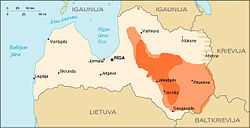
My acquaintance made no comment on my interpretation of the play or, more accurately, my resolution of the riddle posed by Sophocles. Rather than probe and embarrass myself by having to listen how perhaps my Latvian skills made reading the play difficult, I let the matter rest. Perhaps on another day would come and offer another opportunity. After all, the plague that plagues Thebes may be said to plague Riga and Latvia, and plagues do not simply disappear. King Oedipus may be renamed King John, and imagined as a descendant of the king of Jersika, King Visvaldis. [See blog 58 ff. for a discussion of the kingdom of Jersika and its king.] An interesting coincidence is the fact that the current President of Latvia is a surgeon, and the English name “surgeon” may be read as “sur-john” or Superjohn.

In any event, the several years that separate my probe into the nature of the Protestant mindset in Latvia has done little to change my impression that self-sacrifice as the cause of death is a subject too touchy to touch. It has obvious political implications. The sacrifice by Adolfs Buķis (see blogs 16, 36, 67, 68) of his life in front of the Freedom Monument in Riga and the dismissal of the event as inconsequential by the authorities and the media is ample evidence of the unwillingness of Latvia’s post-Soviet government and society to take itself “that” or so seriously as to involve self-sacrifice. The bureaucracy of the state, with self censorship its second nature—thanks to eight hundred years of self-repression—knows how evade any subject, itself including.

Mostly my disappointment was however the way the echoes of self-sacrifice rebounded on Latvian society itself. It simply had no ear for it. No doubt, the fate of Oedipus and Thebes could be imagined as in some way applicable to not only the current political situation in Latvia, but indeed to the political atmosphere the world over. Whatever the rest of the world may think or make of self-sacrifice, in Latvia it is but a clump of clay stuck to the shovel and what the shovel needs to be freed of. This is taken for evidence that everything is as it should be. Self-sacrifice as a phenomenon necessary for the creation and maintenance of a community, which makes it a political force, has not been able to find room for imagination here.

Now the act which my actor acquaintance was questioning is the last act, the fifth. (See blogs 46-47.) It is true that most of the deaths in the play (eleven +) occur or, better, are declared in this act. The entire network of relationships among those who are part of or somehow connected with King Oedipus’ court unravels here.

For the time being my probe to try discover Latvian reaction to tragedy had proven itself to be unsuccessful. As I came to interpret it, it was simply too risky to risk upsetting a Latvian audience with a play that insists in introducing such radical changes in how we have grown up to see ourselves. Latvians would rather continue to perceive the Sphinx as a mystery rather than a revelation.

However, there is a solution to the difficulty of having to present to the audience death after death after death. One solution is to tell the audience the story first or by giving it a hint of what the play is leading up to. Not all of the eleven and more deaths need to happen in the last act, but can be told in a brief introduction. In this way, the audience is given some tools with which to imagine the events in the play more easily.

Let see how this might work in the next blog.

Asterisk & Notes of Interest:

On material depravation in Latvia.
On the theme of “more-equal-than-others” Orwell's Animal Farm  
A recommended read: “The Theory and Practice of Oligarchical Collectivism” by Emmanuel Goldstein (A book within a book from George Orwell's "1984".) 
Of great interest to me is this and like articles. It presents some of my reasons for supporting the growing of Johns Grass in Latvia.
These blogs tend to be a continuum of an idea or thought, which is why—if you are interested in what you read—you are encouraged to consider reading the previous blog and the blog hereafter.
Partial entries of my blogs may be found at LatviansOnline + Forum Home + Open Forum –ONLATVIANPOPULISM vs LATVIJASLABEJIE. If you copy this blog for your files, or copy to forward, or otherwise mention its content, please credit the author and http://esoschroniclnes.blogspot.com/

Saturday, January 16, 2010

© Eso Antons Benjamins, a.k.a. Jaņdžs


NOT-VIOLENT TERROR
73 Climbing Mt. Citheron (VI)
Let us return to Sophocles’ “King Oedipus”, a play that has profound implications for politics. At least, I think, Sophocles thought so.

As some readers may have noted (though not those who see no “enemy” or adversary in sight, not even within themselves), the ancient method of defusing a potentially violent situations was through self-sacrifice. When the naked life-force embodied in the serpent Kirtimukha had shortened itself to its face without losing the urge to annihilate itself and was about to give birth to twins [who through annihilating each other would annihilate ‘naked’ life force (portrayed as Shiva’s wrath)], human consciousness in one of the twins found “religion” and stepped in with a self-sacrifice. This is how the Face of Glory remains energized by the force of life without destroying itself. No matter how awesome its appearance, it never becomes a death head over two crossed bones that underlies the piracy prone and victim seeking Western civilization.

I begin with the fate of the tragic theatre in Latvia. Needless to say, at the present time, such a theatre is playing in my imagination only, as is my interpretation of what Sophocles’ had on his mind. [See blogs 40-47 for “Tiresias’ Revenge”.]

Firstly. Once upon a time the proto-Latvian people possessed if not a tragic theatre, then at least the chthonic elements that are essential to its being. J. A. Jansons, a Latvian philologist, wrote a paper, published in 1926, which he titled “Why we should found our tragic theatre on Johns and Spirit days.”* [My translation; ‘spirit days’ = veļu dienas.] Jansons argued that already a century earlier the philologist J. Lautenbergs had made a connection of the Latvian Johns Days with the Greek Dionysian Festival. As a specific example, Jansons cites the rite observed (~1864) by “Old Andreys”, a peasant from Kurland, who set a table, called on, and greeted his forebears in the old sauna. The sauna was a sacred place, probably so since ancient times, because the ghosts of the departed had very likely been born there to substance. The sauna was the retreat and therefore also the ‘home’ of women giving birth. It was in the sauna that the Goddess Laima, a midwife and the Goddess of Fate, received on a towel the newborn and told his-her fortune.

We ought to remind ourselves that tragedy depends on fate and fate being fated on someone. Unlike the modern ‘career’ man or woman, fate leads a human being to his-her destiny, which cannot be achieved by ‘money makers'. No doubt, the necessity to make money and become a ‘money maker’ has provided work and career jobs for teachers, psychologists, career advisers, employment office workers, etc. Today one is born to a career, because without a career it is almost impossible for one to make ‘a living’. Even a man or woman in high a career position, if asked how they like what they are doing, may respond with a shrug and the words “it’s a living”. But is it fate?

In the days of Old Andreys and before him, a man or woman would describe whatever happened in their life as “it is (or was) my fate”. Fate is somewhat like a card players hand. The cards dealt become the player’s fate. This may be one of the reasons why “career” people become addicted to gambling: they wish to experience fate vicariously.

Secondly. J. A. Jansons paper had no echoes to speak of in Latvian society. While the Latvian theatre has a tradition of “drama”, it has no tradition of “tragedy” other than a replay of the classics. This is not to say that Latvians have no room for a tragic space. However, to this day it has not been realized. If there are exceptions, exceptions they remain.

Latvia, founded in 1918, was soon overwhelmed by the trends of modernity and the movement of people from the land of traditions to the city of “fashions”. Latvians lost ‘fate’ and gained a ‘career’. Though drama—one that included large numbers in lives lost to violence and emigration—was certainly a common experience, it was always an experience of having survived a wreck. Old Andreys forebears had to exchange the scarf of fog rising in the fields and forests that surrounded the sauna for a sandy path in the church graveyard, which was transferred soon to a cemetery in the city. In the city or its suburbs the ghosts no longer come alive by way of the mind projecting them on the fog, but are painted over by a 24-hour circus. For the city dweller, an Old Andreys was a curio, a survivor from another age. If Old Andrey was also known as Andreys son of John (Andreys Jāņa dēls), the city changed his name to Andy whose past no one knew or cared about. In the same way, tragedy was exchanged for a ‘mention’ of certain dramatic historical events, certain cultural shifts that had caught Latvians in their gears. In other words, Latvians saw themselves as having a passive role in these events. The people kind of put their lives in a state of suspended animation. Though Latvians still have a special place for the theatre, the Latvian government is no longer among the peoples’ best friends if one goes by the support the theatre receives from it. The Latvian theatre may not only have no place for tragedy, but is itself a receding phenomenon.

The Latvians of today see themselves better reflected in ‘soap operas’, almost all which take their cue from the fact that audiences around the globe like to watch characters who change their sexual partners every few weeks or so. Latvians may trace this tradition to the pseudo epic of “BearJawBreaker” (1888) by Pumpurs, who gave the hero two women as lovers, but because of the mores of the time left it to the imagination of the audience. He made no written commentary on the liaisons. The audience either may or may not read between the lines. I read it as love affairs within a situation that calls for the hero’s death, but only one of the women (the temperamental one) is so much so involved with the hero as to commit suttee by jumping into the river after he falls into it during a violent wrestling match with the Black Knight. The possibility of tragedy for the fair ‘other’ woman, especially if the writers (Pumpurs and Rainis) had caused her to be with child, is beyond anyone’s ken. Because the neo-Christian dogma does not permit the hero to marry or have an affair with two women at the same time, Latvian writers did not dare to imagine the superhero as having a descendant.

This is the background against which I wrote my version of the story of King Oedipus. The death of tragedy is not unique to Latvia. Even compulsive gamblers may now be rescued from their addiction to fate by career psychologists. Positivism has sent fate into hiding among Taro cards, where unhappy love affairs seek solace from what at least one of the partners may feel as a tragic unrequitement.

That said, a sense of something called fate lingers around the edges of Latvian consciousness, this blogger’s including. Without such stirrings, it is doubtful that after fifty-one years abroad, I would have returned to Latvia. No doubt such stirrings are traceable to a childhood, the last several years of which were spent on a farm, where horsepower was as real as twelve horses are at a full gallop.

I wrote my version of Sophocles’ tragedy in English and then translated it into Latvian. Perhaps I did the translation, because I knew that self-sacrifice in America—where I spent most of those fifty-one years—is the furthest thing from anyone’s mind, but Latvia—after so many years at a distance—was only partially known to me. Therefore, after I had invited a Latvian actor to help me in my efforts to rejuvenate the Johns Eve celebrations in my local area and had made his acquaintance, I used the opportunity to pass him my manuscript.


Asterisk & Notes of Interest:
*J.A. Jansons, Filologu biedrības raksti, issue VI, 1926.
On material depravation in Latvia.
On the theme of “more-equal-than-others”, see Orwell's Animal Farm. 
A recommended read: “The Theory and Practice of Oligarchical Collectivism” by Emmanuel Goldstein (A book within a book from George Orwell's Nineteen Eighty-Four) http://www.newspeakdictionary.com/go-goldstein.html
Of great interest to me is this and like articles. It presents some of my reasons for supporting the growing of Johns Grass in Latvia.
These blogs tend to be a continuum of an idea or thought, which is why—if you are interested in what you read—you are encouraged to consider reading the previous blog and the blog hereafter.
Partial entries of my blogs may be found at LatviansOnline + Forum Home + Open Forum –ONLATVIANPOPULISM vs LATVIJASLABEJIE. If you copy this blog for your files, or copy to forward, or otherwise mention its content, please credit the author and http://esoschroniclnes.blogspot.com/  


Saturday, January 9, 2010

© Eso Antons Benjamins, a.k.a. Jaņdžs


NOT-VIOLENT TERROR
71 Climbing Mt. Citheron (IV)

Riddles sometimes take a long time to solve, though partial solutions may occur long before we discover the complete answer. It was thus for me with the Hindu monster known as Kirtimucha, who I first met in 1958, now over a half a century ago.

I was still attending Boston University at the time. Though I hardly glanced at the books assigned for classroom reading, I often read with great interest the books that I came across in the bibliographies. When I came across the story of Kirtimukha, I was quite taken with it. It answered to a question that had not yet even occurred to me: what happens to the serpent that bites its own tail? I had heard stories in my childhood that the garter snake, known to Latvians as ‘zalkts’, which was sacred to Latvian ancestors, was sometimes seen in cemeteries, and for which farmers put out a plate of milk near the barn door (not only for the cat or the hedgehog)—that this small nonpoisonous snake was known to bite its own tail.

The story went that in ancient times there was a ‘king’ garter snake. It wore a gold crown and moved like a wheel. It could do so, because it bit into its tail and formed a ring. Some people knew to tell me that they had seen such a snake come rolling down the hill, especially on Midsummer or Johns Eve. It was the stuff of stories that put children on the alert when walking through swamps while mushroom hunting. I had a pretty good idea on what hill this could happen, though of course it never happened but in my imagination.

Here is the story of Kirtimukha. After God Shiva had been angered and had released his anger against the lesser God who had provoked it, Shiva changed his mind. That presented a problem. What should Shiva’s Wrath, which had real substance, now do? It had been created; it was still here. Shiva told Kirtimukha that it should put his and its anger to good use and devour itself. So, Kirtimukha bit into its tail and started shortening itself. Maybe this means that anger was becoming less angry. However, when anger came to the doorstep of its very face, it had to stop. It could not eat itself any further. Nevertheless, the wrath of Vishnu remained on the serpent’s face, which is why it became known as the Face of Glory or Face of Wrath.

As it happened, I was also reading Sophocles’ “Oedipus the King” at the time. The play tells a story of how a mother put her son on the throne of a kingdom by marrying him. When the people of Thebes, suffering from a mysterious plague, learned the true story though, chaos broke loose in the kingdom of Thebes. Iocaste, Oedipus’ mother, killed herself; Oedipus blinded himself; and their two sons killed each other. It was the latter event that made me connect the myth of Oedipus to Kirtimukha. After I had read about the monster’s Face, I had begun to wonder if there really was no way that the serpent could put an end to itself. It was like a mathematical problem: if the flight of an arrow can be put to a stop by bending it into a circle, and the circle could be reduced to a point, the Face of Glory, how could the point be reduced to zero? The story of the two sons of Iocaste and Oedipus provided the answer. When at a Dead End and with no way out or to die, the thing to do is split into two.

Since in the case of Kirtimukha, its tools of wrath were its teeth, when the teeth had no longer anything to devour, two of them expressed themselves by growing ever longer—until they grew out of the top of the serpents face as horns. Thus, Kirtimukha became a face with two horns, at which point I remembered the events at the founding of Thebes (read third paragraph down). Cadmus, the itinerant prince, had killed a serpent guarding a sacred well. Very likely the serpent had a name that was a cognate of Kirtimukha. To kill Kirtimukha X was a major transgression against the laws of the universe, and it had to be avenged.

Cadmus was told by the Goddess Athena to sow the serpent’s teeth into the ground. When he did, the teeth sprung up as two rows of fully armed men. The Goddess Athena (or perhaps it was Artemis) had hoped that the sown-men would kill Cadmus for having killed the serpent. However, Cadmus had a quick wit. He threw a pebble between the rows of the armed men. The men believed that the pebble was thrown at them by the men in the other row, and there began a fight among them. All but five of the men killed each other. Perhaps these five men are to be equated with our ‘teeth of wisdom’. In the myth though, the five represent the five vowels of the alphabet: AEIOU, and it was with these that Cadmus founded Thebes. In other words, politically speaking, the Theban kings were not kings by accident, but kings who had been ‘chosen’, therefore were sacred, and could not just kill each other off as consonants without vowels may.

I was surprised. Was this another chronal occultation? It reminded me of yet another Greek story. There were two giants, twins, Otus and Ephialtes. The brothers went hunting one day. The object of their hunt was the Goddess Artemis. Both brothers wanted to have sex with her, but the Goddess changed into a doe, so she could better run away. Instead of then attempting to catch the doe by hand, the giants threw their spears at her at the very time that they stood opposite each other. The spears missed Artemis, but killed the twins instead.

The story’s point is telling. The reappearance of the twins in Sophocles’ play means to tell us that Oedipus has come to a dead end. There is no escape for him, but to die. This is why the image of Kirtimucha  is so popular in some cultures to this day. It looks like the living image of wrath. It reminds the onlooker of the desirability of its death—if not as a force, then as a phenomenon one has learnt how to deal with and, therefore, has been able to check it within his own self.

Indeed, this myth reflects profoundly on the politics of our days. More in Blog 72.


Asterisk & Notes of Interest:

On material depravation in Latvia.

Iceland fights back, re TheMovement. 

On the theme of “more-equal-than-others”, re Orwell's Animal Farm.

A recommended read: “The Theory and Practice of Oligarchical Collectivism” by Emmanuel Goldstein (A book within a book from George Orwell's NineteenEighty-Four). An article to orient yourself on populism in America (and hear the echo in Latvia), Retrieving the Democrats’ Reason for Being by Sam Smith.

Of great interest to me is this and like articles/. It presents some of my reasons for supporting the growing of Johns Grass in Latvia.

These blogs tend to be a continuum of an idea or thought, which is why—if you are interested in what you read—you are encouraged to consider reading the previous blog and the blog hereafter.

Partial entries of my blogs may be found at LatviansOnline + Forum Home + Open Forum –ONLATVIANPOPULISM vs LATVIJASLABEJIE. If you copy this blog for your files, or copy to forward, or otherwise mention its content, please credit the author and http://esoschroniclnes.blogspot.com/

Tuesday, January 5, 2010

© Eso Antons Benjamins, a.k.a. Jaņdžs


NOT-VIOLENT TERROR
70 Climbing Mt. Citheron (III)

For anyone who has been away from home for a long time, returning home ought to lead through the ‘old home’ first, because the ‘new’ old home is never the same as the old home was. The problem for human kind for this kind of maneuver, however, has been that a journey to the ‘old home’ necessarily leads through the past and a forest of lies and misconceptions about what the old home looked like. The lies and misconceptions of course have been sown by those who are at the wheels of power now or were anytime between the ‘old’ times and now. In other words, there is no such thing as returning home, though you are welcome to try and find out for yourself.

Lewis Carroll’s famous story “Alice in Wonderland” may be read as an allegory of Alice wishing to visit the old home of her immigrant parents. Alice herself is too young to have ever had an old home yet. So, one day when Alice feels bored, she sees a white rabbit, she begins to chase it, and the rabbit leads her to a hole in an old tree stump. Being young and innocent, Alice sticks her head into the hole, the ground under her gives way, and down and away she falls.

Sometimes seeing the ‘old home’ (click here for a synopsis of Alice’s story) may change the picture of not only the past, but how you see the present. I do not mean that when you return, you simply will be brushing off a few leaves the moment after you believed your head was about to be chopped off on the orders of a mad queen. For all I know, you may be Ann Boleyn  and the queen is king Henry the VIII. Or you have decided to make your journey back to the old home on February 14th, Valentine's Day.

Yet another almost impossible struggle to return to one’s old home is presented by the Greek playwright Sophocles in his play “Oedipus Rex” or “Oedipus the King”. However, in Sophocles’ story, the “return” is not to discover one’s old home, but the truth to what really happened not only to Oedipus, but to a lot of people who in one way or another were connected to him.

On the surface “Oedipus Rex” is a simple riddle asked by a chimera, known to Sophocles as the Sphinx. The riddle asks who is it who walks on four legs in the morning, two legs by noon, but on three legs in the evening. The answer is that it is “man”, because a baby first crawls on all fours, then as an adult walks on two legs, but when old walks with the help of a cane, which ads up to three legs. The answer is of course correct. Any half wit can come up with the answer. However, this is the very reason why the riddle begs a deeper probing. So far, most critics of the play have not got past scratching the surface.

Nevertheless, before we go into a possible solution of the riddle, we need to ask yet another question: Why did Sophocles write a mystery to which no one seems to have the answer? That is, why is it a mystery until we discover (in the next blog) the answer? I believe that it has to do with timing. The answer can be discovered only at a “chronal moment”, when like the stars in a horoscope occultate in such a way that what was impossible before becomes possible now.

One reason why the riddle of Oedipus has been under occultation by the present for so long may be because the present has for a very long time been dangerous, life-threatening, and there was no way of avoiding the threat to one’s life except to pretend to believe in mysteries. Thus, the answer to the meaning of Sophocles’ play may be that he is telling his audiences of something that is very dangerous, and, indeed, may cost him and his audience their lives. On the other hand, everyone may recognize the danger of the topic immediately the play begins, understands the danger of it, and tells the next audience coming to the show that they will be seeing a mystery play.

People who live under the rule of dictators know this phenomenon, i.e., the hope to live long enough to experience the chronal moment, the dictator’s fall, because their poets’ heads and popularity depend on the wit used in their verbal allusions. While the people wait for this moment to arrive, there appear all kinds of guesses as to what Sophocles’ play and the Sphinx are about. The psychoanalyst Sigmund Freud made himself famous with his theory, which he called the Oedipus complex. Indeed, we still hear of it, because while the salacious aspects of the theory arouse most sexually repressed people, Freud discovered that there may be secrets repressed beyond memory. However, they reveal themselves only at certain chronal moments.

It is possible that even as I am telling the reader what I know and have reconstructed, I am hiding the story by writing about it in English, which is a language most Latvian politicians fear to learn past the 800 words of Basic English, but those who speak it well are too far from their old home to care how the ball bounces in Latvia. After all, those who return to Latvia today and presume that what they see is “old Latvia”, are like King Oedipus—blind, or like Alice are arriving in Latvia on a daliisque ship with sails of made of giant pink irises.

So, where do we begin with the unraveling of Sophocles’ mystery? Let us wait for blog 71 and see.


Asterisk & Notes of Interest:

On material in Latvia. depravation in Latvia.

On the theme of “more-equal-than-others”, see Orwell's Animal Farm.

A recommended read: “The Theory and Practice of Oligarchical Collectivism” by Emmanuel Goldstein (A book within a book from George Orwell's Nineteen Eighty-Four, aka 1984.  

Of great interest to me is this and like articles. It presents some of my reasons for supporting the growing of Johns Grass in Latvia.

These blogs tend to be a continuum of an idea or thought, which is why—if you are interested in what you read—you are encouraged to consider reading the previous blog and the blog hereafter.

Partial entries of my blogs may be found at LatviansOnline + Forum Home + Open Forum –ONLATVIANPOPULISM vs LATVIJASLABEJIE. If you copy this blog for your files, or copy to forward, or otherwise mention its content, please credit the author and http://esoschroniclnes.blogspot.com/