Tuesday, December 15, 2009

© Eso Antons Benjamins, a.k.a. Jaņdžs
NOT-VIOLENT TERROR

64 The Future of The Wuerzeltod (II)

A friendrecently asked: “Why do we always end up in a two-tiered society?”


My answer is simple and straight forward.

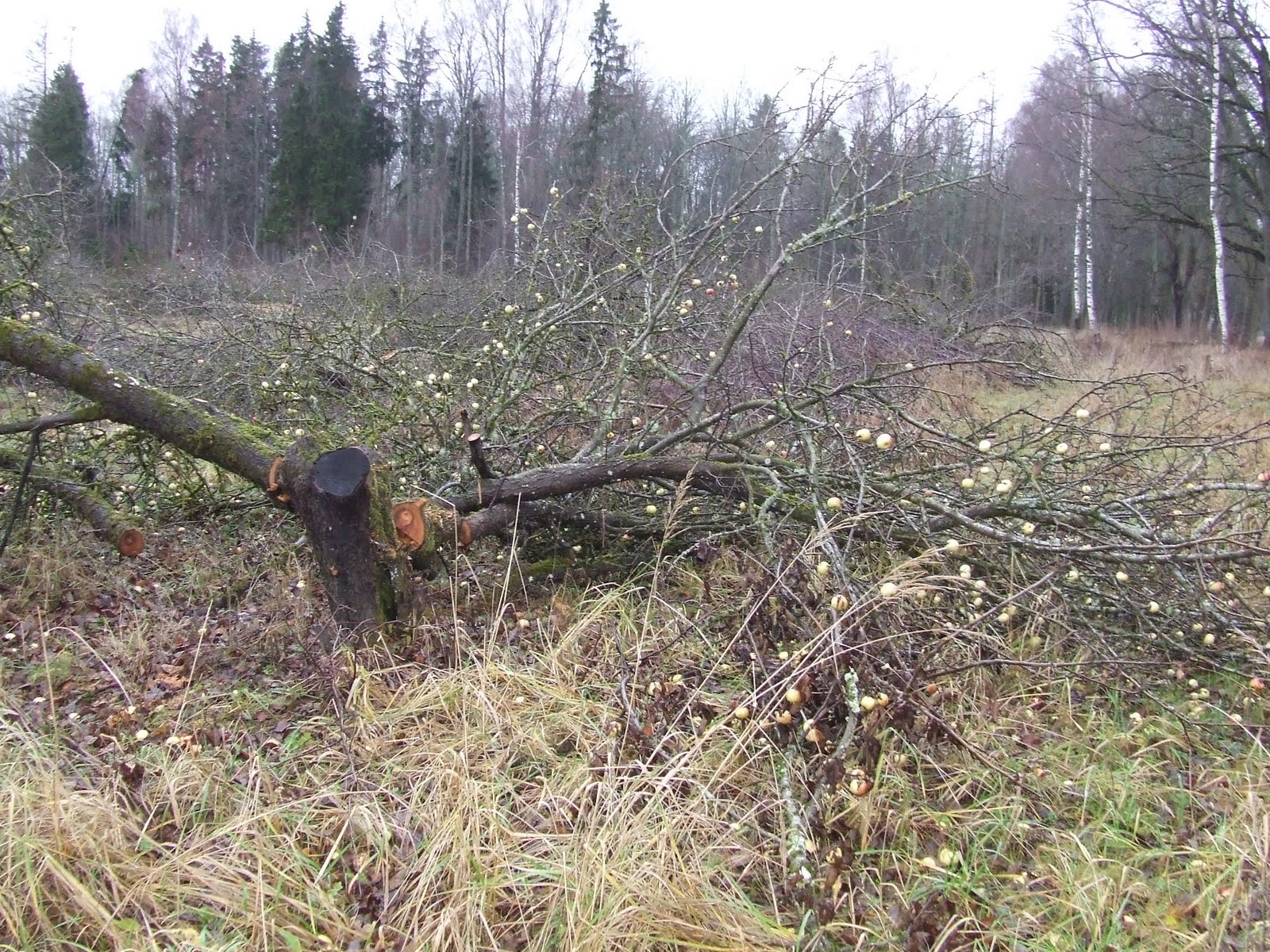
We have destroyed and disappeared the wood.

The wood—ever since the creation of humankind—has been humankind’s first line of defense with regard to human freedom and liberty.

The wood is the home of democracy. So-called democracy of the urban environment, the city, is nothing but utopian thinking in retrospect. Human beings did not become democrats in the process of social evolution, but they were born democrats, and democracy is because it began in the wood.

The wood and the individual tree stand as a shield against exploitation. Both the wood and the individual tree in the wood is the physical object that enables man and woman to defend themselves against any attackers of their democratic privilege.

Both now and in the long ago, many men became rich, wealthy, and ‘important’ by cutting down the wood. It was not always thought as an act of terrorists. To the contrary, it was often believed to be a creative act by pioneers (http://www.fiddleheadsbarandgrill.com/pdf/darlingtour.pdf ) and ‘smart generals’, as, for example, when the Roman General Varus lost three legions to the freedom loving Germanic tribes. The strategy of the men of the wood was a simple one, they attacked the Romans from out of the Teutoburg wood http://en.wikipedia.org/wiki/Teutoburg_Forest and then ran back into the wood to hide in the marshes and swamps there. After their defeat, the Romans always cut the wood about them when encamping or building a fort; and no number of brave and heroic wood dwellers could then dislodge or defeat the disciplined ranks of the Roman urbanites.

The tragedy for democracy and the wood began with the arrival of agriculture. Up to that time, human beings made their dwellings by clearing out a piece of land in the forest. The cleared land was used to grow various edible roots, berry bushes, and fruit trees, while the wood and its marshes were used as hunting and fishing grounds.

With the arrival of agriculture, which brought with it taxation (of grain) and hording by the boyars (originally probably ‘bully boys’). who built fortifications for their hoard. The fortifications used a large amount of lumber. In turn, this resulted in the clearance of sizeable areas of the forest. When some people of the wood found it convenient to build their dwellings along the outer edge of the wall of the boyars’ castles-forts, there arose the first towns and cities. Worse, there arose conceit among the “city” dwellers against the people of the wood and farmers. The conceit was most likely based on the ‘superiority’ of violence that the city people could bring to bear against the dwellers of the wood.

The cutting of forests continues to our day, We now call this cutting of trees “desertification”, because we can clearly see that we are not only destroying trees, but have created a whole culture of extreme resource exploitation along with it.

This brings us back to the question that opens this blog: “Why do we have a two-tiered society?”

Answer: Because we no longer have people dwelling in the wood. We no longer are protected by the wood. We can no longer ambush the Roman legions from behind trees. Our wood huts along the wall of the fort have become numbered cubicles in an “urban environment”. A modern American folk song called “Little Boxes” http://www.youtube.com/watch?v=2_2lGkEU4Xs&feature=related describes the situation well.

Speaking only for myself, I consider myself “terrorized” by all those who have terrorized the wood to extinction. In order to protect my interest in freedom and democracy, I have purchased a few hectares for myself in Latvia and have built there a “temple” dedicated to the wood. The centerpiece of the temple is not a God or Goddess, but the trunk of an oak tree with sawn off limbs. The “tree” stands on a concrete platform that has been built over the foundations of what used to be an old cowbarn and a hayloft.

This brings me to the literary critic, philosopher, and essayist Walter Benjamin. I am particularly interested in Walter Benjamin’s thought, because very possibly he helps to explain the thought processes of our forebears (and of course my own).

Writes Benjamin: “If the theory is correct that feeling is not located in the head …but, rather, in the place where we see it, then we are, in looking at our beloved, too [in this instance the wood and trees], outside ourselves.”

In other words, we experience our experience of the object in a sentient manner, as it beings outside ourselves. When we see a tree that commands our attention, we do not look at it as an actor may, with our head and conscious selves studying the tree in every detail, but as if the tree were that instant become a part of us. Such an entry of our self into the wood’s or tree’s self allows us to see he tree as copy of our selves. [I owe this latter insight to Michael Taussig’s book, re “Mimesis and Alterity”.] This is why sometimes the sawing down of a tree affects us with emotions that make us want to scream murder!
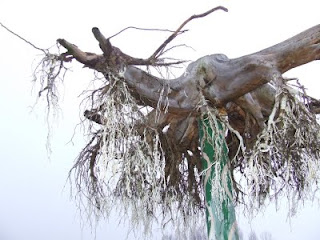
It is thus that we sacralize, make holy, a place, where the oak tree grows (or grew), and, in turn, the tree and its place sacralizes us.

While a mutual blessing may occur every time that I (we) and the tree meet (as when it grows in my yard), the communal ritual of sacralization (with the whole community participating) generally occurs on the basis of a local tradition, among Latvians, specifically, on Johns Eve.

In Latvia, Johns’ Eve is the time when a man presents himself to himself and the community with an oak leaf wreath on his head, a symbol of strength, endurance, greening, and life giving. In the instance of the oak tree, its fruit are the acorns that feed bird and beast. The woman appears with an oak leaf crown on her head as well (flowers are for medicinal tea and fulfill the sentiments of modern city dwellers), and both man and woman wear loafers (pastalas) made of linden tree bark made pliable after having been soaked in water.

To break meaning down further, the oak speaks for mindfulness as if it were a hat, while the linden speaks for being in touch with Earth. When the linden is in bloom, she is visited by thousands of bees; and if the bees think not with their heads, but are sentient in their being, then the linden tree, bees, and humans together create an aura within a special sound space. Latvians call this sound “sann-eht”. This ‘sann’ sound may only be heard properly when we are standing under a blooming linden filled with bees and with you and me present. So, if one wishes to hear how the linden, its flowers, the bees, and we sann together, you and I have to go there, where we will meet in the here and now.


We can rebuild this planet and recreate an un-tiered (egalitarian) society when and if we start using our brain to create ways to live in the wood again. Presently, it is still a movement toward the city, yet the computer makes the city unnecessary--at least as far as communication and education is concerned. Factories need not be so large as to consume a landscape. We dont need cars. We do need a good monorail http://en.wikipedia.org/wiki/Monorail system , bycycle paths, and a way to quickly attach a bicycle to the rail.

We also have to reinterpret history. That is why I have turned to Anatoly Fomenko as my orienter and guide in history. The current and popular version of history destroys our (my) sense of sentience regarding events by removing the events further into the background than they really are.


As recently as the 17th century, daily life was still enveloped by the wood. The machine, the great distancer of reality (television and the chainsaw being best examples), was not yet. Jesus on the cross (replacing Jesus thrown into a fire pit on the Hippodrome (11th or 12th centuries) in Constantinople did not yet fill the imaginary space with a phantasm better fit for the consumption of an urban dweller. Death by burning was a more sentient experience, the last victim of the Inquisition being Giordano Bruno in 1600, but the imaginary suffering of Jesus is made to appear more immediate.

In short, the current version of history (re: 2012 years since the birth of Jesus) denies, certainly handicaps Walter Benjamin’s theorizing and relevance. Propaganda takes precedence over sentience. The linden tree may as well be a linden in Unter den Linden http://www.ww2incolor.com/d/483493-4/1__007 c. Berlin, WW2.


Asterisks; Notes of Interest:

On  material depravation in Latvia.

On the theme of “more-equal-than-others” Animal Farm.

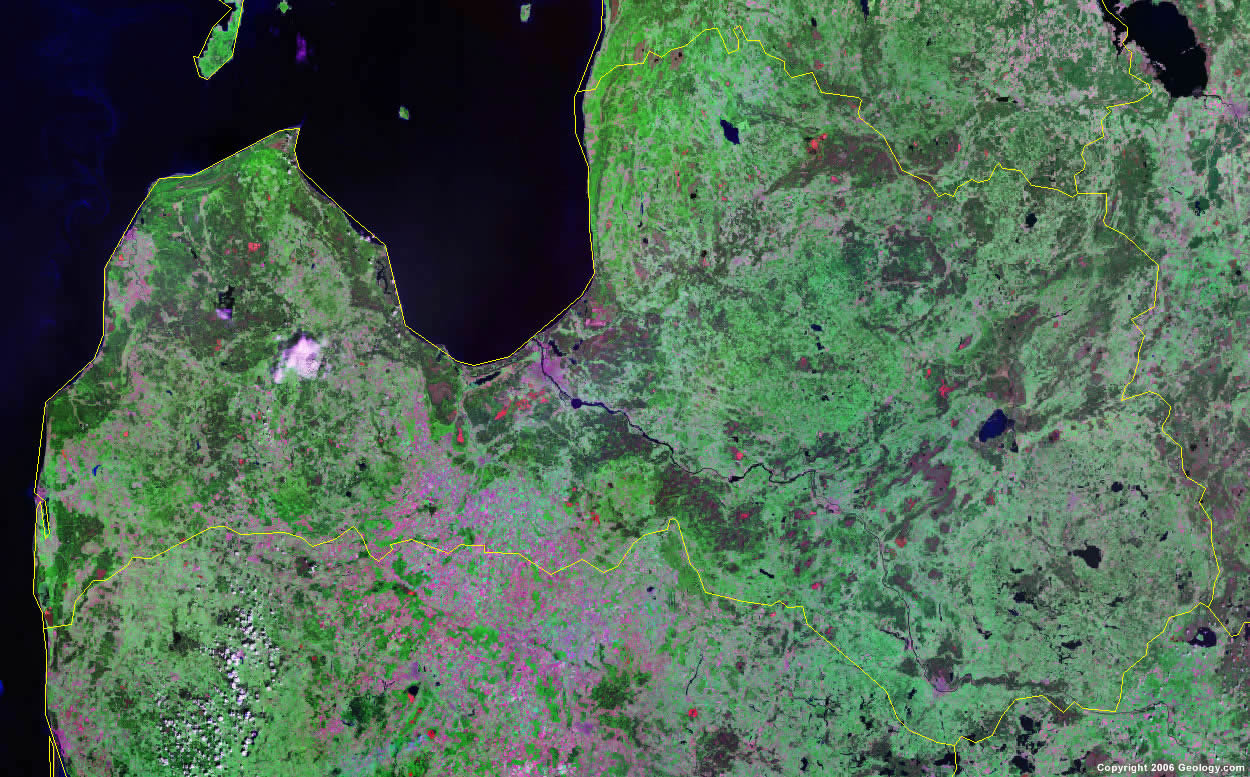
An eyeball view of Latvia (and its forests) company map; satellite. While some sources claim that Latvia is 47% covered by forests, none of it is old growth forest. The Latvian news media provides little coverage of the rapid pace of deforestation. Anecdotal evidence of deforestation in progress from a neighbor: “There were fewer mushrooms this fall than last year. Forests we used to visit are gone.”

Google software to tell effects of deforestation.

Of great interest to me this and like articles like articles. It presents some of my reasons for supporting the cultivation of Johns Grass in Latvia.

Favored serendipitous click or “chronal mirage” on the internet. I was searching for a relationship between the burning of Jersika and heretics in Lanquedoc, France. You must read the text at near the end of the scroll, re image of “The Burning of St. Joan”, Monday, September 03, 2007, to get the point.

My most unappreciated work—so far, re “Tiresias’ Revenge”, my reinterpretation of Sophocles’ “Oedipus Rex”. I believe that Sophocles had to hide the true meaning of his play for political reasons. It is apropos of the political situation in the world today, also in Latvia. The play may be found at blogs 40 through 47. Start from Blog 40.

These blogs tend to be a continuum of an idea or thought, which is why—if you are interested in what you read—you are encouraged to consider reading the previous blog and the blog hereafter.

Partial entries of my blogs may be found at LatviansOnline + Forum Home + Open Forum –ONLATVIANPOPULISM vs LATVIJASLABEJIE. If you copy this blog for your files, or copy to forward, or otherwise mention its content, please credit the author and http://esoschroniclnes.blogspot.com/

Friday, December 11, 2009

© Eso Antons Benjamins, a.k.a. Jaņdžs


NOT-VIOLENT TERROR
63 The Future of The Wuerzeltod (I)

When Bishop Albert sent his knights to burn and destroys Jersika, he was hoping not only to destroy a kingdom, but to disembody proto-Latvians who were its inhabitants by burning their idols. If he were to succeed in his endeavor, the exercise would not kill so many people as make those not killed “Wuerzeltod”. Wuerzeltod means, in this setting, a people become spiritually-psychologically dead to their roots, an uprooted people in their own garden. That is how a people can keep their language, but the language loses much of its spirit, which is replaced by, let us say, a foreign object.

Without their idols (cultural objects instilled over the centuries with memories of traditions, which had the power to heal the soul every time some defeat, including illness, visited the people) the Jersiks would be unable to re-embody their bodies with their former spiritual selves. In effect, Bishop Albert hoped to make the Jersiks obedient to him and other lords in Riga. Under Riga’s tutelage [Riga, the new para-normal Jerusalem] the defeated and humiliated Jersiks would be denied the right to repossess their former and own spirits. They would be remade as neo-Christians, i.e., post-Jersika Jersiks become Wuerzeltod to their old spirit as well as spirits.

The burnt idols of Jersika were replaced by various neo-Christian saints, all of who implicitly and explicitly denied their predecessors, the itinerant Johns, existence. Denied, too, were the shamans-healers (dziednieki, literally sing-healers), priests, and all that was sacred to those who—through struggles of many millennia—had created their own vision of Jerusalem*. The Jersiks and all people about were caused to pray to a chronal mirage sent by Rome. The mirage was of the head of a man enveloped by a circle, a halo laid down by goldleaf, which gave it a para-normal appearance. But whereas the Jersiks would have called the icon the head of John (Jānis), Son of the Sun, the man from Rome, the Pope, called it Jesus Christ, Son of God. No doubt, the Wuerzeltod, that is to say, the body with little or no memory of its past, transferred its need for a spirit to Jesus. The process of transference was made easier through many para-psychological tricks, violence being its primary tool. Because Jesus himself had been one of the Johns and was killed by the Brotherbund of Rome, John was reembodied in Jesus by violent conversion, which was then glued to the communal memory through the demand of continuous confession and a written history that never was. Since the art of writing and the art of printing belonged to the powers that be, the Brotherbund was able to force the graft to grow roots.

Given such a background, we now must move forward in our reconstruction of the Latvian myth as it might have moved forward had the making of myth not been forbidden to proto-Latvians. We must return to John Visvaldis, King of Jersika, and ask: Why had the Jersiks followed this leader? What was his magic attraction?

If the Children of Johns in King John Visvaldis’ keep had followed their “John Awesome” [Visvaldis = (literally) Ruler Over Allness, an Allness that is an equivalence not of ‘all’ (viss), but Visums (Allness)], they most likely did so in deference to the not-violent terror the King inspired. Such an inspiration from the King came by way of the King’s forebears, all of who had ended their life at a ripe old age, but which age was ended by way of what the Cathars called the endura. When the Cathar perfecti or priests felt that their hour had come, they called for their descendant-to-be to offer them consolamentum (literally to consol them), after which they no longer took food. The offering of consolamentum was also a form of oath-taking by the one who offered it, that is, he-she swore to uphold not-violent rule in the same manner than the one who was taking the consolance and was departing. When a perfecti died, he transferred to his-her descendant(s) great charismatic authority. Similar practices were in existence among most of the heredici—including (we surmise) the Children of Johns of Jersika.

The neo-Christian brethren were able to destroy the old bonds of loyalty among the Children of Johns because they were in effect aliens. They were not of the culture of Johns, but belonged to what in our own day is known as capitalist culture, a culture that enriches its adherents and not the temple. In due course, the para-normal sheen of gold on the halo of the icon is scraped off and converted to coin.

To be awesome is to inspire no ordinary respect, but to be inspired by terror, not-violent terror. Even if appearing fearless before death may not be all that it seems (all are apprehensive before it), it, nevertheless, has enough traction-terror to prevent a community of which John(s) are the leaders from dissolving into Wuerzeltodness—rootlesness.

King John Visvaldis was the root, stem, and branch of the Children of Johns. We might say, that the Jersiks, the Children of Johns, were the leaves of the tree trunk that represented the king. Neither leaves could be without the trunk, nor the trunk could be without the leaves. Ideally speaking, if a storm felled a tree, the roots would send forth new shoots, and the kingdom, the stem (or the Donjon, Don-Jon, who stands for ‘John of Johns’) would have another go at sprouting and growing into a tree peopled by a society of leaves.

At the same time that not-violent terror created, bonded, and maintained a society, no one who was of it ever forgot that both individuals and society are not immortal. Before immortality immortalized itself upon society with such violence as overcame the Jersiks and has become commonplace in our day, mortality was accepted as a reality of the Great Being itself. This is why a seed was and remains such a wonder. It flies to the winds of fate, and fate finds it another place to root or not. Meanwhile, King John Visvaldis held the community of the Children of Johns together whether the community was in situ or in motion, travelling.


Asterisk & Notes of Interest:

*Jerusalem = Yaroslav. The meaning of this name is hid behind a thick veil, but it becomes easier to decipher if we split the word into yaro + slav. Yaro is somehow related to ‘year’, which may reflect a tradition of an ancient annual sacrifice ritual. In Latvian the word ‘yehrs’ (jērs) means lamb. For ‘slav’ see here and read under Ethnonyms until you come to the theory that the name may once have meant worshippers. In my interpretation the name stands for ‘the lamb of peace’ sacrificed at an ancient ritual invoking peace. Thus, the name ‘Jersika’ in Latvian may once have meant “the land of peace”.

On material depravation material depravation  in Latvia.


On the theme of “more-equal-than-others”, re Animal Farm.
An eyeball view of Latvia (and its forests) company map; satellite map. While some sources claim that Latvia is 47% covered by forests, none of it is old growth forest. The Latvian news media provides little coverage of the rapid pace of deforestation. Anecdotal evidence of deforestation in progress from a neighbor: “There were fewer mushrooms this fall than last year. Forests we used to visit are gone.”

Google software to tell effects of deforestation deforestation. 

Of great interest to me this and like articles this and like articles. It presents some of my reasons for supporting the growing of Johns Grass in Latvia.

Favored serendipidous click or “chronal mirage” on the internet. I was searching for a relationship between the burning of Jersika and heretics in Lanquedoc, France. You must read the text at near the end of the scroll, re image of “The Burning of St. Joan”, Monday, September 03, 2007, to get the point. 

My most unappreciated work—so far, re “Tiresias’ Revenge”, my reinterpretation of Sophocles’ “Oedipus Rex”. I believe that Sophocles had to hide the true meaning of his play for political reasons. It is apropos of the political situation in the world today, also in Latvia. The play may be found at Blogs 40 through 47. Start read with Blog 40.

These blogs tend to be a continuum of an idea or thought, which is why—if you are interested in what you read—you are encouraged to consider reading the previous blog and the blog hereafter.

Partial entries of my blogs may be found at LatviansOnline LatviansOnline + Forum Home + Open Forum –ONLATVIANPOPULISM vs LATVIJASLABEJIE. If you copy this blog for your files, or copy to forward, or otherwise mention its content, please credit the author and http://esoschroniclnes.blogspot.com/  

Tuesday, December 8, 2009

© Eso Antons Benjamins

NOT-VIOLENT TERROR
62 The People of Johns (VI)

The Latvian government has been protected by the umbrella of MACRO corporate policy and politics for so long that it would gladly run every time someone comes and asks a representative: What are the government’s plans for the future?

The most likely answer from government (paraphrased): “Well, you see, once the rest of the world economy recovers, so will Latvia’s. By the end of next year everything will be up and running again. That is what all the economists are saying. It is V for Victory. We will soon be jumping. Meanwhile, you voters, concentrate on bailing out the MACRO corporation darling, Parex Bank, with another Ls 100 million aid package, pay for the most expensive bridge in the world that our MACRO economists could think of, build the “CrystalMountainLibrary” (national pride you know ), pay a 26% value added tax, have the pensioners raise potatoes to survive their starvation pensions, and, we are telling you, stop whining and do more.”

Not all MACRO men are saying this (they often made it there by a fluke), though just about all government officials are. Controversial criticism of the government, which in this writers opinion is desperately needed is simply not happening. I am stressing the word “controversial”. There is much criticism, but it is about as dead to realities as the government of Latvia. Is there nothing that might suggest a different tack for the government than cowering at dead end and gnaw its fingernails? Has anyone, to give an example, thought that the V bottom of the economy might take the shape of a W? If someone has, it has not been prominently featured in the Latvian media. Does not a W bottom make a difference how we project the future? In the USA a relatively recent internet site calling itself ZeroHedge has upstaged Nouriel Rubini (Dr. Doom, recently ranked 4th in a line of economic thinkers) and become one of the more popular sites people consult when it comes to the economy. And, yes, the site became prominent by attaching itself to the profound unease and suspicion of the U.S. public that the stock market’s bullish run is a bear market rally and another dip is waiting. If the next economic dip retraces the rally, the bottom of the recent financial and economic collapse may in fact look like a W. Contrary to speechless Latvian types, ZH features bloggers named  George Washington, RobotTrader, gilgamesh, and Mayhem, to mention a few.

It is obvious that MACRO corporations rule and overrule the government in Latvia, and clearly these have steered Latvia into a swamp where its tractor slowly sinks in sphagnum moss of which Latvia has plenty. Which is perhaps why, when anyone asks THE question (see above), the government swallows its tongue. The inability to speak is a phenomenon that has continued for such a long time that it is reasonable to believe that it speaks of something true. What might this be? Mine is a guess, but it hits a close bullseye. Fact is that the MACRO business partidocracy can think of its own skin only. Thus, while it is no future for Latvia as such, all the bailout money that the IMF and EC loaned to the Latvian government must be contrived to somehow fall into MACRO pockets of MACRO corporations. That is why the frozen smile and stuck lips.

On the other hand, any reasonable plan for the future must involve MICRO economics. Under recent international pressure the wall that the Latvian government presented to its citizens vis a vis development of MICRO business has cracked, and as of 1st of January 2010, anyone can start a company for just Ls 100 (about $150). Time will tell how this develops without the help of how-to-do workshops. One also wonders what incentives will be used to facilitate cooperation between townships and small municipalities. The latter should be working toward attracting city dwellers and tourists to the countryside, but are not. Hopefully, the awakening of government to MICRO business will filter down and bear fruit. Still, one does not feel that the high-end MACRO lumpenproletariat is happy, because high-end office holders get their real pay offs by way of an envelope from the MACROs.

Though the name of Latvia will continue as an area under the administration of the EU, education policies of the government will continue to dumb the natives down until they will become the aborigines of Tierra del Fuego who held to the principle of absolute economic equality. When this economic principle of their native land was not recognized by Darwin and the crew of his ship, the natives reacted by becoming thieves without shame. Not surprisingly, economic equality was deemed to be a concept too aboriginal for the liberal economic system of then mighty British Empire, and justified British sheep farmers in killing the natives for the price of one pound sterling for two Fuegian ears.

The Latvian poor are of course not killed in any such brutal and unsophisticated manner, but the media is hardly covering the plight of the poor or their children. The poor in Latvia—as the poor under the liberal MACRO economic systems anywhere in the world—are the invisible people. There are hundreds of thousands of such in Latvia. While the upper strata, the better off, the party and entertainment crowd have their own picture magazine(s), and one Afghan boy who has learned halting Latvian from Latvians soldiers doing military duty in Afghanistan can get more attention than desperate folk, poor Latvians who live outside the circle of a twenty minute drive from Old Town Riga are for the most part unseen. The media either does not wish to see them or cannot afford to do such features on them as are necessary to bring proper attention to the situation. Yes, we do get short glimpses of the poor on television news sometimes, but for the most part the media does not hesitate to associate the poor with excessive use of alcohol.

Is it any surprise that more than 50% of Latvians are saying that if there was a job afor them in another country, they would leave? I first heard of this dramatic figure by way of Robert Ķīlis (a social anthropologist, Assistant Professor at the University of Sweden, also head of an advisory group to the President of Latvia) who appeared in an interview about a week ago on a popular internet site. Alas, he was soon ‘disappeared’. In any case, if more than 50% of Latvians are willing to leave Latvia, such willingness to travel is proof that the descendants of Jersika have regained their feet and are on the move again as their forebears, the itinerant Johns were. The irony is intended.

Which brings us back to the question I asked in the previous blog: What is it that these emigrating post-Soviet-Latvian Latvians are taking with them? What is their cultural baggage? Does it contain something of Jersika? This would give contemporary Latvians a toehold to the claim of having emerged from a proto-state long believed to be destroyed and gone. It is not true that Latvians emerged from Livonia as media people assert. The Jersiks were annihilated as a cultural entity by invading neo-Christians, but not as a physical body. If what remains is not part of everyone’s consciousness today, does it still have a subconscious role? Such questions are ignored by the President who rather hobnob with neo-Christians at secretive prayer breakfasts. Twenty years after the fall of the Soviet Union, post-Soviet Latvians are arriving in England (and elsewhere) without any memory of having a history worth talking about. If they continue to celebrate Johns Eve in their subconscious, it is without conscious detail. When it comes to culture, the baggage Latvian emigrants bring with them surely contains love for the land of their birth, but their suitcases are packed with what the Germans call Wuerzeltod (dead roots, deadness to roots).

It is curious how the Wurzeltod have become not only millionaires but MACRO millionaires, oligarchs, a nation not made of people but plebs become a few millionaires levitating on the backs of a people no longer a community, unless it is a community of the dismissed.

Asterisk & Notes of Interest:

On material depravation in Latvia.

An interesting poll.

On the theme of “more-equal-than-others” Orwells fable.

An eyeball view of Latvia (and its forests) company map; satellite map.While some sources claim that Latvia is 47% covered by forests, none of it is old growth forest. The Latvian news media provides little coverage of the rapid pace of deforestation. Anecdotal evidence of deforestation in progress from a neighbor: “There were fewer mushrooms this fall than last year. Forests we used to visit are gone.”

Of great interest to me this and like articles. It presents some of my reasons for supporting the growing of Johns Grass in Latvia.

Favored serendipitous click or “chronal mirage” on the internet. I was searching for a relationship between the burning of Jersika and heretics in Lanquedoc, France. You must read the text at this link to get the point.

These blogs tend to be a continuum of an idea or thought, which is why—if you are interested in what you read—you are encouraged to consider reading the previous blog and the blog hereafter.

Partial entries of my blogs may be found at LatviansOnline + Forum Home + Open Forum – ONLATVIANPOPULISM vs LATVIJASLABĒJIE (LatvianRightWing). If you copy this blog for your files, or copy to forward, or otherwise mention its content, please credit the author and http://esoschroniclnes.blogspot.com/

Friday, December 4, 2009

© Eso Antons Benjamins


NOT-VIOLENT TERROR
61 The People of Johns (V)

In his book “On Populist Reason”, Ernesto Laclau analyzes the role and connectedness of populism and the “people”, and comes to a conclusion that ought to be of interest to Latvians today. Laclau writes: “…the political operation par excellence is always going to be the construction of a ‘people’.” Later in the same paragraph, the professor gives his conclusion as to what gives populism its important role. He writes: “Firstly, there is the widening of the discursive-strategic operations that the construction of the ‘people’ requires…. [Secondly,] any new ‘people’ would require the reconstitution of the space of representation through the construction of a new frontier.”

It may be difficult language for the uninitiated, but the message to the Latvian ‘people’—whose heterogeneous equivalences (whatever at that time) were shattered by the Soviet occupation and imposition of hegemonic workers paradise—is to make an effort to emerge from the October, 2010 elections with a new sense of itself as a ‘people’. At this writing, there does not however exist any “widening of the discursive-strategic operations” required for heterogeneous interests to emerge. On the other hand, the yeast of pent up anger among the post-Soviet Latvian people is rising, hopefully will energize, and certainly gives hope for an emergence of a post-Latvian Latvian people.

Coining the term ‘post-Latvian Latvian’ may not be a concept that many post-Soviet Latvians will find agreeable. But to consider it and its implications they must, because the political system that has imposed itself on Latvia is not of the ‘people’. That is why we hear the drumbeat of unwavering condemnation of ‘populism’ by government and from the patriots who are patriots of government rather than of the people. Apparently, the sense among the political elite is that it is on firm ground, and the traditional media and “politologues” are obedient and in tow behind it. I think that it remains to be seen if this is true or make-believe.

I mentioned in preceding blogs that following the destruction of the kingdom of Jersika (?-1209), there have been three-four different political eras during which the Latvian people were real, but which reality was never to manifest itself in a politically homogenous social entity commonly known as ‘people’. If the replacement of the totem of Johns (sons of the Sun) with Bear-Jaw-Breaker (in the 1888-1905 period) was perhaps indicative of a subjective consensus among the ‘people’—[potentially another Zionist style state in the making (?)]—the consensus broke apart after the heavy losses (9000 Latvian, 45,000 Russian soldiers) on the front during and after the Christmas battles of 1916 (old calendar) near Riga. The aftermath contributed to the fall of tsarist Russia in 1917 and significantly changed the political landscape in Latvia. For one, the Russian Revolution and bloody civil war made it easier for many patriotic Latvians to turn nationalist (i.e., Zionist; rather than envision greater independence within a Greater Russia) and turn its eyes toward the West.

It was for this reason that the liberal democratic Latvian state that emerged after WW1 was too polarized between liberal and socialist forces to provide the rainbow of equivalences from which a new democratic homogeny of the Latvian people could emerge. The Constitution of the state was written in haste with no provisions for a review in the years following. Instead, the parties that became part of the Saeima soon began to metamorphose into parties with business interests at their core—as is the case with the Saeima today. In short, the Constitution failed to protect the people of Latvia from a partidocracy that favored an oligarchy oriented lumpenproletariat twice.

The failure of the Latvian Constitution to protect Latvians from exploitation by the post-Soviet oligarchs is distressing, because almost all business interests today are MACRO business interests with a degree of access to money that makes it believe it can overwhelm society at large not only in the economic arena, but in the political as well. That the lumpenproletariat of business managers and board members feels confident that it can continue to overwhelm the people is evidenced by the recent reemergence of the former Prime Minister Shkhehle (Šķēle)   whose [pseudo-]Peoples Party (Tautas partija) under the leadership of another Prime Minister, Kalvītis, was at the wheel of government at the time of Latvia’s economic collapse.

Though the People’s Party (Tautas partija) only a month ago had only 2% of support from the public in opinion polls, Šķēle apparently now feels confident that he can overcome his party’s unpopularity with money of his own, from the pockets of allied interests, and a vote from a dumbed-down impoverished population. Since his reemergence, TP’s approval rating has risen to 5.6%. Šķēle clearly expects to make his points by using the carrot and stick approach, i.e., I promise to improve the economy, but only if you vote for me. Else? If you do not vote for me, there will be no development of the economy along the lines of MACRO business, which will bring hundreds of jobs. As for MICRO business, it creates jobs only one or two at a time, and takes time and devotion to develop. Besides, there is no longer such work available as the Children of Johns once engaged in: weaving, inn keeping, harness and rope making, spoon carving, tailoring, acting as healers, and the like. So, vote for “Maximum Goodtime” and the party that rocks to MACRO music—even if it is more than a little stale.


Asterisk & Notes of Interest:

Information on emigration figures.

On the theme of “more-equal-than-others” see Orwell.

An eyeball view of Latvia (and its forests) company map; satellite. While some sources claim that Latvia is 47% covered by forests, none of it is old growth forest. The Latvian news media provides little coverage of the rapid pace of deforestation. Anecdotal evidence of deforestation in progress from a neighbor: “There were fewer mushrooms this fall than last year. Forests we used to visit are gone.”

If we substitute the word “trees” for “gold” and make the words synonymous, then “trees” come to stand for the “gold” of Latvia. If we then read Ayn Rand’s words from her book “Atlas Shrugged”, but substitute “gold” with “tree”, Rand takes us to a very interesting conclusion: “Whenever destroyers appear among men, they start by destroying money, for money is men's protection and the base of a moral existence. Destroyers seize gold and leave to its owners a counterfeit pile of paper. This kills all objective standards and delivers men into the arbitrary power of an arbitrary setter of values. Gold was an objective value, an equivalent of wealth produced. Paper is a mortgage on wealth that does not exist, backed by a gun aimed at those who are expected to produce it. Paper is a check drawn by legal looters upon an account which is not theirs: upon the virtue of the victims. Watch for the day when it bounces, marked, ‘Account overdrawn.’” My thanks to site and author here.

Of great interest to me this and like articles. It presents some of my reasons for supporting the growing of Johns Grass in Latvia. The Teutonic Knights of yesteryears and the neo-Christian politicians of today have all conspired to destroy native Latvian sacred traditions. The micro farmers of yesteryears’ countryside have been removed from the land in favor of macro farmers, thereby destroying the main function of the countryside—a good place for subsistence businesses and raising children, the latter the native culture’s nature tested self-replenishing human stock. Without Johns Grass to attract tourists to the Latvian countryside to substitute for the income lost due to deforestation, the human stock will continue its precipitous decline. Radical steps need to be taken to make all of Latvia (not only a few of its cities) a place where households make their home.

These blogs tend to be a continuum of an idea or thought, which is why—if you are interested in what you read—you are encouraged to consider reading the previous blog and the blog hereafter.

Partial entries of my blogs may be found at LatviansOnline + Forum Home + Open Forum – ONLATVIANPOPULISM vs LATVIJASLABEJIE. If you copy this blog for your files, or copy to forward, or otherwise mention its content, please credit the author and http://esoschroniclnes.blogspot.com/

Tuesday, December 1, 2009

© Eso Antons Benjamins


NOT-VIOLENT TERROR
60 The People of Johns (IV)

The proto-Latvians of Jersika—let us remind ourselves that Jersika may be colloquial Latvian for Jerusalem—were so to speak disassembled by the neo-Christian church under the leadership of bishop Albert, who was doing the disassembling and plundering in the name of any number of pauperized and not so pauperized princes of the West. As Caterina Bruschi writes in her book concerning the Crusade against Lanquedoc: “…the Crusaders, …effectively were leading a military campaign against the southern nobility….” (p. 184) In Livonia (yet to be), they were converting, robbing, killing, and instilling fear among the natives to last for centuries as per the following excerpt from Bruschi’s work:

“…on the Sunday in the Lent, in the evening, the aforesaid Bernard of Rival—detained for a long time and still held in prison in leg-irons, because he was found to have confessed less that fully—was found wounded in the head. And he acknowledged before me, Aton, the aforesaid notary… that he had hit and wounded himself in the head, wishing to die, and wanting to kill himself.” (p. 189)

After the proto-Latvians disappeared from the stage of history, pure chance took over the lives of the people who remained. We get an occasional low visibility glimpse of them in later chronicles. However, the center stage, to borrow a comparison from Marx, belongs to the upper caste lumpenproletariat, for the most part Germanic invaders. The native Latvian lumpenprolitariat of those days is the shadowy half of a glass globe, the lower part always touching the ground.

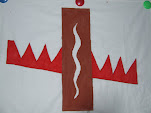
Among the first politically explicit and self-assertive signs of Latvians occurs in 1873 with the publication of Karlis Baumanis book of songs called “Lihgo”. The name and cover design of John (priest) officiating at an altar has an explicitly religious message. The book is named after the refrain (“lihgo”) of Johns songs, thus giving the book a celebratory and sacred significance. The tsar’s police confiscated the books and burnt them immediately upon publication. Only a few copies remain today. But the cover design and content give evidence of the direction the poet and his supporters hoped in their mind’s eye Latvians would take.

Not only did the book not reach its intended audience, but those of the consciousness raising movement who tilted toward the arch-Christian past were—under pressure of the neo-Christians—soon replaced. The neo-Christians had in their favour the fact that Latvian peasants had learned how to read by having only the Bible to read from. Thus, helped by woodcuts from Luther’s Illustrated Bible such as Samson cut by one of Cranach’s students and like this painting by Cranach himself, the Latvian country people created a “folk tale” that never was. In any event, such pictures served as prototypes for the Latvian Lachplesis, the image of the “new” neo-Christian Latvian.

Though Lachplehsis image remains in use—the commix-like statue of the hero in the niche of the Latvian Saeima building being proof—his charismatic days came to an end with WW2 and the second subjection (1945; the first in 1940) of Latvia by the Soviet Union. With the Soviet occupation of Latvia there came the 3rd version of the Latvian people: Latvian Sovieticus. Today, as suggested in blog 58, we are experiencing the 4th reincarnation of Latvians, but this time we are emerging as Latvians of the post-Latvian era.

Of course, the people of Latvia call themselves Latvians still, and they are still the majority of people in Latvia. Nevertheless, the Latvian population, due to low birth rates—caused by an absence of self-employment that can be provided only by jobs at the micro economic level—is in a demographic death spiral. A significant number of Latvians, especially the young, wish to leave Latvia. Economic emigrants number about 30,000 this year alone. Most of the emigrants and the majority of Latvians who remain behind believe that the country was “stolen” from them by their own lawmakers. And well they may think so. There is no evidence that the Latvian government understands that relative independence comes only by way of a micro economy. The government overemphasizes corporate macro economy, because that is where most of the money in an “envelope” comes from.

Whether the people of Latvia can recapture the country without some radical action is doubtful. Radicalizing the post-Soviet man/woman into a post-Latvian Latvian implies changes that even if it promises to bring “change for the better” (to quote Rainis, one of the few Socialists Latvians have made peace with) and the change is not violent, change cannot be guaranteed because of the spiritual and material desert it has to be built on. (The chainsaws are buzzing all around my country home as I write, as farmers in debt to the banks try to forestall bankruptcy.) If in King Visvaldis days his congregation went into the vast forests, today Latvia’s green treasure is fast disappearing accompanied by an orchestra of chainsaws.

Twenty years have passed since the reestablishment of the state of Latvia, and for twenty years the euphoria that greeted the downfall of the Soviet Union has served to prop up the “dreamtime” that served so well high end “job seekers” who used the people’s dreams to infiltrate the highest levels of government. Not all in the government are of equal blame in the failure of the state of course. Some have participated in elections driven by an honest desire to reestablish Latvia as a prosperous and just nation. However, the moral tone of those leading the nation is like that of President of Latvia, Zatlers, who deftly left out of his Independence Day speech (on the 18th of November) the word “sacrifice”. The absence of any mention of “sacrifice”—as far as I know unnoted by the media—illustrates the rhetorical nature of post-Soviet Latvia.

With reality replaced by virtual reality, it should be no surprise why the collapse of Latvia continues to be of little concern of its government. The “soft war”—now being waged by Swedish banks against the Latvian government in order to pressure it to squeeze water out of the stone that is left to the Latvian people—is being obliged by the Latvian government. All that the people hear from their government is that this is the “normal” state of being, legalized by a nonexistent European Constitution and sanctified by fait accompli of their own partidocracy. Never mind that the demographic death spiral differs from bloody casualties in a war of bullets in name only. In real terms, the year 2009 differs from 1949 and 1941 in name, not in its consequences.

I have been recommending that the “soft war” being waged against the Latvian people needs to be answered by raising the level of Latvian wit. One of the ways that Latvians may respond is by legalizing Johns grass, then inviting the Swedes to “come on over” and enjoy a steamy cup of Johns milk tea in the Latvian countryside. It is one way to rebuild the capital of the people that has been “legally” stolen from them. Johns Grass may even pull the country out of the demographic  death spiral, because for once it is micro, not macro economy that will be served.

Less it is said that by being unfriendly to Swedish banks, I am unfriendly to the Swedish people, let me remind the reader that all peoples’ of the West, the Swedes including, have for some time been looking at reality through the filters of newspapers, radio, television, movies, advertising, and not least their governments. This is one reason why first-hand knowledge of reality among Swedes and in the West has become so abstracted that such an abstraction is presumed unexceptional. For anyone to presume that to capture Latvia for the European Union by promoting “cheap” bank loans to later suck the country dry by pretending innocence is simply not acceptable to a sovereign people—even if they discover-awaken to the crime after the fact.

If the Latvian people have their excuses, the Swedes have fewer. The latter have indeed allowed themselves to become so abstracted by their media as to fantasize that they were helping Latvians escape poverty by yoking them to slavery of debt? Like it or not, the Swedes, too, must bear responsibility for the actions of their banks and of their moral inertia and torpor when it comes to understanding material realities.


Asterisk & Notes of Interest:

An interesting poll. Information on emigration figures .

On the theme of “more-equal-than-others” Orwellsfable.

An eyeball view of Latvia (and its forests) companymap ; satellite While some sources claim that Latvia is 47% covered by forests, none of it is old growth forest. The Latvian news media provides little coverage of the rapid pace of deforestation. Anecdotal evidence of deforestation in progress from a neighbor: “There were fewer mushrooms this fall than last year. Forests we used to visit are gone.”

If we substitute the word “trees” for “gold” and make them synonymous, then obviously “trees” come to stand for the “gold” of Latvia. If we then read Ayn Rand’s words from her book “Atlas Shrugged”, but substitute “gold” with “tree”, Rand takes us to a very interesting conclusion: “Whenever destroyers destroyers appear among men, they start by destroying money, for money is men's protection and the base of a moral existence. Destroyers seize gold and leave to its owners a counterfeit pile of paper. This kills all objective standards and delivers men into the arbitrary power of an arbitrary setter of values. Gold was an objective value, an equivalent of wealth produced. Paper is a mortgage on wealth that does not exist, backed by a gun aimed at those who are expected to produce it. Paper is a check drawn by legal looters upon an account which is not theirs: upon the virtue of the victims. Watch for the day when it bounces, marked, ‘Account overdrawn.’” My thanks to site and author here.

Of great interest to me: X. The article at this link pretty well presents my reasons for supporting the growing of Johns Grass to facilitate the tourist industry in the Latvian countryside.

These blogs tend to be a continuum of an idea or thought, which is why—if you are interested in what you read—you are encouraged to consider reading the previous blog and the blog hereafter.

Partial entries of my blogs may be found at LatviansOnline + Forum Home + Open Forum –
ONLATVIANPOPULISM vs LATVIJASLABEJIE. If you copy this blog for your files, or copy to forward, or otherwise mention its content, please credit the author and http://esoschroniclnes.blogspot.com/

Saturday, November 28, 2009

© Eso Antons Benjamins


NOT-VIOLENT TERROR
59 The People of Johns (III)

According to “Heinrici Chronicon Livoniae”, Riga’s main function in the 13th century was to “vine Domini palmites extendere in gentibus”, that is, “to extend the vines of the Lord’s vineyard among the pagans”. This information and translation from Linda Kaljundi’s paper, re “Young Church in God’s New Vineyard ….(2004)” I am pleased that Heinrici uses the word “gentibus” instead of “pagan”. Heinrici’s “gentibus” in his context may be best translated as “tribesmen” from “gentes”, tribes, but the word “people” may be equally apt. Be that as it may, it is my sense that when the Balts refer to themselves as “pagans”, they do themselves an injustice, because they should be using the word “heretics” instead. Indeed, Latin “heretici” rather than “pagan” is the way most neo-Christian inquisitors referred to the arch-Christian church. It is my belief that the people and ruler Visvaldis of Jersika (see blog 58) were arch-Christians, i.e., heretics to the violence prone neo-Christians.

I stated in my previous blog that “Jersika’s defeat is taken political advantage of by various interests to this day, which is why information of the culture that likely prevailed in Jersika is repressed to this day”. What was Jersika’s culture about?


There remains in our time almost no physical evidence that Jersika ever existed. However, in a post dated July 18, 2008, at LOL’s “Latvians on Faith” [re: The Janis Festival and All About Janis, p. 6], I wrote a blog titled “Of Polyphonic Songs & Witches”. The post was on a review by Ilva Skulte which appeared in “Kulturas Forums”, and concerned Professor Martin Boiko’s monograph on the Lithuanian sutartines, spiritual songs from northeastern Lithuania. This region approximates the region of Jersika and most likely extends it. I found the review interesting and speculated that the word “sutartine” may have some relationship to Montsegur, the Cathar stronghold in the Sabarthes Mountains in Languedoc. (I suggest the reader turn to the site for greater detail.) Suffice to say, I speculated that there may be a linguistic relationship between the word “sutartines” to the Lithuanian word “sutarti”, which means to get along, to be in accord, to sing together, and that it may shed some light on the designs woven into belt from Lielvarde. After all, a belt binds. Moreover, the belt may have bound more regions than Jersika alone. The word “saturs” in Latvian means content, while “saturēt” means to hold, to hold together, to keep from disintegrating.


To return to Caterina Bruschi’s work (see previous blog) concerning the wandering heretics of Languedoc. According to Bruschi, Humbert of Romans, the Master General of the Dominicans (1254-1264) at the high point of the neo-Christian inquisition, not only referred to Prussia, but complained bitterly that the Dominican monks “…do not want to leave their land or kinfolk, or forget their own people….”, whereas the opposite is true (by implication) of the heretics, the itinerant preachers, who had no such inhibitions, but went from house to house and from region to region, and were in constant motion throughout most of their lives. It does not take much for one familiar with the traditions of the Latvian “Children of Johns” to see the relationship between these itinerant preachers and wandering Johns.

The neo-Christians of our day are not interested in undoing the work of bishop Albert. Their clergy are direct beneficiaries of arch-Christian repression. The archbishop of Riga, Jānis Vanags, for example says that “For a long time now, Johns Day is no longer a religious celebration, but a folk celebration.” It is nice to hear the archbishop admit that Johns was ever a religious celebration in Latvia. It is also good to hear that he is making a response to the neo-Christian fundamentalist Janis Sadovskis who proposed “prayer evenings” to counter Johns Eve celebrations and, came Johns Eve 2009 had his congregation burn Latvian books, especially those which emphasized Latvian cultural traditions.


What the Lutheran archbishop forgot is that the folk tradition (“tautiski svētki” in his words) is no longer a signifier for the people. Vanags himself states that “the absolute majority [of the people], among them [neo-]Christians, simply come together before an outdoor fire to meet, sing, eat, and celbrate.” The repression of arch-Christianity in which the archbishop is participating by spreading disinformation and denying any religious significance to Johns today is no longer effected by sleight of tongue substituting religious tradition with a “folk tradition”. The folk tradition, Vanags is referring to is now following the lead of Pop culture, which turns Johns into a day off from work and/or binging on alcohol.


Neo-Christians would like everyone to forget that the itinerant Johns (the holy men of proto-Latvians) loved their homeland just as much as the Dominican monks did (see above), however, their homeland was not limited to king Visvaldis kingdom. Rather, the kingdom of Jersika, was very likely still part of a borderless empire of which kingdoms were auto cephalic precincts, so determined by language, tribal myth, historical happenstance, and ever changing borders due to everyone becoming a migrant when survival was at stake. The Johns or itinerant preachers of Jersika and other kingdoms were not the only ones who moved, but the entire kingdom moved. This is the one thing that scholars, even Bruschi forget. It was not the “heretics” who moved in on (neo-)Christian spiritual territory, but neo-Christians protected by and hired by secular princes who moved to suppress itinerancy in the interest of princes desiring to establish secular territorial kingdoms. So called “patriotism” of today has become identified with a given territory in an extreme fashion, which is why it may also be called fascism. However, in king Visvaldis days, patriotism meant loyalty to the tribe. The tribe chose the king as its living totem, and generally it was the king who died for the tribe, rather than the tribe for the king or state as is the case in our days.

Some scholars argue [as Kaspars Klavins does (see blog 58)] that the violent past of the Latvian people ought to be viewed from “a constructive standpoint”, i.e., without a papal Livonia there would be no modern Latvia. He is of course right with but one caveat: the proto-Latvian people of the Jersika kingdom ceased to exist as a recognizable sovereignty people after their king’s humiliation. It is true that the king justified his submission to humiliation when in 1214, he lead an  uprising. When it failed, the proto-Latvian people of Jersika gradually blended into the forests. They stayed there for seven hundred years. When the “Latvians” reemerged, they were a different “people” from the ones whose living totem had been John. As I have pointed out, the new totem became Bear-jaw-breaker. Whether the Latvian people or neo-Christianized elite chose him is argument for another day.

Asterisk & Notes of Interest:

An interesting poll. Information on emigration figures figures.

On the theme of “more-equal-than-others: AnimalFarm. An eyeball view of Latvia (and its forests) companymap companymap ; satellite satellitemap.  While some sources claim that Latvia is 47% covered by forests, none of it is old growth forest. The Latvian news media provides little coverage of the rapid pace of deforestation. Anecdotal evidence of deforestation in progress from a neighbor: “There were fewer mushrooms this fall than last year. Forests we used to visit are gone.”

Of great interest to me: cocalear. The article at link pretty well presents my reasons for supporting the growing of Johns Grass to facilitate the tourist industry in the Latvian countryside.

These blogs tend to be a continuum of an idea or thought, which is why—if you are interested in what you read—you are encouraged to consider reading the previous blog and the blog hereafter.

Partial entries of my blogs may be found at LatviansOnline LatviansOnline  + Open Forum – ONLATVIANPOPULISM vs LATVIJASLABEJIE. If you copy this blog for your files, or copy to forward, or otherwise mention its content, please credit the author and http://esoschroniclnes.blogspot.com/

Wednesday, November 25, 2009

© Eso Antons Benjamins


NOT-VIOLENT TERROR
58 The People of Johns (II)

Due to its geography, the territory that is now Latvia has always been in a state of greater or lesser demographic crisis. No doubt, various conflicts and wars have played their horrific role. However, an undeniable role in the shaping of the culture of the Baltics has been played by the land itself. As I remember from a news report a while ago, the current Premier of Russia, Vladimir Putin, is said to have referred to Latvia as a country where one can find only sand and mushrooms. Of course, in a derogatory sense, Putin is absolutely correct, because the third resource, forests, are now fast disappearing. According to some of my neighbors, the mushrooms, too, may be going due to the fast pace of deforestation.

There is some richly fertile land in Latvia, of course. However, most of it lies in the south of the country, and, from what I read, it has been bought up by foreign companies. Where I live, the northern part of Limbazhu region (not far from the Estonian border), the land has only about a foot of rock-thrown topsoil with clay appearing immediately underneath. This condition is due to the scraping and leaching of the land by the retreating ice age and its plentiful water runoffs not all that many thousand years ago. While farmers are exploiting this topsoil to the maximum and claim that the soil has plenty to give yet (“as long as you keep tilling and fertilizing it”), my own sense is that the land is better served if it were left to the forests and humans adapt to a forest environment.

The geography of Latvia pleads that the land be reforested, that the people learn how to build their homes in forests again as of yore, and that the population continue to be sparse—as it always has been.

Such an readaptation to geography, unfortunately, runs against the grain of the privatist mentality that prevails in the wake of 19th and 20th century philosophies that hold that those in power are “more-equal-than-others” and to simplistic Darwinisms such as “survival of the fittest”. Such theology-philosophy was well represented by the current President of Latvia, Zatlers, when on Latvia’s Independence day, he emphasized three things as being of primary importance: “land, people, freedom”. Why the president omitted sacrifice makes sense in the context of the neo-religion that prevails in Latvia today and is enabled by Latvia’s Constitution, the same that was unable to prevent two savagings of Latvian culture and the country’s economy. The first savaging occurred through the offices of the Saeima and the Cabinet of Ministers of the original Republic, the second is officiating today. Within both time periods the prevailing philosophy of government and, if you will, the theology of those in government, did not encourage “freedom” with responsibility, which of course cannot occur without sacrifice.


The final death knell of Latvian culture of old was sounded by the Latvian poet Pumpurs, who in 1888 published a pseudo epic called “Lāčplēsis” or Bear-jaw-breaker. While it has become a convention to call the poem’s pseudo-hero “Bear-slayer”, he is often portrayed as tearing apart the jaws of a bear. Such an image occurs in Luther’s Illustrated Bible (1543), though the figure is ripping the jaws of a lion and his name is Samson. http://www.suite101.com/view_image.cfm/1049463

I do not believe that most Latvians know that the death of their forebears occurred (I am still hoping that it did not occur) in 1209. The year should be famous among Latvians for two reasons.

One. In 1209 (the date may be of questionable accuracy for those who are critical of Scaligeri’s chronology) Pope Innocent III began a Crusade against the Albigensian Cathars in what is now the south of France. It is my opinion that the Cathars were equivalencies or co-existing arch-Christians cells. The auto cephalic ecclesia of Eastern orthodox neo-Christian churches follows this organizational pattern to this day. The Crusade ended in a victory for the Pope. Many of the Cathar perfecti (teachers and leaders) were burned. The significance of burning, incidentally, is that it was believed to wipe from memory the times and ways defended by those burnt.


Two. In 1209 the neo-Christian bishop of Riga, Albert, sent forces at his command against the kingdom of Jersika, which was located in what is now the southeastern region (most of today’s Latgale). Jersika (pronounce Yersika; sometimes written Gercik, Gereike) was a kingdom ruled by a king named Visvaldis. In literal translation, the king’s name means Ruler of All. The king was not prepared for the surprise attack and Jersika was burned to the ground. In 1842, the thirty-six year old Polish poet Michal Borch, possibly of Latgalian extraction, wrote a poem, in which he imagines the defeated king witness Jersika burning. The poetic image is based on Heinrici Chronican Livoniae (“Indrikha hronika”) written in the 13th century.

After Visvaldis is taken across Daugava and sees his burning city on the other side of the river, the king “…took a deep breath and began to weep. He screamed, and he said: Ai, Jersika, my dear city! Ai, the inheritance of my fathers! Ai, the unexpected destruction of my people!...” (My translation.) Visvaldis is taken prisoner, brought to Riga, and publicly humiliated there.*


For an encore, let me offer a variation on the text. “John screamed, and he said: ‘O, Jerusalem, my dear city! Ai, the inheritance of my fathers! Ai, the unexpected destruction of my people!’” Perhaps it is time to think that Jersika may be a colloquialism for Jerusalem. Bishop Albert tried to capture the name and bring it to Riga. It was not uncommon to compare Riga to Jerusalem in the bishop’s days. However, as we know, in our times Riga remains the seat of secular power. If in Albert’s days Riga’s mission was conversion of arch-Christian proto-Latvians to neo-Christianity, today the government is doing all it can to turn neo-Christianity to Pop culture, which is successfully leading Latvians to a post-Latvian future.

I owe the quote and help in making the above One./Two./1209 c.e. association to Kaspars Klavins and his book “apStāvēšana”, Mansards, 2009, p. 80. I find the title of Klavins book almost untranslatable, but perhaps “Defense Of…” will approximate. Klavins speaks, among other things, of the defense of Latvian culture even as it may be disappearing from the stage of history. The book’s author criticizes the cultural ethos prevailing in Latvia today and rings praise in defense of the values proto-Latvian culture in Jersika. Klavins is Assistant Professor at the Daugavpils University and Adjunct Research Associate at Monash University in Australia. I would add that Jersika’s defeat is taken political advantage of by various interests to this day, which is why information of the culture that most likely prevailed in Jersika is repressed to this day. (More to follow in my next blog.)


Asterisk & Notes of Interest:

*“Tāpēc, nododami pēcnieku zināšanai to, kas noticis mūsu laikos, darām zināmu visiem nākamiem un tagadējiem Kristus ticīgiem, ka Dieva lielā žēlastība, joprojām jauno Livonijas baznīcas dēstījumu atbalstīdama un atbalstot uz priekšu virzīdama, pakļāva mums Visvaldi, Jersikas karali. Proti, ieradies Rīgā, klāt esot jo daudziem dižciltīgiem garīdzniekiem, bruņiniekiem, tirgotājiem, vāciešiem, krieviem un lībiešiem Jersikas pilsētu, kas viņam pieder par dzimtu līdz ar novadu un visiem pie šīs pilsētas piederīgiem labumiem viņš nodeva kā likumīgu dāvinājumu svētās Dievmātes un jaunavas Marijas baznīcai, bet tos savus meslu devējus, kas saņēmuši ticību no mums, viņš atbrīvoja un nodeva mums līdz ar viņu mesliem un novadu, proti Autīnas pilsētu, Cesvaini un citas ticībai piegrieztās. Pēc tam, zvērējis mums vasala uzticību, viņš svinīgi saņēma no mūsu rokas minēto Jersikas pilsētu ar piederīgo novadu un labumiem kā lēnu ar trim karogiem.” http://tiny.cc/pYqiX  


On the theme of “more-equal-than-others” http://tiny.cc/RRviK  ; http://tiny.cc/1NFQJ


An eyeball view of Latvia (and its forests) http://tiny.cc/TSghu  While some sources claim that Latvia is 47% covered by forests, none of it is old growth forest. The Latvian news media provides little coverage of the rapid pace of deforestation. Anecdotal evidence of deforestation in progress from a neighbor of mine: “This fall there were far less mushrooms than last year. The forests we used to go to are gone.”


Of great interest to me: http://tiny.cc/HorIT  The article pretty well presents my reasons for supporting the growing of Johns Grass to facilitate the tourist industry in the Latvian countryside.


These blogs tend to be a continuum of an idea or thought, which is why—if you are interested in what you have read—you are encouraged to consider reading the previous blog and the blog hereafter.


If you copy this blog for your files, or copy to forward, or otherwise mention its content, please credit the author and http://esoschroniclnes.blogspot.com/