Showing posts with label king. Show all posts

Tuesday, November 25, 2014

EC 449 / GoveRment is an aLien People
© Eso A.B.
A Placebo’s Progress to Democracy
© Translation Eso A.B.

When the name of the Sun was changed from ‘Sonne’ (German, feminine gender) to ‘Saul’ (masculine gender) and thereby from an object adored from distance to one adored as a physically installed King (also  referred to as the ‘sun king’ http://en.wikipedia.org/wiki/Louis_XIV_of_France ), there began a long (‘historical’) era of barbarization of government.

It is a synchronistic element worth noting that the name ‘Louis’ in the ‘sun king’s’ name is a reference to the name ‘Ludi’, which name at the beginning of the era of government by barbarization was a name that stood for the name of the People, re: Ludi. It is doubly interesting that the era of the physical ‘sun king’ was brought to an end by the Ludi getting together and doing a Revolution==as in the French Revolution, which ended with Louis loosing his hed to a guillotine and the institutionalization of ‘Femocracy’, which, as we now see, was then and is now an impossible form of government.

It may be worth while to remind the reader of the beginning of the era of the ‘King’ as government.

I have argued that when our planet was still largely covered by wood and such plains as naturally rose from lands unfit to support a wood, most people lived either in the wood or at the edge of the wood. Since the only way to cover distance in those days was by foot, many human dwellings arose along the edges of rivers, lakes, or seas, where water facilitated a faster, if riskier, form of transportation and movement. This enhanced form of transportation, however, did not mean that all ludis’s used it, but was largely confined to males, who due to their physical characteristics were best fit for such an exercise.

The majority of ludis’s continued to live in the wood or at its edge (be it field or river). This confinement to relative immobility facilitated, in its turn, the human imagination to turn inward. For example, when the ‘rovers’ returned from a trip from a village up river with tales that somewhere at either the beginning or the end of the river, there was a site (city) nigh indescribable in magnificence, the people in situ (in place)  began to have visions of no lesser magnificence than the English poet Cooleridge had after he had smoked some opium and wrote his famous poem “Kubla Khan” (the Great John). http://en.wikipedia.org/wiki/Kubla_Khan : “In Xanadu did Kubla Khan himself a stately pleasure dome decree….”

In that long ago era of Kubla Khan, the King had only an imaginary existence. His physical existence took a long time in developing, with its intermediary phase beginning with the issuance by King John at Runnymede of the Magna Carta and end phase arriving with Louis XIV of France. Nevertheless, the Chan’s imaginary existence is, in fact, the first form of human government and the ground on which the idea of God is imagined and founded.

In those days as the Sun (feminine gender), re: Heo, or possibly Eo (?El) or Io. Indeed, this reminds me of my college class in Old English, from which I now remember only one phrase: “Fæder ure þu þe eart on heofonum…” (Our Father who art in Heaven). Let us note that the word for Heaven (heo-fon-um) begins with Heo, (Sun) and ends with fon (Moon) = Heofon, and the suffix ‘um’. In effect, heaven is as yet the realm of the Sun and the Moon, while God is not yet a physical being except as my, your, our ‘father’ yet to be born.

As I have already noted (blog 448), the ‘force’ that forced the Sun=Saule to abdicate to be replaced by Saul, is the institution of the fur tax, which defined ‘force’ as the physical removal (by wripping) of an animal’s skin off its back and the removal from the Sun of its ‘shine’ to be used as a halo over the heads of a conglomeration of heads of government, who t ‘legitimized’ themselves by creating in the midst of the wood, the desert, aka the city, and in the desert of the city thinking=up (?imagining) Democracy, which replaces the feudal lords with individual rights.

Before I end this blog, it is worth remembering that Louis XIV centralized government (eliminated the feudal subset http://en.wikipedia.org/wiki/Feudalism of rulers) and created himself as a more or less physical God. This fact, shortly brought about the Revolution, which broke down the ‘feudal’ system of nobles http://www.newworldencyclopedia.org/entry/feudalism into ‘individualist’ segments. Today we are witness to a like act of self-glorification by means of centralization and globalization by a U.S. a President sans charisma—Obama.

An excellent summary of the actions of Obama can be seen and heard reported by David Knight, re: ‘Obama's Amnesty by Royal Decree’. I watched the program on 25 November, 2014.
 

Saturday, November 15, 2014

EC 446 / GoveRment is an aLien People
Eso A.B.
Another King Fails In Charisma
Translation © Eso A.B.

It is a curious happenstance that when Sigmund Freud lent to the story of Oedipus Rex his famous interpretation of incest [re: Interpretation of Dreams (1899)], he not only proposed a psychoanalytic theory, which we know as the Oedipus http://www.britannica.com/EBchecked/topic/425451/Oedipus-complex  or ‘castration complex’ http://psychology.about.com/od/oindex/g/def_oedipuscomp.htm, but brought to prominence a minor element that is only of a secondary importance to the play of Sophocles as a whole.

It is the prominence given to the secondary element and the failure of Western analyst to see beyond this secondary aspect, that not only increases the intellectual significance of the play, but betrays Western scholarly intelligence as entrapped by its solipsist character.

Freud fails to analyze the play properly, and only notices its superficial aspects: that in the course of the plays’s development, Oedipus slays his father and inadvertently marries his mother. Freud fails to notice that this happenstance occurs, because Iocaste tries to save her son from being tested by the Gods (through a mock sacrifice ritual), and that the reason for her anxiety and activities to circumvent her husband, King Laius (another name for King of the People or Ludi)  is that Oedipus, may be at risk of being slain by King Laius during the proceedings, and, thus, denied, what the mother believes to be her son’s rightful role as future King of Thebes.

As my ‘rewrite’ of Oedipus Rex argues http://oedipusrexrewritten.blogspot.com/2014/09/oedipus-synopsis-king-ludi-ii-play.html (see synopsis of Act I), the anxieties of Queen Iocaste arise from the fact that she is a former temple prostitute. This fact causes her to be pregnant with Oedipus at the time the King of Thebes Laius decides to marry her—possibly because of her expertise at playing and being a desirable and at the same time a ‘divine’ sexual object.

When the child is born, the King follows the old custom of letting the Gods decide whether the child is fit to become the next ruler of the Kingdom by ordering him exposed to the elements of Mt. Cytheron. Not unreasonably, Queen Iocaste is anxious that the King may have got wind that the child is not the King’s, but the result of her liaison with an ‘Unknown lover’, and may use the ritual as a pretext to kill the newborn.

For these reasons the Queen abducts her own child from the mountain and replaces him with a stillborn of another woman. She spirits away her own son to the neighboring Kingdom of Corinth, where her sister Meirope, also a former temple prostitute, has married the King.

As Oedipus grows into an adult, the mother finds herself in the unenviable role of wishing to do what she can to enable her son to become the king of Thebes.

In effect, Oedipus Rex is a play about politics and the entrapment of a group of people (of royal and ludi descent) by the customs of choosing a Kingdom an heir. Rather than a story of incest as Freud’s interpretation and the political prejudices of our epoch have caused the play to become, it is an illustration of how kings in the long ago were legitimized and the risks that such a legitimization entailed.

While the story has many possible nuances, the one that interests this blogger is the role of ‘king’ as leader of society in former times versus the role of leadership assigned to ‘democracy’ in our time.

Indeed, government by King and Democracy may be the north and south pole of a bipolar psychic political system and may be telling us something about the development and history of human society.

If we presume that such a bipolar political model does indeed reflect the reality of social organization of, say, the last ten or twenty thousand years, we may perceive in pareidolia the ‘drift effect’ that takes the place of Earth’s magnetism. As the Earth’s magnetic poles gradually shifts from + to -, from the North pole  back to the South pole, so the story of Oedipus Rex yet tilts toward the ‘kingly’ pole, while the Democratic pole, represented by Queen Iocaste, finds fault with the system and subjects it to a test that turns out to be catastrophic in result. I.e., the entire Kingly ‘political system’ goes down as a result of one woman’s anxieties, just as today our Democratic ‘political system’ may be going down for the simple reason that one presumably ‘democratic’ President cannot—because a of a social tradition traditionally disciplined by charisma his ‘color’ denies him.

Sunday, January 19, 2014

Eso’s Chronicles 284 / 10
The ‘Knellen’ of EU Nations
© Eso A.B.
All comments appearing within brackets [ ] are editorial in origin.

Deaded in Megalopolis

No word is as overplayed and overused today as ‘creativity’. There is but one reason for it: the violence and lack of creativity within the urban sprawl, aka megalopolis http://en.wikipedia.org/wiki/Megalopolis_(city_type) .

One of the earliest critics of urbanism was Lewis Mumford http://en.wikipedia.org/wiki/Lewis_Mumford . In his book, “The City in History” (1961), Mumford, born at the end of th 19th century, was not yet so brainwashed by banker-led and urbanist bred capitalism that he did not perceive that the capitalist ‘white ship’ was being blown by the ill winds of advertising for http://en.wikipedia.org/wiki/The_City_in_History the gates at the edge of the Seas, under a sign that read “Beware Megalopolis—A Dead End Labyrinth”.

Our modern Theseus has no golden thread to borrow from Ariadne to escape the trap http://www8.georgetown.edu/departments/medieval/labyrinth/info_labyrinth/ariadne.html . All evidence in our modern times proves that once in the labyrinth, there is no way out, because advertising is so accurately attuned to our autoerotic needs that no heterosexual love or need of community can prevail as long as there is money that can buy it in the shape of an artifice. We all know that frustrated housewives of wealthy husbands go shopping to lower stress.

Yet, as I wrote at the end of my previous blog, there is such a thing as autoerotic death with the community acting the lover. In ancient times, before the institution of marriage was forced on us, it was women who acted the role of the community, and the King never lacked their attention or love. With the modern State and media continuing to pay lip service to the institution of marriage, ‘democratic’ sexuality, aka sex between consenting adults, coexists with the paradox of ‘marriage’ and prevention of the emergence of a spontaneous kingship or priesthood through vicious condemnation of paedophilia—though the stress provoked is clearly autoerotic on the part of media subject to the superego of the law.

The ‘dead end’ of our times is synonymous with the kind of ‘closed circle’ that does not know the circle as either kirtimukha http://en.wikipedia.org/wiki/Kirtimukha or Mobius circle http://www.youtube.com/watch?v=BVsIAa2XNKc . In short,what I am trying to say, is that the plain or ‘materialist’ circle is for idiots. It does not provide for transmigration of thought become character as the links—entrance to temple and mobius strips==show.

Our contemporary civilization is stuck in a perpetual groove that it cannot get itself out of short of a catastrophe. At this time, a catastrophe is in progress as the Finance Bubble shows http://www.cyniconomics.com/2014/01/18/tracking-bubble-finance-risks/ , even as ‘proud atheists’ build themselves monuments. The problem is that atheists may be able to multiply 2x2, but do not know what 2 squared is. Which is to say, that belief has nothing to do with God or Gods, but is knowledge that thought fills the universe and that whatever the reality that one has transmigrated to may be, it is too demanding of our attention to escape except through prayer.

This leads me to think that the ongoing catastrophe will continue and our commitment to ‘democracy’ will disintegrate right along with it. We are, so to speak, being tenderized.

Men who work in the wood destroying our Latvian woods tell people who I know that whole regions of young women (such as remain and have not left the country) go to ‘work’ to the capital or roads leading to it as whores. One such, who rents an apartment from someone I know and fell in arrears, paid back the rent multiplied by one and a half. She explained that because her husband had fallen sick, she had gone looking for work and had found a good ‘job’. I am told that the going price for one who knows what she is doing is about fifty Euros an hour. Latvia joined the Euro twenty days ago, and got praised by Van Rompuy and Barosso who came for a visit to tell how smoothly our political jerk offs did their ‘job’. Our young women are getting rich, what with equal rights and singular character, but their children are born screwed by absentee mothers and never know it, while young men grin obscenely and bear it.

As someone once famously asked: What is to be done? http://en.wikipedia.org/wiki/What_Is_to_Be_Done%3F

While presently unimaginable and beyond our community’s ken, I advocate that the ’47 Ronin’ among the elderly become a permanent phenomenon. After all, only humans with a lifetime of experience have the ability to replace the ‘what is’ with ‘what was’. Were it to be so, though it would bypass becoming a political party, except for an ‘exceptional time’ when one recognizes one’s self by killing one’s self as “homo sacer” http://en.wikipedia.org/wiki/Giorgio_Agamben , it could little by little  discredit and chip away at ‘democracy’ as artifice and return to a democracy of the wood, where human beings are delimited to a Guantanamo prison renamed Washington and Brussels, where they re-elect the King, who as in former times, is a fairy-tale.
Saw Cross https://blogger.googleusercontent.com/img/b/R29vZ2xl/AVvXsEjPI4FceVgDDSuUxIJcVFT6TfjBf6IQwE5T0nZB9xmrUUFmPppkD7WJte8Z2M4Hr6pCOlMRAGQ34oPcCr8n3WQK-j-acV7Yrd0kWyLS6qNQrRzzKrt2dsS-iDrr3GVqgtgSkpeSzXxbAc0i/s220-h/DSCF7743.JPG


Tuesday, January 14, 2014

Eso’s Chronicles 279 / 5
The ‘Knellen’ of EU Nations
© Eso A.B.
All comments appearing within brackets [ ] are editorial in origin.
 
THE LAW AS AGENCY OF LIQUIDATION
 
If in the beginning of what we call ‘civilization’, humankind lived in the wood and was ruled by a dream-King who was never seen except as a fantasy figure in a story, then the King was told about by story-tellers who, more than likely, were travelling herders who travelled for the most part with the seasons, south to north (in the spring), and north to south (in the fall).
 
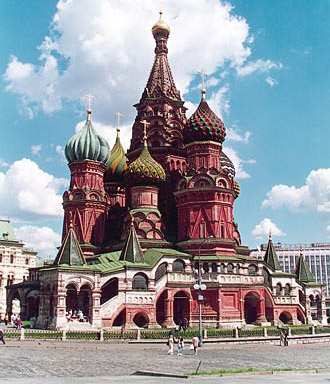
It was the story-tellers who built the first temples, sites where stories were told to such people as had decided to become sedentary and make a living off the wood and its free gifts: animal pelts for dress, meat cured by smoking, and dried berries, mushrooms, and roots, which were later soaked and boiled into a soup in home-made clay pots. One of these early fairy-tale temples, Saint Basil’s (Sacred King) Cathedral http://www.moscow.info/images/red-square/St-Basils-Cathedral.jpg , still stands in Moscow though built at a later date (as a Memorial) and on a much grander scale than early temples in the wood.
 
The early herders of nomadic tribes were called Gens, from which have derived such names as genes, gendarmes and at least a hundred more words. Gens probably meant ‘herder’; in the Latvian language it is pronounced ‘gans’, but gans is still a herder. The many derivatives and cognates of the name are a fact hidden and deliberately overlooked by linguists, who will argue that they cannot see how the same letter G can over time change into other letters J, Ch, Y, H, Gh, V to name a few, and be pronounced differently: Jean, John, j(y)anniseries, Charon, Huan, Ghengis, Vanna (Vanesa), and so on. For this reason, St. Basil’s Cathedral in Moscow, which in direct translation means ‘Sacred King’ Basil, and Basil’s early name was likely John (Ivan, Jesus) the King, ought still be recognized as a symbol for ‘green’ (wood, field, and nature).
 
In any case, these early travelling priests or medicine men were also the first teachers. One ought not to be surprised that it was from these same ‘herders’ that there emerged the first teachers and, indirectly, law makers. These were the ‘wise men’, aka sons of the Sun; traces of this still remain with the Jewish rabbis, if we remember that many centuries ago, many people could not say the letter R and pronounced it as L, thus Rabbi=Labbis, the latter meaning ‘good men’ in Baltic languages to this day, hence “Laba diena” in Lithuanian means “Good day!” In the Baltics themselves, the word ‘labs’ changed to ‘raibs’, which means ‘changeling’ (of colors, many spotted, interesting); the Latvian capital city Riga, was anciently known as Līga, which is a word that stands for alliance and agreement (līgums).
 
In the early days, rabbis were men of the wood and also animal herders who came from many communities. When the days of the dream-King were coming to an end [at about the end-times of the Byzantine Empire (according to Anatoly Fomenko) aka Israel], these same men formed a community of their own ‘good men’. It ought not be surprising that in due course the ‘good men’ came to serve the King as lawmakers and tax collectors.
 
It was at this time that the early stages of later calamitous times were set into place. Though it may confuse some people why this should be so, it makes sense if we remember that the early people of the wood, who governed themselves, kept social order through localized decisions, whereas with the appearance of the King (as an actual rather than a dream entity), there appeared the first steps toward ‘globalization’. This globalization (then known as Catholization) of ‘human rights laws’ had nothing to do with ‘human rights’, but enabled a mechanism that made laws on behalf of kings, princes, barons, and EC commissioners. The post-wood or urban laws were imposed on many communities, which destroyed the earlier local (subjective) decision making mechanisms and unleashed governmental entities that are monstrous when compared to what our forebears believed to be necessary for self-rule.
 
Early opposition to globalized law came from the rabbis or ‘good men’ of the Israelite (formerly Byzantine) community. Almost everyone knows what the globalizers or Reichmahers of Germany did to the rabbis and their communities. The lies told by the Reichmahers remain in force through anti-Semitism in many East European countries, who do not remember—unfortunately—that their own communities of gani, the gens, were repressed and ‘knelled’ by the descendants of Vikings, who settled in Western Europe and now wish to Federalize Europe under a new legal barbarism. http://en.wikipedia.org/wiki/Law
 

Saturday, January 11, 2014

Eso’s Chronicles 275 / 1
The ‘Knellen’ of EU Nations
© Eso A.B.
All comments appearing within brackets [ ] are editorial in origin.
 
INTRODUCTION
 
I was just finished with a long series of blogs on my blogspot (Esoschronicles) on the theme of ‘The King’. Among the last logs is one where I complain that all too often when I feel the time has come to end a series, some other topic reminds itself, which is why the blog has a PS, and then a PPS, and then even a PPPS—a Post Script to the 3rd power. And here I am with a PPPPS to the 4th power, which I have decided to write as a short pamphlet (= an old name, one that comes from the days way before the arrival of the internet and blogging) or booklet, a name more familiar to those around during the time of the print revolution.
 
In some ways it is only right that I borrow a word from the days of yore, because not only was the ‘pamphlet’ http://en.wikipedia.org/wiki/Pamphlet then in vogue, the King, too, was yet around in livelier form than he-she is today.
 
This PPPPS to the 4th power was suggested by a News item at the Telegraph, UK  internet site http://www.telegraph.co.uk/news/worldnews/europe/eu/10562740/David-Cameron-lying-to-British-voters-about-the-EU-and-immigration-Viviane-Reding-claims.html. The item reports that a UN official and a vice president of the EU commission, Viviane Reding, slams London “for peddling ‘myths’ about an ‘invasion of foreigners’”, which Reding said were “scare tactics”. Specifically, Reading said:
 
“Most of the things which are told to the people in Great Britain are myths, [and] have nothing to do with reality.”
 
As we say in polite society: “I beg your pardon, Madam!” I am not a citizen of the UK, but one of a full fledged EU country called Latvia. Moreover, I deeply resent being a part of the EU—for a number of reasons, but the main one is that I was not consulted whether I agreed to the loss of sovereignty for Latvia, a once sovereign country now being forced to submit to the dictates of the European Central Bank (ECB), which it came under (with ever less juridicial arguments to use to slip away) when at the beginning of 2014, Latvia lost its sovereign currency for the slippery eel called the Euro.
 
This pamphlet is therefore going to be about what I would have said, had the EU dictatorship (headed by Barozzo & Von Rompuy, and my own government) asked me for my thoughts on the subject. I would have said: “I prefer the King to you, Quenelles!*”
 
The fact that Latvia joined the Euro is due to the traitorous collaboration between the officialdom of the EU and Latvia’s own ever so malleable conspirators against the people of Latvia. The reader will notice (by clicking on the link above) that Viviane Reding dismisses the people, for being ‘populists’ (a dirty word, she believes), and accuses the UK government, led by PM David Cameron as a ‘populist’ and a ‘’Euroskeptic’. Worse, when her words are interpreted right, Reading accuses, none other than the people (the populists) themselves of “destroying the[ir] future … actually”.
 
Well, madam, as the French comedian Dieudonné  M’Bala M’Bala says through a gesture he has made famous: “Quenelle!*” to you, too. The King is coming up yours. Or maybe you, born into an urban and denaturalized environment, would have him parade as a Queen?
 
*http://www.voltairenet.org/article181663.html : “quenelle.” As the author of the article Diana Johnstone writes: “The quenelle is all too obviously a vulgar gesture roughly meaning “up yours”, with one hand placed at the top of the other arm pointing down to signify “how far up” this is to be.” However, if you think about it, given that the palm of the extended hand is turned down, it may also mean: let it lie, don’t make an issue of it, its not a big deal. Yet again, if officialdom possessively determines that the sign is an anti-Semitic--as the following link hints some groups read it http://www.belfasttelegraph.co.uk/sport/football/premier-league/powar-calls-for-anelka-sanction-29878752.html . then why not have populist subjectivism read it to be a French pro-Royalist sign that says: “Curtsy (quenelelle)! (and as we—the public--turn our palms up—we suggest:) here comes the King!” Incidentally, the word ‘quenelle’, is related to the dutch word ‘knellen’, which means ‘oppress’ and ‘squeeze’: http://www.wordhippo.com/what-is/the-meaning-of/dutch-word-knellen.html , which is what the EU does to the people, the communities, and nations of Europe.
 

Sunday, December 29, 2013

Eso’s Chronicles 264 / 4
The King & I
© Eso A.B.
All comments appearing within brackets [ ] are editorial in origin. This blog begins a new series.
 
INTRODUCTION
 
In blogs 262 & 263, I discussed role of the King and Parliamentary governments. It was discovered that the King was important as the “irrational moment” in the formation of a community, while Parliamentary ‘democracy’ results, for various reasons, in “bureaucratic totalitarianism”.
 
Perhaps ‘the King’ is on my mind, because as a child I heard a lot of fairy tales, which included stories about kings. From that time on, I have thought about governments as originating with a King. Though kings are long out of fashion, they still play a notable role in my imagination, and though governments and the media have abandoned the office as politically unviable, I suspect that he-she still resides in many imaginations and would be viable enough—it the opportunity arose.
 
The “irrational moment” of a King is necessary, because a community cannot form until there arises a moment of trust. Such a moment cannot arise with a Parliament, because it is, so to say, a ‘democratic’ form of government; and a democracy will not be trusted by any member of any proto-community because it is never ‘democratic’ a priori, but is such only as a result of being so declared by ‘law’, which—because of the necessity of such a declaration—is ‘democratic’ only for those who constitute the will of a ‘majority’ (whatever that may be).
 
The rest of the body-‘democratic’ is in opposition to the ‘democracy’, but has agreed not to contest it for the sake of avoiding bloodshed, even while it has not conceded being wrong in its views or opinions.
 
Examples of the ‘irrational moment’ abound in James Frazer’s famous work on myth and religion called “The Golden Bough”. While an indispensible read for any anthropologist, the work has been for various reasons pushed into the background. The most notable reason is that most all of our modern political societies associate themselves with ‘democracy’, which according to theory ought not to have ‘irrational’ or ‘charismatic’ moments.
 
Still, ‘irrational moments’ do occur; and when they occur, they are usually resolved through an act of violence, in which the alleged ‘majority’ (generally associated with the ‘victors’) kills the leader of the opposition and, if possible, most of his-her supporters. Most recently such killings occurred in Iraq and Libya, whose leaders were hanged  http://www.youtube.com/watch?v=KwfDHXT7RBM and shot http://en.wikipedia.org/wiki/Death_of_Muammar_Gaddafi . Such a resolution of the irrational moment almost always favors the killer(s), but does not necessarily resolve the question whether justice is done.
 
The ‘irrational moment’ (falsely ‘charismatic’) in our times has more often to do with the institutionalization or demise of a community rather than its creation. One such instance occurs in Aztec mythology, when the God Nanauatzin sacrifices himself by jumping into a pit of fire and impels the Sun to rise at dawn http://www.lakelandschools.us/lh/rjamin/AztecCreationMyth.htm .
 
In the religion and myth of the West, self-sacrifice is renamed ‘self-directed violence’, in effect allowing ONE self-sacrifice only, i.e., that of Jesus. This myth makes all governments, no matter how illegitimate, after Jesus legitimate, because any government that comes into existence thereafter as a result of a self-sacrifice may be claimed by ‘legal’ authority to have no sanction, which makes such a community illegitimate in spite of the fact that it may be of and have the trust of the people.
 
The adaptation of this myth as the ultimate authority of legitimacy is what has kept my loyalty for the King. As far as I am concerned, trust and not power is the most important factor in determining who rules. Though one may argue that ‘trust’ may be misdirected, the fact that it is gained as a result of someone’s self-sacrifice assures that all subsequent governments will have to legitimate themselves through self-sacrifice as well.
 
Because such legitimization has fallen away and has no legal recognition in our time, from the point of view of a King most modern governments have no legitimacy as ‘trust’ needs to be periodically renewed and cannot be forwarded to the future automatically as allegedly occurs through  ‘democratic’ elections today.
 
It must be noted that while self-sacrifice today may be interpreted as an act of violence in a strictly legalistic sense http://en.wikipedia.org/wiki/Religious_terrorism , in a psychological sense, it retains its persuasive hold on the human psyche. This writer rejects philosopher Derrida’s definition of self-sacrifice as self-directed violence http://www.zora.uzh.ch/41846/ , but agrees with the argument at the preceding link that self-sacrifice constitutes a not-violent act of terror by impressing on the observer the fact that death as a voluntary act is not to be slighted or abjured in favor of the law as determined by the written word, which likely transgresses against justice more often than when one puts in escrow (as an assurance) one’s life.
 
At the present time, however, Derrida’s interpretation of self-sacrifice has the upper hand for the simple reason that presently it is the ‘power’ of the government elite that writes ‘the law’, which, at the same time, has earned most governments the distrust of the populace at large. The distrust is because the law in economic matters is invariably written in favor of the elite. Given the enormous gaps in income levels (popularly described as1% vs 99%), it may not be long before the agreement not to test ‘democracy’ will be challenged. Incidentally, the consequences of what happens when institutionalized self-sacrifice is ignored or avoided is dealt with in my ‘rewrite’ of OedipusRex Rewritten at http://oedipusrexrewritten.blogspot.com
 
For additional reflection, I recommend http://en.wikipedia.org/wiki/Carl_Schmitt
 

Wednesday, May 22, 2013

Eso’s Chronicles 170
No Room For Me at Home (II)
© Eso A.B.

The Merriam-Webster dictionary defines fascism as: http://www.merriam-webster.com/dictionary/fascism (please read link) :

“1: often capitalized: a political philosophy, movement, or regime (as that of the Fascisti) that exalts nation and often race above the individual and that stands for a centralized autocratic government headed by a dictatorial leader, severe economic and social regimentation, and forcible suppression of opposition

2: a tendency toward or actual exercise of strong autocratic or dictatorial control “early instances of army fascism and brutality — J. W. Aldridge”; etc.

Anyone with some analytical ability will note that both 1 & 2 definitions are not definitions, but transparent  pejoratives and a priori denouncements dressed in a language tuned to imitate a definition.

Let us take a closer look at the 1st ‘definition’: “….a political philosophy, movement, or regime (as that of the Fascisti) that exalts nation and often race above the individual and that stands for a centralized autocratic government headed by a dictatorial leader, severe economic and social regimentation, and forcible suppression of opposition…”

The second (2) ‘definition’ is no less propagandistic and serving those  (Merriam?) in whose interests it is to weaken and ultimately destroy COMMUNITY as a legitimate social phenomenon.

Let us look at the items separately and in the context that sees said ‘definitions’ as politically deliberate and pejorative redefinitions of a community of human beings:

1. A political philosoph:
Is ‘community’ a political philosophy or a necessity of the human condition? http://dictionary.reference.com/browse/community The reader should read the text at link to see that the enemies of the COMMUNITY are those who stand against it: “1. a social group of any size whose members reside in a specific locality, share government, and often have a common cultural and historical heritage.”

2. regime:
http://dictionary.reference.com/browse/regime?s=t Items 1. (above) + 2. should suffice for us to get the anti-community gist: “1. a mode or system of rule or government: a dictatorial regime. 2. a ruling or prevailing system.”

3. exalts nation and often race above the individual:
synonyms: extol,  glorify, elevate, praise, raise. In and of themselves the synonyms are harmless, but put in combination with words such as “nation” or “race above the individual”, it instantly acquires a negative coloration in reference to the ‘known unknown’ COMMUNITY that inevitably stands just behind the curtain.

4. centralized autocratic government headed by a dictatorial leader:
a definition of ‘autocracy’: http://en.wikipedia.org/wiki/Autocracy : “An autocracy is a system of government in which a supreme power is concentrated in the hands of one person, whose decisions are subject to neither external legal restraints nor regularized mechanisms of popular control (except perhaps for the implicit threat of coup d'état or mass insurrection).”

5. economic and social regimentation:
if this is the prevailing mode of communal existence, then COMMUNITY again appears in a negative light.

6. forcible suppression of opposition:

here we return to the Merriam Dictionary: “fascism noun: Philosophy of government that stresses the primacy and glory of the state, unquestioning obedience to its leader, subordination of the individual will to the state's authority, and harsh suppression of dissent. Martial virtues are celebrated, while liberal and democratic values are disparaged. Fascism arose during the 1920s and '30s partly out of fear of the rising power of the working classes; it differed from contemporary communism (as practiced under Joseph Stalin) by its protection of business and landowning elites and its preservation of class systems. The leaders of the fascist governments of Italy (1922–43), Germany (1933–45), and Spain (1939–75)—Benito Mussolini, Adolf Hitler, and Francisco Franco—were portrayed to their publics as embodiments of the strength and resolve necessary to rescue their nations from political and economic chaos. Japanese fascists (1936–45) fostered belief in the uniqueness of the Japanese spirit and taught subordination to the state and personal sacrifice. See also totalitarianism; neofascism.

While it is true that the above mentioned states and regimes did use the stated methods for gaining and staying in power, it is just as clear that said governments had no or little understanding of the place of a community in the scheme of human society or the state as a mechanism for the facilitation of communal values. On the other hand, it cannot be said that the impulses that lead to the creation of a fascist state did not originate with a desire by a disintegrating community to preserve the community.

The question over what forces create a community necessarily lead us to consider the nature of human being, consciousness, the Superego, the subjective mind, primal times, and more.


Any attempt to look at the community leads one to look at the nature of human being. We begin as children, and as children our natures are as needful of parental protection and love as we as remain barbarous, anarchistic, and largely untutored in our behavior. As babes, we all insist that we are born billionaires, and the first billion that we own is attached to the nipple of our mother’s breast.


Because parents have gone through the experience of learning that the physical habitat we are born into does not offer us a cornucopia of everything we want, they must wean the child not only off the mother’s breast, but that instead of getting two pieces of candy, we may have to be satisfied with one, and sometimes none at all. This is when the cornucopia appears in heaven and the figure of God. However, ‘God’ and ‘heaven’ (or Paradise) are meaningless words until these are supplemented with images and stories that create the illusion that these promises are real. By the time the child discovers that a storyteller tells lies, he-she has reached puberty and discovers the pleasures of sex, which discovery may have been caused by parental sex education. Instead of being truly educational, it more likely lead to self-education through masturbation. Because for a man the desire of his penis tends to be stronger than the man himself, the penis provokes fantasies of women as cornucopias. Since a boy knows that the women of his own family are no cornucopias, his fantasies project to women of other families and/or tribes, and results in stealing for himself a ‘wife’.


It may be that the first communities began through the act of rape, which deed was resolved by the myth that women ‘enjoyed’ being raped. While today we seem to ‘unknowingly know’ that rape is an unmentionable, this was not necessarily so for our forebears. While the reason for rape for a man was sexual pleasure, its consequences were assured pregnancy culminating in the birth of a child. Another inevitable consequence was social turmoil: one small social unit, one family (in prehistoric days headed by a woman) had intruded into the space of another family. Conflict was always just short of being imminent, even though it was not always inevitable.


Imminent conflict could be avoided by following a number of simple tactics. One of these was rape, an immediate (asap) deflowering of the stolen-kidnapped maid. This fait accompli act defused the conflict, because the brothers of the maid, who gave chase (the father always was no one knew where) knew enough about ‘facts of life’ that a child could be the consequence. If a child was indeed the consequence, it was better for the families of the two women (one of the groom, the other of the bride) to live in peace. In other words, the custom that prevails to this day in pre-borgeois ‘organic’ communal life, which encourages the raped woman’s family to blame her rape on the woman, is not because it favors rape or wishes to besmirch one of their own, but to avoid mortal conflict between the brothers of the two families.


Another tactic employed was to carry the stolen ‘bride’ beyond easy reach of her pursuing brothers, such as carrying the maid across a natural barrier, say, a river. The barrier means that the pursuers will be delayed, during which time the sexual act will be consummated.

Yet another tactic is to take advantage of everyone’s desire to avoid death. Thus, both sides invented numerous excuses for avoiding conflict. In a Latvian folk song, after the maid is carried across the river, her brothers, still on the other shore, call their sister and urge her to come back, but the maid (no doubt already sexually compromised) shouts back: “Dear brother, I will not come back, your wife treats me harshly….”


Still, while direct conflict between the families has been avoided, a sense of humiliation may linger. Sometimes this results in brawls among the men-brothers at the next community festival, where inebriating drink may loosen tongues and resolve to control one’s self. If grudges result in conflict long after the original provocation, other tactics need to be exercised to avoid violence. It is these tactics that call for the involvement of elderly men, commonly known as community elders; and it is at this point that the Superego invents another story. The story may come by way of a dream (ever respected because its source is not one’s personal and wilfull consciousness) or may be consciously inspired and meet with communal approval. One may call the story, “Piece of Coal in the Cake”.


The elders of the various families who participate in the Festival, come together for a Salmagundi (a meal of peace*) at which they confirm that together they form one community, and all, do or die, stand as one. To confirm this resolve, the men divide among themselves a cake, into which has been baked a piece of black coal. Whoever gets the piece of cake with the coal in it will self-sacrifice himself on behalf of all, i.e., the community. In this way, he will overcome death and violence on behalf of all.


Incidentally, such an extended community avoids becoming centralized, but consists of autonomous communities. The bond among the communities is expressed and reasserted at festivals, which come together on the basis of habit and tradition. They often occurred on astronomically significan days: summer and winter solstices. The man who ‘wins’ the peace of coal, pays for the ‘win’ with his life, though in times of conflict, he may become the King or leader of the community and goes to repel the ‘outsiders’ or ‘unfriendlies’. By becoming the leader of armed men, the King is in no way forgiven death, but becomes the leader, because death is already his fate. If he survives the battle, he will fulfill his pledge perhaps at the next festival


The need to select a King in wartime may create Kingship as a centralized office for the entire community. The office does not lead to fascism or the dissolution of communal bonds in preference of a hunta or junda. The organic nature of the community continues to be confirmed through self-sacrifice.


*Salmagundi—while the dictionary informs us that it is a salad, the word ‘salma’ (like salam) probably stands for ‘peace’, while the word ‘gundi’ likely stands for a ‘gathering’.