© Eso Antons Benjamins, aka Jaņdžs
POSTSCRIPT 4 / Summary 2
101 The Sail
These blogs tend to be a continuum of an idea or thought, which is why—if you are interested in what you read—you are encouraged to consider reading the previous blog(s) and the blog hereafter. http://esoschronicles.blogspot.com/
Partial entries of my blogs may be found at LatviansOnline + Forum Home + Open Forum –ONLATVIANPOPULISM vs LATVIJASLABEJIE.
The blow-up within the West is the end result of what the former President of the United States, Bush, described as the "crusade" . While for Bush the “crusade” meant war on terrorism, which he claimed was begun on-the-cusp of the 21st century by a Saudi Arabian Muslim prince named Bin Laden, curiously enough, the “crusade” actually began with the so-called Fourth Crusade (according to A. Fomenko actually the First Crusade) of 1204.
The First Crusade followed the death of Jesus, the itinerant story teller, who a decade or two earlier (? 1184) was thrown into a pit of fire (no, he was not crucified; crucifixion is a neo-Christian invention to throw the listener off the scent of what really happened) in Constantinople by Alexis I, a Byzantine king, one of the first such to overturn the sacred nature of his office in order to exploit wealth and power for the sake of—as Taussig tells it about the colonizers—“[the] gratuitous, end in itself”.
As I have often stated in earlier blogs, the chronology of history as presented by the West is unreliable for the reason that is was established as a result of the Council of Trent (1545-1563), which selected one Joseph Justus Scaligeri to set straight a chronology that did not favour the Catholic Church. The Council of Trent was the main event of the Counter Reformation. While Martin Luther, the founder of the Lutheran Church and the Reformation movement hardly sympathized with the Catholic Counter Reformation, the Council’s historical revisionism suited well enough all neo-Christian sects. At the same time, many scholars have questioned the veracity of the chronology, among which doubters were Isaac Newton (1643-1727) and is Anatoly Fomenko (1945- ).
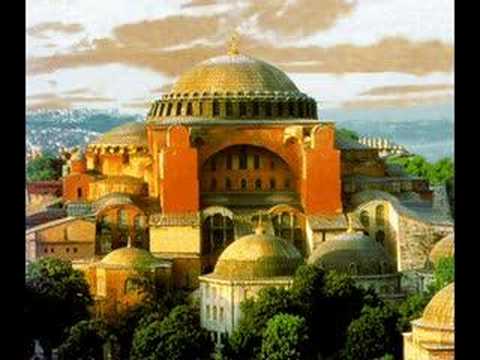
The “crusades” by the West that followed the First Crusade (1204) were the result of the rapid spread (by way of mimesis) of the desire by secular princes to expand their wealth and power. This rise of the importance of power became a scramble. The scramble took place not only among kings and princes, but at the same time involved attempts to discover ways to eliminate the arch-competitor—Constantinople, the seat of arch-Christianity some 900 years ago. This was accomplished by letting Constantinople fall (in 1453) to the Turks.
The First Crusade was made possible by rousing the “Children of Johns” (I prefer to put all arch-Christians under this description, because the name “John” is ubiquitous in all European and many more languages) against those said to have slain Jesus, the Children of Johns believing Jesus to have been one of their own. The outrage of the arch-Christians was then redirected by the secular princes against the Kingdom of Israel, which at that time was not located where a nation called Israel is located in our time, but the Israel of Byzantium as Byzantium was then known among the Children of Johns. Following the plunder of Constantinople (1204) by the West, the Children of Johns were turned against themselves by introducing a new sect, re: Catholics or neo-Christians, who distinguished themselves from arch-Christians (who referred to the Divine by touching the Earth) by claiming—in the beginning almost beyond anyone’s belief—that their “John” was not mortal and lived in Heaven. By 1209, the Western princes had sufficient violent force and could use the written word in a sufficiently sophisticated a manner to confuse the population of Europe (the Children of Johns were largely of an oral tradition) to such a degree that credibility accrued to those who practiced violence, that is, to neo-Christians.
It follows from the above that arch-Europeans and their religion were repressed and the European people were turned against themselves—as they had first been turned against Constantinople. The new world order of secular kings and princes rode on the backs of the European people. The only sect of arch-Christians or Children of Johns who survived was the Jews. The reason the sect was not destroyed has to do with their service to kings and princes—most likely as tax collectors. The ability of the sect to survive against the onslaught of Catholicism attracted to them many Children of Johns making an escape from the Inquisition. Most of this happened post-?1184. Unlike the flight of the Waldensians to Bohemia and the freedoms of the Hussites (15th century and earlier), the flight of the Children of Johns by ritualistic or self-confessional conversion to Judaism remains repressed information.
Let us return to Michael Taussig, our authority on memesis and alterity, and repeat the quote that I already gave in Blog 99. Taussig writes (pgs. 70,71): “As the nature that culture uses to make second nature, mimesis cannot be outside of history, just as history cannot lie outside of the mimetic faculty…. As the nature that culture uses to create second nature, mimesis chaotically jostles for elbow room in this force field of necessary contradiction and illusion, providing the glimpse of the opportunity to dismantle that second nature and reconstruct other worlds—so long as we reach a critical level of understanding of the play of primitivism within the mimetic faculty itself.”
Let us now think of the Latvian Children of Johns back in 1209, when Bishop Albert of Riga in tandem with Pope Innocent III in southern France, Languedoc, and the Albigensian Crusade there, attacked Jersika (a local name for Jerusalem), up river from Riga on the shores of Daugava (Dvina), and put an end to arch-Christianity in the territory that became known as Livonia, and later yet as Latvia.
And now let us think of the anti-Semitism, not admitted to, but lingering on among the materially and educationally repressed Latvians. [For proof of material and educational repression, all one has to do is visit the more popular internet sites for the flavor of their content and take a look at the children’s teeth in the countryside to see the material need.] Even so, I believe that more than half a century after Hitler and the Nazis, the time has come for the “opportunity to dismantle that second nature and reconstruct other worlds”, i.e., an updated mimesis of the Children of Johns of old. It could begin in Latvia.
How is this to be accomplished?
I will quote Taussig once again. In his book "Mimesis and Alterity", the anthropologist and doctor writes (2): “…[Let us] see anew the spell of the natural where the reproduction of life merges with the recapture of the soul”. Nice sentiment, right? Then Taussig tosses us a brick: “But just as we might garner courage to reinvent a new world and live new fictions… so a new devouring force comes at us from another direction, seducing us by playing on our yearning for the true real.”
And what might the “true real” be?
It is fascism, the make-believe of neo-Christianity falling apart, yet held together by the force of violence. And violence—as Latvians of any ethnic origin ought to know—causes long-time terror. The terror lasts not just for one life time, but it lasts for many lifetimes—if possible with but occasional refreshers by way reminders. This is a perfect way to intimidate people and affect their behaviour. The terror of violence seeps into the bones of the violated ones by way of a negative mimesis and represses human nature. The entire world is infected by this mimesis of terror in our day. It is rather disingenuous of academic historians to adhere to the Scaligeri chronology when the chronology of Anatoly Fomenko fits the shoe better. Moreover, government and academia disingenuosity denies the people their right to shed the terrors of violence.
And just how does one shed the terrors of violence and the PTSD (Post Traumatic Stress Disorder) not only of soldiers back from war today, but the population at large, the one that has violence imposed on it for a thousand years?
For the answer, I invite the reader to Blog 1 and the beginning of my long series of blogs under the title “Not-Violent Terror”. However, the little dirty secret (and you may imagine it right after you read this) is “Not-Vote”. The act is not-violent terror. Not-violent terror to whom? Hint: to the enemies of not-voters.
Showing posts with label Michael Taussig. Show all posts
Tuesday, April 27, 2010
Saturday, April 24, 2010
© Eso Antons Benjamins, aka Jaņdžs
The small secret
(which you may learn as soon as you read this)
at http://esoschronicles.blogspot.com/ is
“Not-Vote!”
It will be an act of not-violent terror. To whom?
To the enemies of the “not-voters”.
POSTSCRIPT 3 / Summary 1
100 The Enemies of the “West”
Photos: The beginnings of mimesis: Life mimics life: Frogs eggs
These blogs tend to be a continuum of an idea or thought, which is why—if you are interested in what you read—you are encouraged to consider reading the previous blog(s) and the blog hereafter. http://esoschronicles.blogspot.com/
To say that political thought and engineering in the West is simplistic is to understate the problem. A better word to describe it is “sick”. Like many illnesses, sick politics took time for a human agency to set up. It then incubated, to infect further, and then reached its virulent stage in the 20th century.
Many of my preceding blogs touch on the schism in Christianity, that is, between arch- and neo-Christians. Such a dual Christianity is not acknowledged by either the intelligentsia or historians of the West (or East), yet someday it will be obvious to anyone who understands that the rise of Catholicism was accompanied by short- and long-term repressive violence. As a consequence of the violence, of the arch-Christian sects (the Cathars, Bogomils, Waldensians, Johns Children, etc.) only the Jews remain, however and alas! no longer recognizable as their former selves.
Among the Latvians, it is the Children of Johns, the once arch-Christian sect, who are no longer remembered for who they were. All that remains of the Children of Johns is the Midsummer’s Solstice celebration at which time the celebrants may occasionally refer to the event as “Johns Eve” and even with lesser occasion refer to themselves as the Children of Johns. More specific interest in the Children of Johns it is apparent no longer exists.
To explain the simplistic political thinking in the West (of which Latvian politicians believe themselves to be a part), I will return once more to Michael Taussig and his anthropological studies. I believe Taussig to be right-on in his explanation concerning anti-Semitism (see quote below), nevertheless, I would like to take anti-Semitism a step further and include among its transgressions anti-self-ism or anti-European-ism. By extending the reach of the anti-Semitic meme, we arrive at the insight that anti-Europeanism among Europeans (in effect, anti-Latvianism among Latvians), too, remain as much a force of fascism as ever, especially because the Latvian people (and of course the Europeans as a whole) never really understood fascism. The repression of the European people by the European elite has lasted for so long as to cause both the people and the elite to forget their history and allow it to be replaced by an artifice or as Taussing describes it—“history… outside the mimetic faculty….”. In other words, history is no longer a written history making an effort to come alive, but an artificial history written by scholars whose experience of history is as much bookishly self-referentialist as it is experientially nonexistent.
The path from colonialism to fascism is illustrated in Taussig’s book, “Mimesis and Alterity”. Though Taussig is writing of the Indians living in the Putumayo in South America, we may learn much by substituting another group of people (through a wilful act on my part) for the Indians, re the arch-Christian/Europeans. Here iTaussig (65):
“…the imaginative range essential to the execution of colonial violence in the Putumayo at the turn of the century was an imagining drawn from that which the civilized imputed to the Indians, to their cannibalism especially, and then mimicked. It should also be pointed out that while this violence was doubtlessly motivated by economic pressures and the need to create labour discipline, it was also… very much a passionate and gratuitous end in itself.
“This mimicry by the colonizer of the savagery imputed to the savage is what I call the colonial mirror of production and it is… identical to the mimetic structure of attribution and counter-attribution that Horkheimer and Adorno single out when they discuss (in “The Dialectic of Enlightenment”) not the violence of the twentieth-century colonial frontier but the blow-up within modern European civilization itself, as orchestrated by anti-Semitism.”
Taussing then quotes Horkheimer and Adorno: “There is no anti-Semite who does not basically want to imitate his mental image of a Jew, which is composed of mimetic ciphers: the argumentative movement of a hand, the musical voice painting a vivid picture of things and feelings irrespective of real content of what is said, and the nose—the physiognomic principum individuationis, symbol of the specific character of an individual, described between the lines of his countenance.”
There are several things in the above quotes which I would like to point out further and add to my own observations.
Let us turn to what Taussig describes as “the blow-up within modern European civilization”. It is my perception that the blow-up is not over. It continues in the effort of NATO to try maintaining pre-eminence of the West through the war in Afghanistan (Latvian military forces including). It also continues by means of the economic catastrophe that now spans the globe. The catastrophe was temporarily averted as a result of a temporarily successful diversion of social tensions caused by secular princes (nee neo-Christians) to Conspicuous Consumption. The mechanism through which Conspicuous Consumption was accomplished was to loosen—following WW1—the gold standard, and then replace it by fiat money in the latter half of the 20th century. The world is familiar with the consequences of fiat money through the parliamentary democracy and inflation in the Weimar Republic of Germany in the 1920s and more recently in Zimbabwe, Africa.
Though Taussig does not connect the repressions of arch-Christianity with colonialism or colonialism with fascism, he comes close enough for my purposes. Writes Taussig: “Fascism… is an accentuated form of modern civilization which is itself to be read as the history of repression of mimesis—the ban on graven images, gypsies, actors; the love-hate relationship with the body; the cessation of Carnival; and finally the kind of teaching which does not allow children to be children. But above all, fascism is more than outright repression of the mimetic; it is a return of the repressed, based on the ‘organized control of mimesis’. Thus fascism, through the mimesis of mimesis, ‘seeks to make the rebellion of the suppressed nature against dominion directly useful to dominion’”.
Even if fascism ceased being virulent as the result of physical exhaustion of societies due to WW2 and a subsequent release of tensions by taking advantage of a combination of machine production and fiat money to squelch unresolved tensions and aggressiveness, it did so also by absolving the carnal sins of sin, now identified as Conspicuous Consumption. However, fascism did not disappear (even if it sometimes so appeared), because “organized control of mimesis” (through apparent release of control over Conspicuous Consumption) cannot be sustained over the long-term.
This is why I agree with Taussig that we need to seize “…the opportunity to dismantle… second nature and reconstruct the worlds”.
This is a time when a small nation like Latvia has the opportunity to be shrewd and set its sail toward the future “within the buffeting of history” (Taussig). However, before the vessel called “Latvia” can take advantage of its small size and sail past the sinking ocean liners, it needs to deconstruct its parliamentary democracy and the Constitution which are tied by hidden ties to fascism. The most obvious way this can be accomplished is to encourage the people of Latvia to “not-vote”, dismiss the parliamentary partidocracy, and then reconfigure the future in a manner that will encourage mimesis not only among their own, but throughout the world.
The setting of the sails into the winds of history requires a radical jibe, that jibe being the “not-vote”.
The small secret
(which you may learn as soon as you read this)
at http://esoschronicles.blogspot.com/ is
“Not-Vote!”
It will be an act of not-violent terror. To whom?
To the enemies of the “not-voters”.
POSTSCRIPT 3 / Summary 1
100 The Enemies of the “West”
Photos: The beginnings of mimesis: Life mimics life: Frogs eggs
These blogs tend to be a continuum of an idea or thought, which is why—if you are interested in what you read—you are encouraged to consider reading the previous blog(s) and the blog hereafter. http://esoschronicles.blogspot.com/
To say that political thought and engineering in the West is simplistic is to understate the problem. A better word to describe it is “sick”. Like many illnesses, sick politics took time for a human agency to set up. It then incubated, to infect further, and then reached its virulent stage in the 20th century.
Many of my preceding blogs touch on the schism in Christianity, that is, between arch- and neo-Christians. Such a dual Christianity is not acknowledged by either the intelligentsia or historians of the West (or East), yet someday it will be obvious to anyone who understands that the rise of Catholicism was accompanied by short- and long-term repressive violence. As a consequence of the violence, of the arch-Christian sects (the Cathars, Bogomils, Waldensians, Johns Children, etc.) only the Jews remain, however and alas! no longer recognizable as their former selves.
Among the Latvians, it is the Children of Johns, the once arch-Christian sect, who are no longer remembered for who they were. All that remains of the Children of Johns is the Midsummer’s Solstice celebration at which time the celebrants may occasionally refer to the event as “Johns Eve” and even with lesser occasion refer to themselves as the Children of Johns. More specific interest in the Children of Johns it is apparent no longer exists.
To explain the simplistic political thinking in the West (of which Latvian politicians believe themselves to be a part), I will return once more to Michael Taussig and his anthropological studies. I believe Taussig to be right-on in his explanation concerning anti-Semitism (see quote below), nevertheless, I would like to take anti-Semitism a step further and include among its transgressions anti-self-ism or anti-European-ism. By extending the reach of the anti-Semitic meme, we arrive at the insight that anti-Europeanism among Europeans (in effect, anti-Latvianism among Latvians), too, remain as much a force of fascism as ever, especially because the Latvian people (and of course the Europeans as a whole) never really understood fascism. The repression of the European people by the European elite has lasted for so long as to cause both the people and the elite to forget their history and allow it to be replaced by an artifice or as Taussing describes it—“history… outside the mimetic faculty….”. In other words, history is no longer a written history making an effort to come alive, but an artificial history written by scholars whose experience of history is as much bookishly self-referentialist as it is experientially nonexistent.
The path from colonialism to fascism is illustrated in Taussig’s book, “Mimesis and Alterity”. Though Taussig is writing of the Indians living in the Putumayo in South America, we may learn much by substituting another group of people (through a wilful act on my part) for the Indians, re the arch-Christian/Europeans. Here iTaussig (65):
“…the imaginative range essential to the execution of colonial violence in the Putumayo at the turn of the century was an imagining drawn from that which the civilized imputed to the Indians, to their cannibalism especially, and then mimicked. It should also be pointed out that while this violence was doubtlessly motivated by economic pressures and the need to create labour discipline, it was also… very much a passionate and gratuitous end in itself.
“This mimicry by the colonizer of the savagery imputed to the savage is what I call the colonial mirror of production and it is… identical to the mimetic structure of attribution and counter-attribution that Horkheimer and Adorno single out when they discuss (in “The Dialectic of Enlightenment”) not the violence of the twentieth-century colonial frontier but the blow-up within modern European civilization itself, as orchestrated by anti-Semitism.”
Taussing then quotes Horkheimer and Adorno: “There is no anti-Semite who does not basically want to imitate his mental image of a Jew, which is composed of mimetic ciphers: the argumentative movement of a hand, the musical voice painting a vivid picture of things and feelings irrespective of real content of what is said, and the nose—the physiognomic principum individuationis, symbol of the specific character of an individual, described between the lines of his countenance.”
There are several things in the above quotes which I would like to point out further and add to my own observations.
Let us turn to what Taussig describes as “the blow-up within modern European civilization”. It is my perception that the blow-up is not over. It continues in the effort of NATO to try maintaining pre-eminence of the West through the war in Afghanistan (Latvian military forces including). It also continues by means of the economic catastrophe that now spans the globe. The catastrophe was temporarily averted as a result of a temporarily successful diversion of social tensions caused by secular princes (nee neo-Christians) to Conspicuous Consumption. The mechanism through which Conspicuous Consumption was accomplished was to loosen—following WW1—the gold standard, and then replace it by fiat money in the latter half of the 20th century. The world is familiar with the consequences of fiat money through the parliamentary democracy and inflation in the Weimar Republic of Germany in the 1920s and more recently in Zimbabwe, Africa.
Though Taussig does not connect the repressions of arch-Christianity with colonialism or colonialism with fascism, he comes close enough for my purposes. Writes Taussig: “Fascism… is an accentuated form of modern civilization which is itself to be read as the history of repression of mimesis—the ban on graven images, gypsies, actors; the love-hate relationship with the body; the cessation of Carnival; and finally the kind of teaching which does not allow children to be children. But above all, fascism is more than outright repression of the mimetic; it is a return of the repressed, based on the ‘organized control of mimesis’. Thus fascism, through the mimesis of mimesis, ‘seeks to make the rebellion of the suppressed nature against dominion directly useful to dominion’”.
Even if fascism ceased being virulent as the result of physical exhaustion of societies due to WW2 and a subsequent release of tensions by taking advantage of a combination of machine production and fiat money to squelch unresolved tensions and aggressiveness, it did so also by absolving the carnal sins of sin, now identified as Conspicuous Consumption. However, fascism did not disappear (even if it sometimes so appeared), because “organized control of mimesis” (through apparent release of control over Conspicuous Consumption) cannot be sustained over the long-term.
This is why I agree with Taussig that we need to seize “…the opportunity to dismantle… second nature and reconstruct the worlds”.
This is a time when a small nation like Latvia has the opportunity to be shrewd and set its sail toward the future “within the buffeting of history” (Taussig). However, before the vessel called “Latvia” can take advantage of its small size and sail past the sinking ocean liners, it needs to deconstruct its parliamentary democracy and the Constitution which are tied by hidden ties to fascism. The most obvious way this can be accomplished is to encourage the people of Latvia to “not-vote”, dismiss the parliamentary partidocracy, and then reconfigure the future in a manner that will encourage mimesis not only among their own, but throughout the world.
The setting of the sails into the winds of history requires a radical jibe, that jibe being the “not-vote”.
Labels:
anti-Semitism,
Jews,
Latvians,
Michael Taussig,
mimesis,
West
Saturday, April 17, 2010
© Eso Antons Benjamins, aka Jaņdžs
POSTSCRIPT 2 / Epilogue
99 Let Us Have Alterity or
Come The Alternative —….
These blogs tend to be a continuum of an idea or thought, which is why—if you are interested in what you read—you are encouraged to consider reading the previous blog and the blog hereafter. http://esoschronicles.blogspot.com/
First, as to the word "alterity" in the title. According to the dictionary “alterity” means: otherness; specifically the quality or state of being radically alien to the conscious self or a particular cultural orientation
Second, I have mentioned in my blogs in the past Michael Taussig, the anthropologist. I acknowledge my debt to Taussig here by citing him and his analysis of Walter Benjamin’s thought from his own thought provoking book, “Mimesis and Alterity”, Routledge, 1993. I am referring specifically to Chapter 3, ‘Spacing Out’ (Latvians would probably use the word “iedomāties”, to think into).
Taussing quotes Walter Benjamin: “The gift of seeing resemblances is nothing other than a rudiment of the powerful compulsion in former times to become and behave like something else.” I cite this passage, because I do not believe that for Latvia today those “former times” are past, but are of profound relevance and need to be exercised today.
This is because as things are in Latvia now, it is a state with a failed government. While there are many mundane administrative functions that can be fixed without a change of government, the chief problem is that the state’s would-be orthodox reformers et al, are insufficiently alive in their imaginations and articulations to probe and try alterity. Indeed, at a time when it is clear that the “West” (capitalism) is as failed an affair as the recent “East” (communism), and yet the ossified model of the former inspires the Latvian reformers in the midst of ongoing social turmoil—even death (suicides) and pain (look at the teeth)—one has to wonder whether the inarticulateness of the ‘picture’ of the state of Latvian society (such mimesis of the community’s self as there exists) is not in fact a process realizing the intolerability of the situation by acting out a communal dying.
Of course, the “good” reformers will not admit that the old Latvia is dead or shout with me “Long live the other Latvia!” They will ask: “What other Latvia?”
This bloggers proposal of how to achieve the “other” Latvia is suggested in Blog 98. I suggest that the only hope of projecting Latvia into alterity that is other than a dying present is to wage a successful “not-vote” campaign. It is possible for 700,000 not-voters to do so. I do not mean that being “successful” must necessarily end in a victory (though it is desirable), but that a “not-vote” campaign draws sufficient attention to itself to become the kick-start (the electric shock to a stopped heart) necessary to assemble a Constitutional Revision Assembly, a Referendum Committee, empower an Interim Government to do all that is possible to do to stop Latvia from bleeding empty of its people by out-migration and demographic death-spiral put into motion by a series of failed governments, and of course many more issues.
In order to survive, Latvia needs to imagine itself a survivor. This survival must include the possibility of seizing on radical direct not-violent actions as means to survival. The Latvia of tomorrow must shed its dead orthodox skin. This skin—a distorted history of pagans, peasants, and neo-Christian preachers—has been let overwrite a people who were in their proto-Latvian stage artisans (weavers, carpenters, potters, smiths, cobblers, gardeners, etc.) and were better known as Johns Children (Jāņu bērni). These were hobbled in the recovery of their identity, when in 1888 the figure of the itinerant teacher John (still visible on the Lihgo flag of 1874) was replaced by one Bear-Slayer, a figure lifted out of Luther’s Illustrated Bible (where he appears as Samson the Lion-Slayer).
The switch away from John in favour of Bear-Slayer happened not only because in 1881 Tsar Alexander III came to power and provoked pogroms against the Jews, but because he threatened many of the people living in the tsardom by attempting to have their language replaced with Russian. Among these people were Latvian speaking people. The tensions exploded under Tsar Nicholas II with what we know as the “1905 Revolution”. While dissatisfaction with economic development was one of its motivating forces, there were other motivations not tied to economics. This is the reason why the image (and the alterity) of Bear-Slayer, a macho character, found fertile soil in what had formerly been a kingdom held together by itinerant story tellers, who served equally well as saints. By making Bear-Slayer the hero and then leaving him to replaced John was a fatal mistake.
Indeed the institutions that diminish the proto-Latvian people (the populist substrate always at odds with a government presenting itself as neo-Christian) have a long history. And this is why the life of the Latvian community’s subjective self was permanently at odds (and often not for the better, though the why-fores are understandable) with democracy under the direction of a parliamentary government. Today direct participatory democracy is still spoken of only in the context of a President directly elected by the public rather than the Parliament. The Parliament remains a club of and for “political” parties.
At the same time, the death rattle may be just what the doctor ordered if we understand the anxieties of the subjective self of Latvians as they enter the death spiral caused by out-migration, an increasingly low birth rate, and not least by a parliamentary government believing itself to know better, though responsible for the time of troubles. This may be an opportune moment for Latvians to recapture the moment of self-identification lost in the last half of the 19th century and—with the help of alterity—re-identify themselves.
To cite Walter Benjamin (by way of Taussig) again: “If the theory is correct that feeling is not located in the head, that we sentiently experience a window, a cloud, a tree not in our brains but, rather, in the place where we see it, then we are, in looking at our beloved, too, outside ourselves. But in a torment of tension and ravishment.”
If the people who once knew themselves as Johns Children still retain in themselves something of the power of “mimesis”, that curious desire to be someone, something or somewhere else, an alterity remains a possibility. Though one cannot accomplish this directly of course, one can feel one’s self into it, and there are many ways of doing it. The copy machine is as much a mimesis machine as a wreath of grasses and flowers on one’s head. The latter was how the Latvian Children of Johns felt themselves into the role of being the children of John, their hero, the maternal male storyteller come on Johns Eve to keep them awake and make sure the Sun rises on Midsummer morning. Today, however, we have for alterity the young Latvian woman, who imagines she comes from impoverished peasants (perhaps kolhozniks), who conceives a child in England with the seed of an irresponsible Latvian boy also imagining he has endless generations of impoverished peasants in his background. Such is the result of the alterity that the parliamentary government of Latvia presents its people with.
Walter Benjamin is writing about his “ravishment” (his feeling his way into an alterity) while thinking of a young Latvian woman, a theatre director, (“a Russian revolutionary from Riga”—circa 1920s) with whom he is infatuated. Asja Lācis is an object out there in Walter Benjamin’s field of vision, that—to paraphrase Benjamin in first person singular—…cuts a one-way street through me, and by that cut stimulates my commitment to Marxism…. Walter and Asja live together for two years in Berlin (no doubt this is the time when Asja cut through Walter Benjamin with arguments that she makes ever so much more profound than words on paper). An intellect bound together by love (be it infatuation) is able to make the quantum jump from singer to linden tree in blossom time, to the song of bees in the blooms, and to the Revolution. So can’t government acting as if it has the rights of state and can go riding piggy-back on the wagon of history pushed onto the steel rails of a neo-liberal capitalist economy.
An important point raised by Michael Taussig is Benjamin’s perception of history. Writes Taussig: “The radical displacement of self in sentience—taking one outside of oneself—accounts for one of the most curious features of Benjamin’s entire philosophy of history, the flash wherein ‘the past can be seized only as an image which flashes up at an instant when it can be recognized and is never seen again.’ Repeatedly this mystical flash illuminates his anxiety for reappraisal of past in present, this understanding that ‘to articulate the past historically does not mean to recognize it ‘the way it really was’ (Ranke). It means to seize hold of a memory as it flashes up at a moment of danger.’”
Taussig continues: “This flash marks that leap ‘in the open air of history’ which establishes history as ‘Marx understood revolution’ as ‘the subject of a structure whose site is not homogenous, empty time, but time filled by the presence of the ‘now’.’”
The government of Latvia, the one in office for the last twenty years, perceives the history of Latvia as a homogenous empty time. By so doing, the government causes the Latvian people to perceive their history as an “empty time” as well. The Latvian government of today empties the people of their “now” as a community and replaces it with visions of conspicuous consumption. In the end, conspicuous consumption is a form of cannibalism performed by the government on the people so that when everything else has been consumed, they consume themselves. The subjection of and then the limitation of the peoples’ subjectivity to Pop globalizes the world for freedom to be a Conspicuous Consumer, but it fails to impress the community of proto-Latvians, 200,000 of who have voted with their feet and left Latvia.
The Latvian people describe the consumption of their state with the phrase “the stolen state”, a word combo that is one of the top ten in Latvia. It is "the stolen state", the nicely crisped body with green garnishes on the long dining room table, that is the centre piece of attention of the guests.
I trust this explains what alterity has to do with vision, with tomorrow, with a people at peace and a purpose. The “not-vote” campaign continues. To not-vote must be done to ensure humankind an alterity beyond that of the Conspicuous Consumer. It is worth as a consciousness raiser. My 99 blogs lead toward it.
Copy leaflet at 98 and pass it on.
POSTSCRIPT 2 / Epilogue
99 Let Us Have Alterity or
Come The Alternative —….
These blogs tend to be a continuum of an idea or thought, which is why—if you are interested in what you read—you are encouraged to consider reading the previous blog and the blog hereafter. http://esoschronicles.blogspot.com/
First, as to the word "alterity" in the title. According to the dictionary “alterity” means: otherness; specifically the quality or state of being radically alien to the conscious self or a particular cultural orientation
Second, I have mentioned in my blogs in the past Michael Taussig, the anthropologist. I acknowledge my debt to Taussig here by citing him and his analysis of Walter Benjamin’s thought from his own thought provoking book, “Mimesis and Alterity”, Routledge, 1993. I am referring specifically to Chapter 3, ‘Spacing Out’ (Latvians would probably use the word “iedomāties”, to think into).
Taussing quotes Walter Benjamin: “The gift of seeing resemblances is nothing other than a rudiment of the powerful compulsion in former times to become and behave like something else.” I cite this passage, because I do not believe that for Latvia today those “former times” are past, but are of profound relevance and need to be exercised today.
This is because as things are in Latvia now, it is a state with a failed government. While there are many mundane administrative functions that can be fixed without a change of government, the chief problem is that the state’s would-be orthodox reformers et al, are insufficiently alive in their imaginations and articulations to probe and try alterity. Indeed, at a time when it is clear that the “West” (capitalism) is as failed an affair as the recent “East” (communism), and yet the ossified model of the former inspires the Latvian reformers in the midst of ongoing social turmoil—even death (suicides) and pain (look at the teeth)—one has to wonder whether the inarticulateness of the ‘picture’ of the state of Latvian society (such mimesis of the community’s self as there exists) is not in fact a process realizing the intolerability of the situation by acting out a communal dying.
Of course, the “good” reformers will not admit that the old Latvia is dead or shout with me “Long live the other Latvia!” They will ask: “What other Latvia?”
This bloggers proposal of how to achieve the “other” Latvia is suggested in Blog 98. I suggest that the only hope of projecting Latvia into alterity that is other than a dying present is to wage a successful “not-vote” campaign. It is possible for 700,000 not-voters to do so. I do not mean that being “successful” must necessarily end in a victory (though it is desirable), but that a “not-vote” campaign draws sufficient attention to itself to become the kick-start (the electric shock to a stopped heart) necessary to assemble a Constitutional Revision Assembly, a Referendum Committee, empower an Interim Government to do all that is possible to do to stop Latvia from bleeding empty of its people by out-migration and demographic death-spiral put into motion by a series of failed governments, and of course many more issues.
In order to survive, Latvia needs to imagine itself a survivor. This survival must include the possibility of seizing on radical direct not-violent actions as means to survival. The Latvia of tomorrow must shed its dead orthodox skin. This skin—a distorted history of pagans, peasants, and neo-Christian preachers—has been let overwrite a people who were in their proto-Latvian stage artisans (weavers, carpenters, potters, smiths, cobblers, gardeners, etc.) and were better known as Johns Children (Jāņu bērni). These were hobbled in the recovery of their identity, when in 1888 the figure of the itinerant teacher John (still visible on the Lihgo flag of 1874) was replaced by one Bear-Slayer, a figure lifted out of Luther’s Illustrated Bible (where he appears as Samson the Lion-Slayer).
The switch away from John in favour of Bear-Slayer happened not only because in 1881 Tsar Alexander III came to power and provoked pogroms against the Jews, but because he threatened many of the people living in the tsardom by attempting to have their language replaced with Russian. Among these people were Latvian speaking people. The tensions exploded under Tsar Nicholas II with what we know as the “1905 Revolution”. While dissatisfaction with economic development was one of its motivating forces, there were other motivations not tied to economics. This is the reason why the image (and the alterity) of Bear-Slayer, a macho character, found fertile soil in what had formerly been a kingdom held together by itinerant story tellers, who served equally well as saints. By making Bear-Slayer the hero and then leaving him to replaced John was a fatal mistake.
Indeed the institutions that diminish the proto-Latvian people (the populist substrate always at odds with a government presenting itself as neo-Christian) have a long history. And this is why the life of the Latvian community’s subjective self was permanently at odds (and often not for the better, though the why-fores are understandable) with democracy under the direction of a parliamentary government. Today direct participatory democracy is still spoken of only in the context of a President directly elected by the public rather than the Parliament. The Parliament remains a club of and for “political” parties.
At the same time, the death rattle may be just what the doctor ordered if we understand the anxieties of the subjective self of Latvians as they enter the death spiral caused by out-migration, an increasingly low birth rate, and not least by a parliamentary government believing itself to know better, though responsible for the time of troubles. This may be an opportune moment for Latvians to recapture the moment of self-identification lost in the last half of the 19th century and—with the help of alterity—re-identify themselves.
To cite Walter Benjamin (by way of Taussig) again: “If the theory is correct that feeling is not located in the head, that we sentiently experience a window, a cloud, a tree not in our brains but, rather, in the place where we see it, then we are, in looking at our beloved, too, outside ourselves. But in a torment of tension and ravishment.”
If the people who once knew themselves as Johns Children still retain in themselves something of the power of “mimesis”, that curious desire to be someone, something or somewhere else, an alterity remains a possibility. Though one cannot accomplish this directly of course, one can feel one’s self into it, and there are many ways of doing it. The copy machine is as much a mimesis machine as a wreath of grasses and flowers on one’s head. The latter was how the Latvian Children of Johns felt themselves into the role of being the children of John, their hero, the maternal male storyteller come on Johns Eve to keep them awake and make sure the Sun rises on Midsummer morning. Today, however, we have for alterity the young Latvian woman, who imagines she comes from impoverished peasants (perhaps kolhozniks), who conceives a child in England with the seed of an irresponsible Latvian boy also imagining he has endless generations of impoverished peasants in his background. Such is the result of the alterity that the parliamentary government of Latvia presents its people with.
Walter Benjamin is writing about his “ravishment” (his feeling his way into an alterity) while thinking of a young Latvian woman, a theatre director, (“a Russian revolutionary from Riga”—circa 1920s) with whom he is infatuated. Asja Lācis is an object out there in Walter Benjamin’s field of vision, that—to paraphrase Benjamin in first person singular—…cuts a one-way street through me, and by that cut stimulates my commitment to Marxism…. Walter and Asja live together for two years in Berlin (no doubt this is the time when Asja cut through Walter Benjamin with arguments that she makes ever so much more profound than words on paper). An intellect bound together by love (be it infatuation) is able to make the quantum jump from singer to linden tree in blossom time, to the song of bees in the blooms, and to the Revolution. So can’t government acting as if it has the rights of state and can go riding piggy-back on the wagon of history pushed onto the steel rails of a neo-liberal capitalist economy.
An important point raised by Michael Taussig is Benjamin’s perception of history. Writes Taussig: “The radical displacement of self in sentience—taking one outside of oneself—accounts for one of the most curious features of Benjamin’s entire philosophy of history, the flash wherein ‘the past can be seized only as an image which flashes up at an instant when it can be recognized and is never seen again.’ Repeatedly this mystical flash illuminates his anxiety for reappraisal of past in present, this understanding that ‘to articulate the past historically does not mean to recognize it ‘the way it really was’ (Ranke). It means to seize hold of a memory as it flashes up at a moment of danger.’”
Taussig continues: “This flash marks that leap ‘in the open air of history’ which establishes history as ‘Marx understood revolution’ as ‘the subject of a structure whose site is not homogenous, empty time, but time filled by the presence of the ‘now’.’”
The government of Latvia, the one in office for the last twenty years, perceives the history of Latvia as a homogenous empty time. By so doing, the government causes the Latvian people to perceive their history as an “empty time” as well. The Latvian government of today empties the people of their “now” as a community and replaces it with visions of conspicuous consumption. In the end, conspicuous consumption is a form of cannibalism performed by the government on the people so that when everything else has been consumed, they consume themselves. The subjection of and then the limitation of the peoples’ subjectivity to Pop globalizes the world for freedom to be a Conspicuous Consumer, but it fails to impress the community of proto-Latvians, 200,000 of who have voted with their feet and left Latvia.
The Latvian people describe the consumption of their state with the phrase “the stolen state”, a word combo that is one of the top ten in Latvia. It is "the stolen state", the nicely crisped body with green garnishes on the long dining room table, that is the centre piece of attention of the guests.
I trust this explains what alterity has to do with vision, with tomorrow, with a people at peace and a purpose. The “not-vote” campaign continues. To not-vote must be done to ensure humankind an alterity beyond that of the Conspicuous Consumer. It is worth as a consciousness raiser. My 99 blogs lead toward it.
Copy leaflet at 98 and pass it on.
Labels:
alterity,
Asja,
government,
Latvians,
Michael Taussig,
mimesis,
Walter Benjamin
Subscribe to:
Posts (Atom)