Showing posts with label 13th of January. Show all posts

Monday, January 19, 2009


The End of “The 3rd Asleep” in Latvia (2)


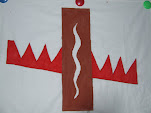
The image to the right is of Melnays Jānis (Black John) at my countryside home. The image stands not only for Jānis (John), a figure of long tradition in Latvia, but also Latvia itself. The image is made of the base of an oak tree and painted black. Its foreshortened limbs can only be made well again by wreaths of oak leaves and flowers. The image was photographed in January, 2009.


If we agree—if only for argument’s sake—that the Latvian people have entered on their 4th Awakening, we must take a closer look at the 3rd Asleep which preceded it. Why was the 3rd Awakening so short lived and so quickly followed by another Asleep period? Why did the great expectations of Latvia’s population in the late 1980s and early 1990s die with the self-sacrificial death of Adolfs Buķis in 1993?

Anyone who looks back at the 3rd Awakening with a critical eye will notice that it was a dream which expressed itself in rhetoric. While I did not make my first visit to Latvia until December of 1991, I remember the pleasure I experienced when I saw in my Arlington, Virginia mailbox a copy of Padomju Jaunatne. The name of the weekly newspaper translates in English as Soviet Youth, but it too, so it appeared, had joined the Awakening.

This is not to deny the reality of The Baltic Way http://www.lv90.lv/files/sadalas/images/457TSD.JPG , people of the Baltic countries linking their arms in peaceful demonstration of solidarity across their borders. Nor is it to belittle the Singing Revolution, a name coined by the Estonians http://www.youtube.com/watch?v=yS8kuHZrN3A , which revived the voice of song throughout the Baltics. Nor is it to ignore the fact that on January 13, 1991, the Popular Front (Tautas fronte) issued a call for the people of Latvia to gather in Riga and build barricades against possible attacks by OMON (Special Purpose Police Squad). Tens of thousands of people from all over the country, women and children including, participated in building the barricades, and providing food and shelter to those who had come from the countryside. In the ensuing days, OMON killed seven people and a number were severely beaten.

Still, the fact that the Soviet Union was falling apart of its own weight (the Baltics in and of themselves are not responsible for bringing it down), and because the rhetoric (and song) saw the Soviet Union fall dead before its eyes in return for relatively little effort, the 3rd Awakening never broke into an open flame. To be even blunter, it never bore the blood sacrifice that would have tested the people’s commitment and mettle.

What followed the gradual and nonviolent collapse of the Soviet Union was a mysterious time, a real enough time, but one that held a vacuum in the place of history. Some historians have called this time “a time when the Soviet regime reigned without Latvians”. The responsibility for this vacuum of history rests squarely on the shoulders of the Latvian government, which never revealed to the public the names of those who served the Soviet Union as KGB agents or who collaborated with the KGB. While the revealing of such names would have been relatively easy in the early days of reinstatement of “independence”, it became progressively more difficult to do. For one, those very agents burrowed ever deeper into the fabric of the renewed Latvian nation. Secondly, all presidents of Latvia—notably Vaira Viķe-Freiberga, because she was president during the years of Latvia’s financial and economic “bubble”—were against making the names public (such as the Soviets failed to take with them to Moscow), because they believed that it would result in more divisiveness than good.

Be that as it may, the 3rd Awakening was still-born because of this unusual alignment of various factors or, if you will, the stars. Which raises the question of whether the current economic crisis in Latvia is the result of this conjunction of forces?

I believe that the answer is both no and yes. It is no, because the financial and economic crisis is almost universal. It is yes, because corruption in the Latvian government is, at least to a significant degree, the result of—as mentioned above—“the Soviet regime without Latvians” or Latvians who collaborated with the Soviet regime who as if by magic have disappeared and made themselves well to do and sometimes wealthy.

Thus, if it was not the Latvian people who were asleep (they were too busy trying to survive on below survival level incomes), it was their government that did its best to avoid looking history in the eye and thereby begged disaster.

(More to follow.)

Sunday, January 18, 2009


The End of “The 3rd Asleep” in Latvia (1)


The image to the right is that of "Melnays Jānis", a symbolic figure for Latvia. Jānis (John) is an arch-Christian Latvian figure--sometimes a traveling teacher, sometimes a self-sacrificial God--who was displaced by the neo-Christian Jesus. This author believes that with the displacement of Jānis, a similar displacement occured with proto-Latvians, the people who preceded the contemporary state of Latvia.


The Latvian people speak of having gone through three periods of “Awakening”. The first period was the national awakening from about the mid-19th century until about 18810, the year of Tsar Alexander II’s assassination in Russia. The 2nd Awakening came with the 1905 Revolution and ended about 1918, the time of the declaration of Latvia as an independent nation. The 3rd Awakening began before the collapse of the Soviet Union in the late 1980s and ended in 1991 with Latvia restored to nationhood.

For reasons of national pride, Latvians do not appear to have thought that “Awakening” may be preceded by an “Asleep” period. Another reason for the omission of an Asleep state may be due to failure to be self-critical, which is a common failing among nations with small populations. It is obvious that they fear self-criticism, because they fear an outside power may take unfair advantage of what such criticism may reveal.

Related to the January 13th (2009) peaceful demonstration, followed by a not so peaceful (nevertheless nonviolent) pelting of the Saeima building with snowballs and eggs, we hear mention a 4th Awakening. In spite of the fact that the nonviolent demonstration was followed by acts of hooliganism by drunken youths, the demonstration did indeed succeed in moving a previously immovable object, the Latvian government, to enact a staged reaction. This is why the all too optimistic mention of a 4th Awakening. The question this raises is whether the latest awakening was preceded by a period in which the citizenry of Latvia was Asleep.

An interesting link to the argument may be an article in The Lancet, a medical journal in England. Authors David Stuckler and Lawrence King from Cambridge University, and Martin McKee from London School of Hygiene and Tropical Medicine, argue that the economic “shock therapy” advocated by Harvard professor Jeffrey Sachs as the quickest way to make the leap from a socialist economy to capitalist economy, resulted in more that a million deaths in post-Soviet countries, Latvia among them. The authors argue that alcohol poisoning was the most direct explanation for the deaths.

However, the economic “shock therapy” which introduced capitalism probably also caused the Latvian government to be corrupt from its inception. Latvians only need remind themselves that already in 1993, one Adolfs Buķis from Jelgava, went to the Freedom Monument in Riga and shot himself in the head as a gesture of protest against corruption in government. At that time, Buķis was said to be not in his right mind, but today, sixteen years later, little has changed, and Buķis could be forgiven if he staged a repeat of his death.

Why was Jeffrey Sachs “shock therapy” so readily accepted and implemented in Latvia? The explanation comes in two parts.

One. Soviet Latvian officials, when they saw that a regime change was inescapable, but at a time they were still in power and could manipulate that power to their advantage, opted for quick privatization, that is to say economic “shock therapy”. Whether they did this consciously or unconsciously is not the question. What is clear is that by accepting Sachs economic “shock therapy”, the officials of Soviet Latvia were able to “legally” (when no one knew what was “legal” and what was not) acquire considerable parcels of private property, mostly real estate and forest lands.

Two. One can understand that Latvians living under the Soviet system had little in-depth understanding of Western economics; however, Latvians living abroad should have been more knowledgeable and concerned. Unfortunately, Latvian exiles were almost as uneducated in economics as they were about the “real” political situation in Latvia. Because of this, they turned into unwitting collaborators with former Soviet officialdom. While such innocence may be forgiven the ordinary Latvian exile, the so-called “ruling circles”, the various “trimda” organizations should not escape blame so lightly. The latter were caught, as the saying goes, with their guard down.

The exile organizations had spent nearly fifty years in exile in single-minded pursuit of “freedom” for Latvia from the Soviet Union. The organizations and their members were so intend on pursuing a policy of “kissing up” to the governments of their host countries as a way of courting favor, that when freedom for Latvia did arrive, they were intellectually unequipped as critics of capitalisms, let alone capable of understanding the consequences that capitalism unleashed on a previously oppressed people can do.

In short, the corruption and chaos and dissatisfaction of the Latvian people with their government during the last eighteen years is home made. The demonstrations on the 13th of January broke what this writer believes to have been the 3rd Asleep period.

(More to follow.)